
When most Westerners make travel plans, Saudi Arabia isn’t usually at the top of their list. For that very reason, I recently felt like an explorer peering into the past for the very first time. There are so many uncovered secrets within both sand and stone that makes every corner of this country more appealing with each new adventure. If you keep reading, you might just discover a potential trip you hadn’t considered before; especially if you’re a history buff who enjoys the outdoors.
A brief introduction
Traveling during the first two weeks of the new year is a privilege I was looking forward to as an International School Teacher. Last year, I took a trip along the southern coast of Spain all the way to Lisbon, Portugal and it was one of the most memorable experiences of my life. This year, my options depended on how the coronavirus crisis was unfolding. Mid-December, I was able to travel with caution. Then on December 21st, Saudi Arabia put another travel ban in place to maintain their low contraction numbers and keep their people safe; a decision I applaud. This meant that I couldn’t utilize my exit-re-entry VISA and must stay within Saudi Arabia.
Researching the best locations within Saudi Arabia opened up a wide array of possibilities that I wasn’t aware of until now. A foreigner who has never visited Saudi Arabia may write it off as a dry, arid landscape. For this reason, it rarely makes somebody’s bucket list as a place to visit. I too, was guilty of having this mentality, but not any longer. Within ten days, I managed to visit Riyadh, Tabuk and it’s neighboring Wadi Al-Disah, Madain Saleh in Al Ula, Yanbu and finally Jeddah. As is typically the case, I had my work cut out for me but with due diligence, I knew I had a nice Alchemist-like adventure ahead.

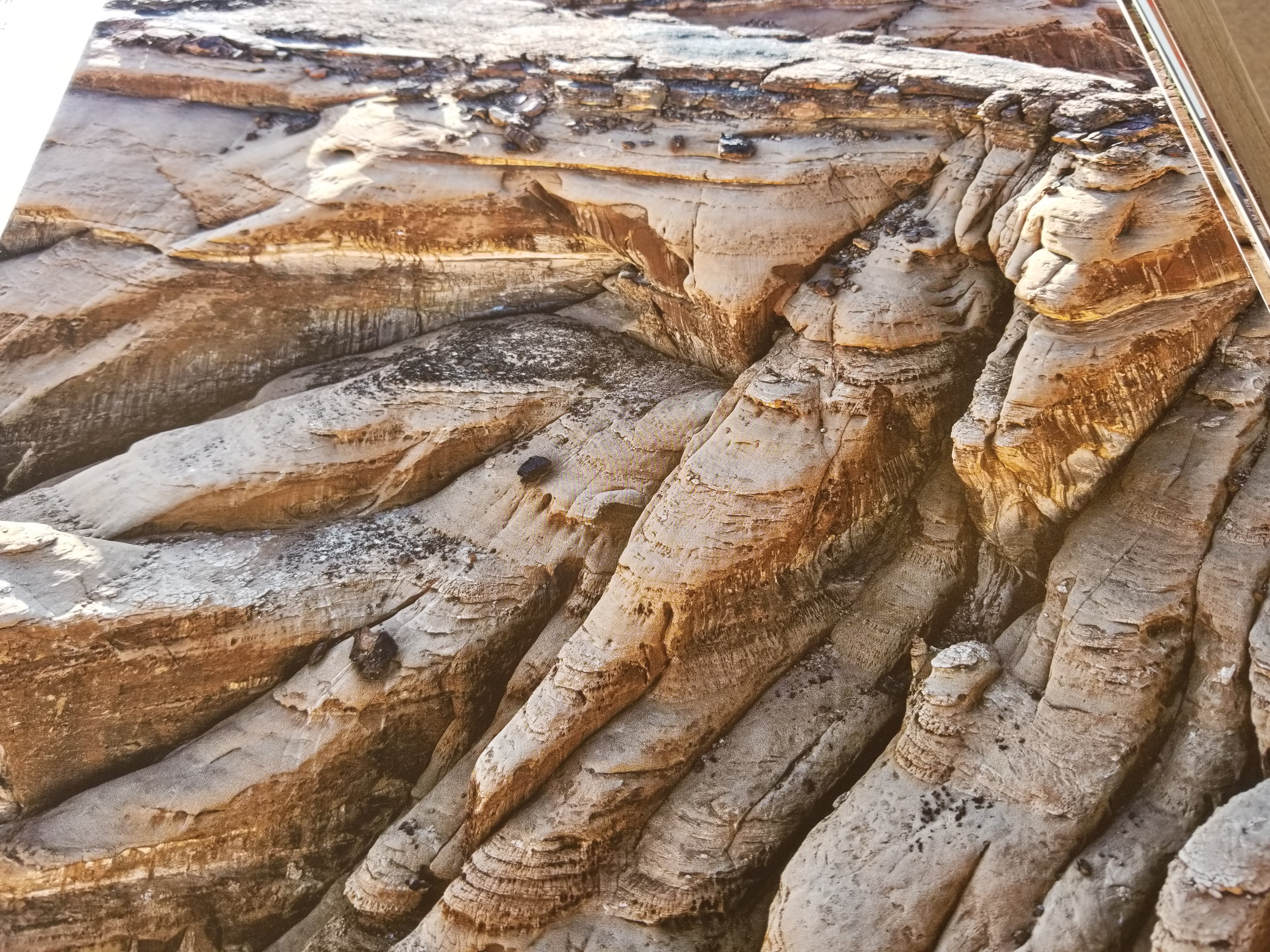
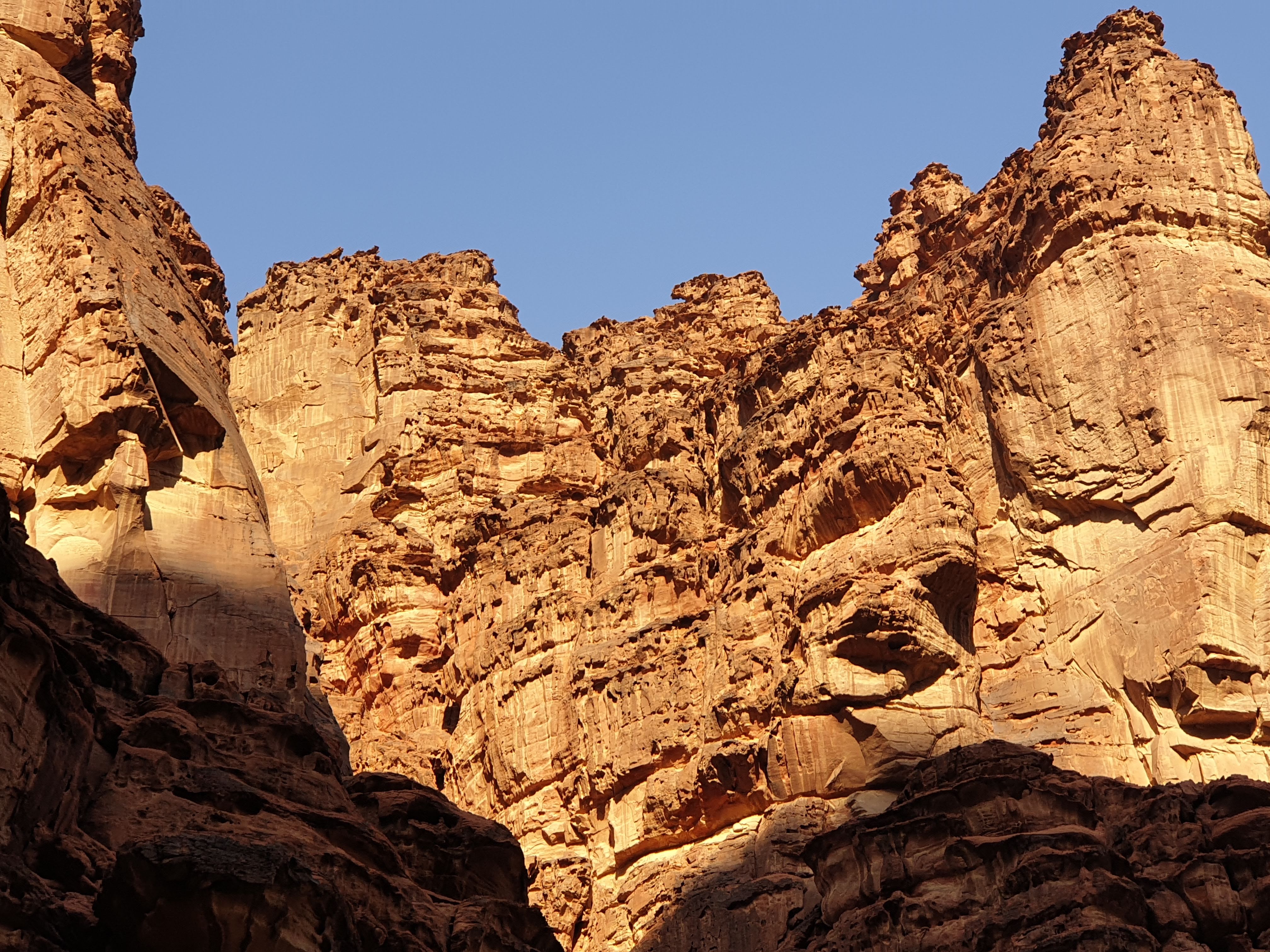
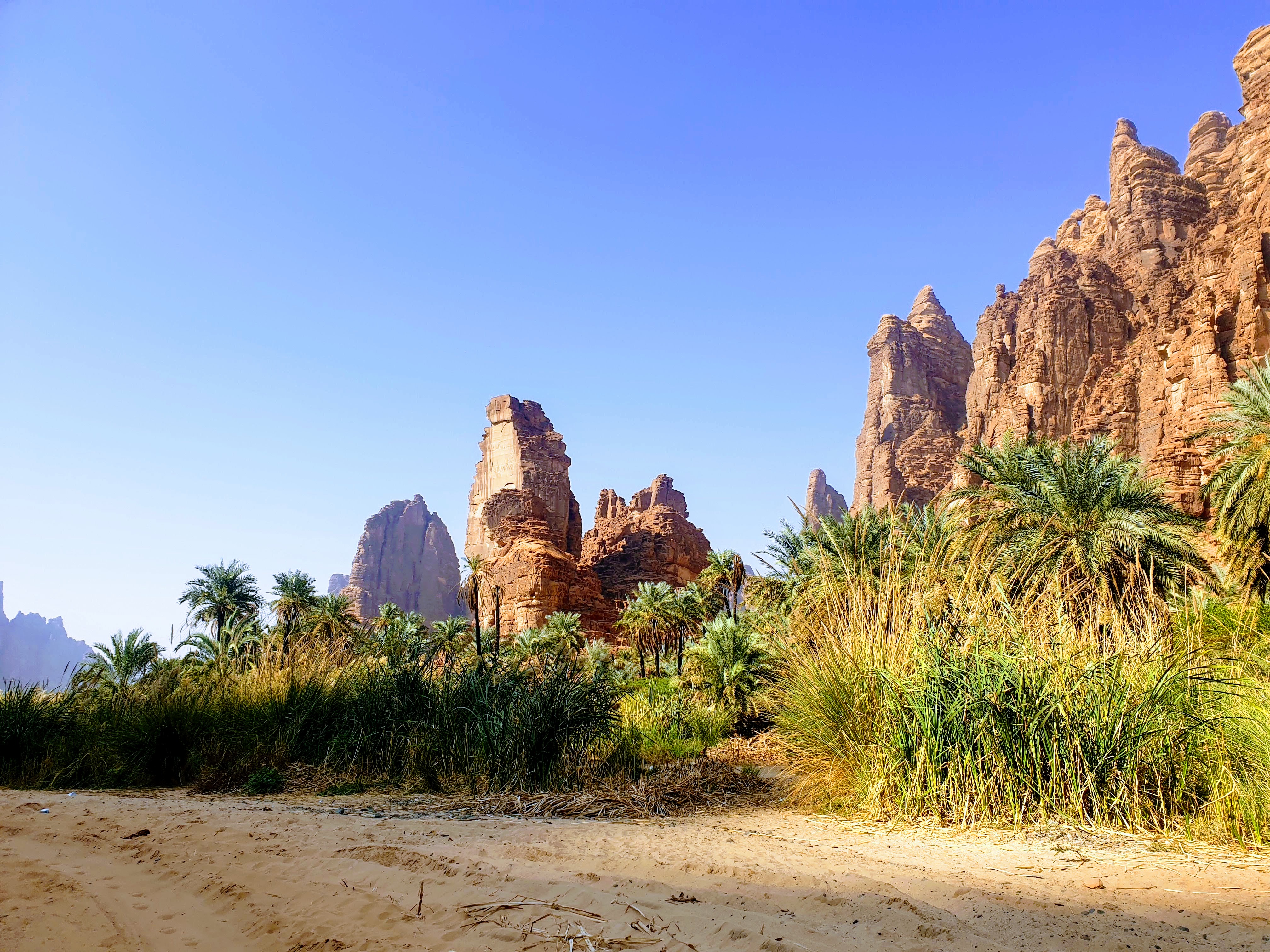


I live and work in the city of Dammam, which is part of the Eastern Province (or Al Sharqiya), and I have easy access to Bahrain. I wanted desperately to venture out and explore the Western coast of Saudi Arabia this time, because conversations I’d had with fellow teachers, employees at Aramco and other expats had been mostly positive when discussing that part of the country. The first stop of Riyadh was a bust, because my rental car could not hold up to the rocky conditions of the off-roading required to get to Edge of the World. To make up for this, we saw forts (Maskmak Fort, circa 1865), skyscrapers and had awesome sushi for dinner at – three guesses – a mall.
Waking up, my wonderful travel companion and I embarked on a 14+ hour drive through Hail, all the way to Tabuk. This drive showed us how the Saudi landscape can evolve from flat, sandy desert, to rolling hills and beautiful steep, rocky mountains. Our Budget rent-a-car vehicle dubbed “Timothy” held up nicely considering it’s failed attempt through the treacherous conditions near Edge of the World. On this trip, we saw our first of thousands of camels along the highways and side routes. Camels in Saudi Arabia are mostly owned but allowed to roam freely. The ones that are owned have hobbles (aka prison shackles) around their two front feet (camels do NOT have hooves, but rather two toes at the front of their feet). On several occasions, a shephard was leading the way on camel-back and behind him were over 50 camels following in synchrony. Thanks to Spotify and the one and only DJ Nicola as a copilot, we maintained some semblance of sanity during our trip and arrived in Tabuk ready for a night’s rest for the next day’s trip to Wadi Al Disah.
The Drive North
Saudi Arabia is gearing up for more tourists with each passing year and the target for the big reveal is 2030. The country’s mission to bring in more tourism was very noticeable during the road trip. Installation art pieces, organized gardens, impeccably landscaped parks and city medians were either under construction or placed in an official, if not ceremonious fashion. There were areas that reminded me of Beverly Hills, California so you can imagine what the end-result will be like in 9 years.
Driving around in the Middle East is not as difficult as I had anticipated prior to obtaining my Saudi driver’s license. I would merely caution future travelers to be weary of speed bumps, aggressive on-coming traffic on the two-way highways, and the traffic cameras that do their best to keep people from speeding. The only consideration travelers should make when renting a vehicle is whether or not they have unlimited mileage. Depending on the trip, how many people are traveling with you (which helps when splitting costs) and your specific destinations, flying may be the better option. For us, traveling with bus, car and finally a flight from Jeddah back to Dammam was the most practical way to go. After reaching the 2,250 km limit on our rental car, the extra fees weren’t exorbitant. Budget Rent-A-Car specifically charges 0.66 SAR per each additional kilometer traveled after reaching 2,250 kilometers.
Visitors have three choices when visiting the Wadi. They can stay in Air B&B accommodations in the small town of Al-Disah, stay in a hotel in Tabuk and drive to the Wadi (what we did), or camp at the Wadi and the nearby oases. Desert camping is a common pastime here in Saudi Arabia. Sleeping in an open tent under a blanket of stars is every star-gazer’s dream, so it makes sense to utilize your tent when visiting such untouched regions of the world. The night skies in this part of the world are one of a kind.
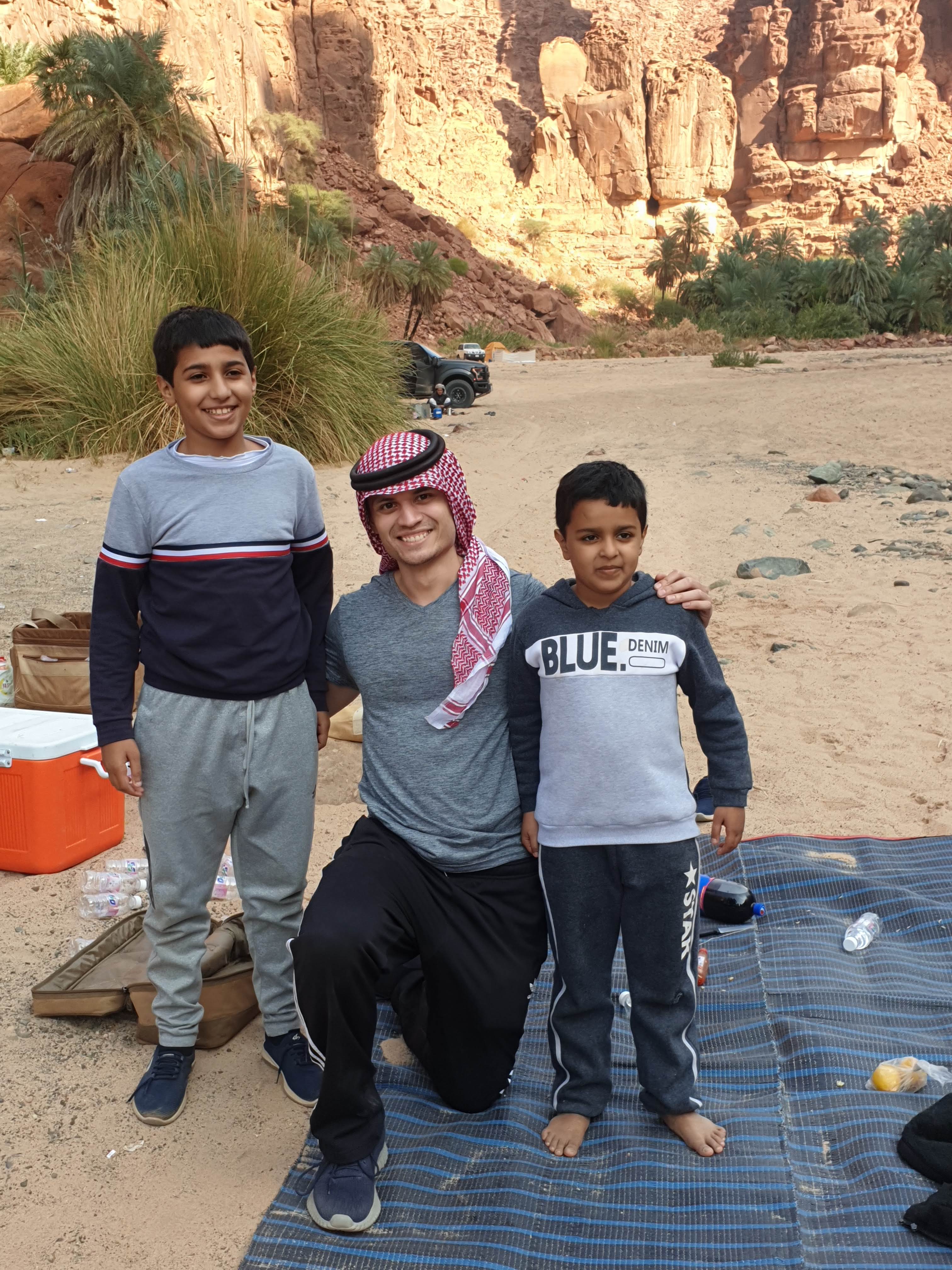
In Tabuk, we stayed at the Garden View Inn for two nights, and embarked on a 2 hour and 30 minute drive to the acclaimed Wadi Al-Disah. This beautiful mountainous valley, lined with limestone rock formations, is a hidden gem in the northwestern region of Saudi Arabia. Driving there is a breeze and you can park on the flattened sand towards the entrance of the Wadi, then walk deeper into the Oasis. The sand evolves and softens as you step deeper into the Wadi and explore. Pillars of red, rocky stone tower over the date palms as you take each step on sand that rivals that of the most pristine Hawaiian beaches. It is a dream-like experience I will never forget. Most foreign tourists don’t yet know about the Wadi and it’s predominantly visited by Saudi nationals. The Oud smells mix with the barbeque smoke and from one Bedouin camp to another, the laughter echoed throughout the valley as I continued walking further into the Wadi. People were cooking corn, rice, soup, and camping with their families. I had invitations from everybody to join them and eat dates, or hitch a ride in the back of their Toyota Landi from the inner-Wadi to our car. We ended up chatting with a down-to-earth family from Abha that was camping in the Wadi for the weekend. They offered us tasty Arabic tea, dates and loved hearing about our home-towns. One of the family members insisted I take his keffiyah (the head-dress worn my Muslim men) upon leaving as you can see in the pictures below. I love memorabilia for me to look back on for years to come, and was eternally grateful for their benevolence.

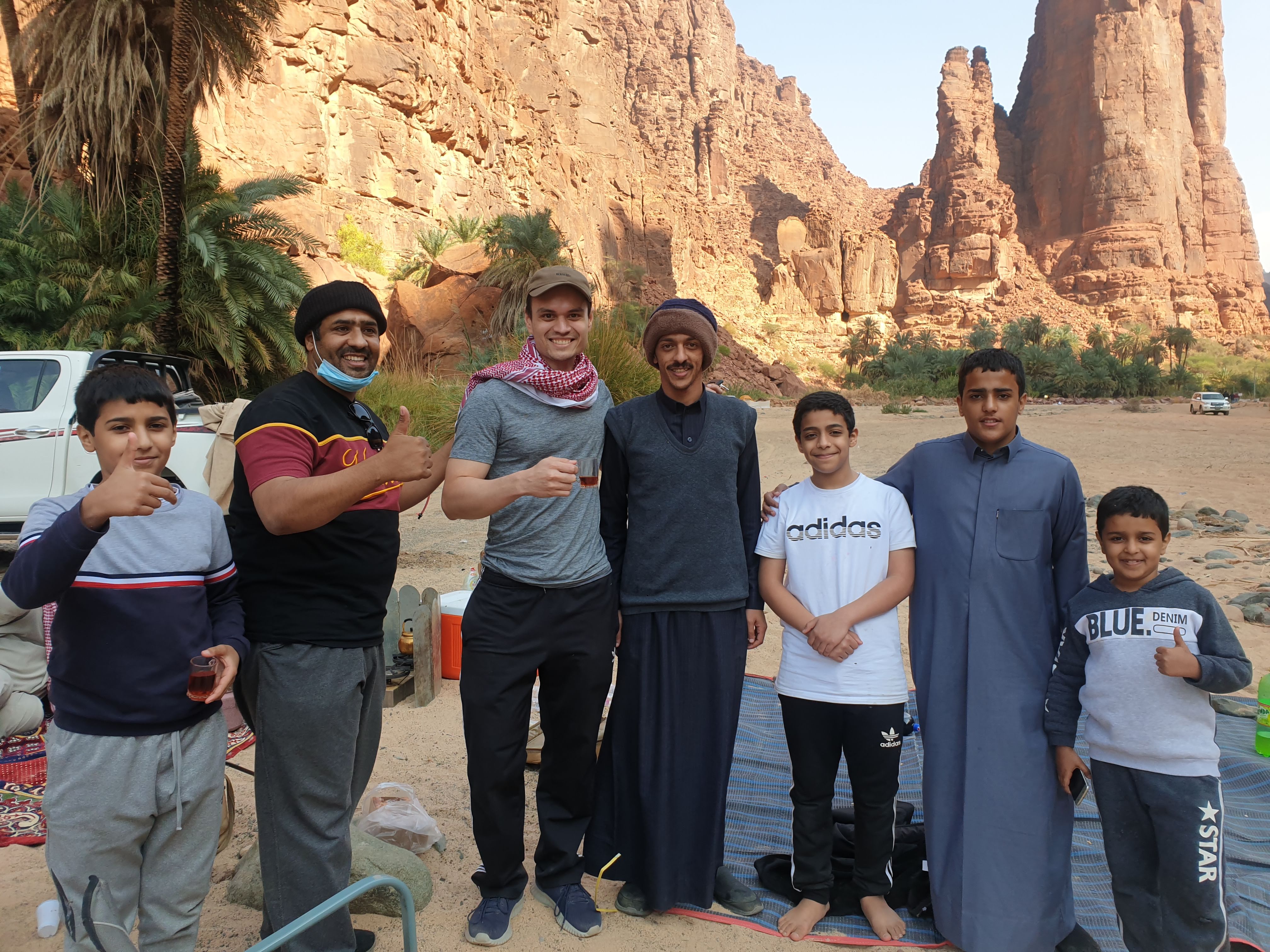

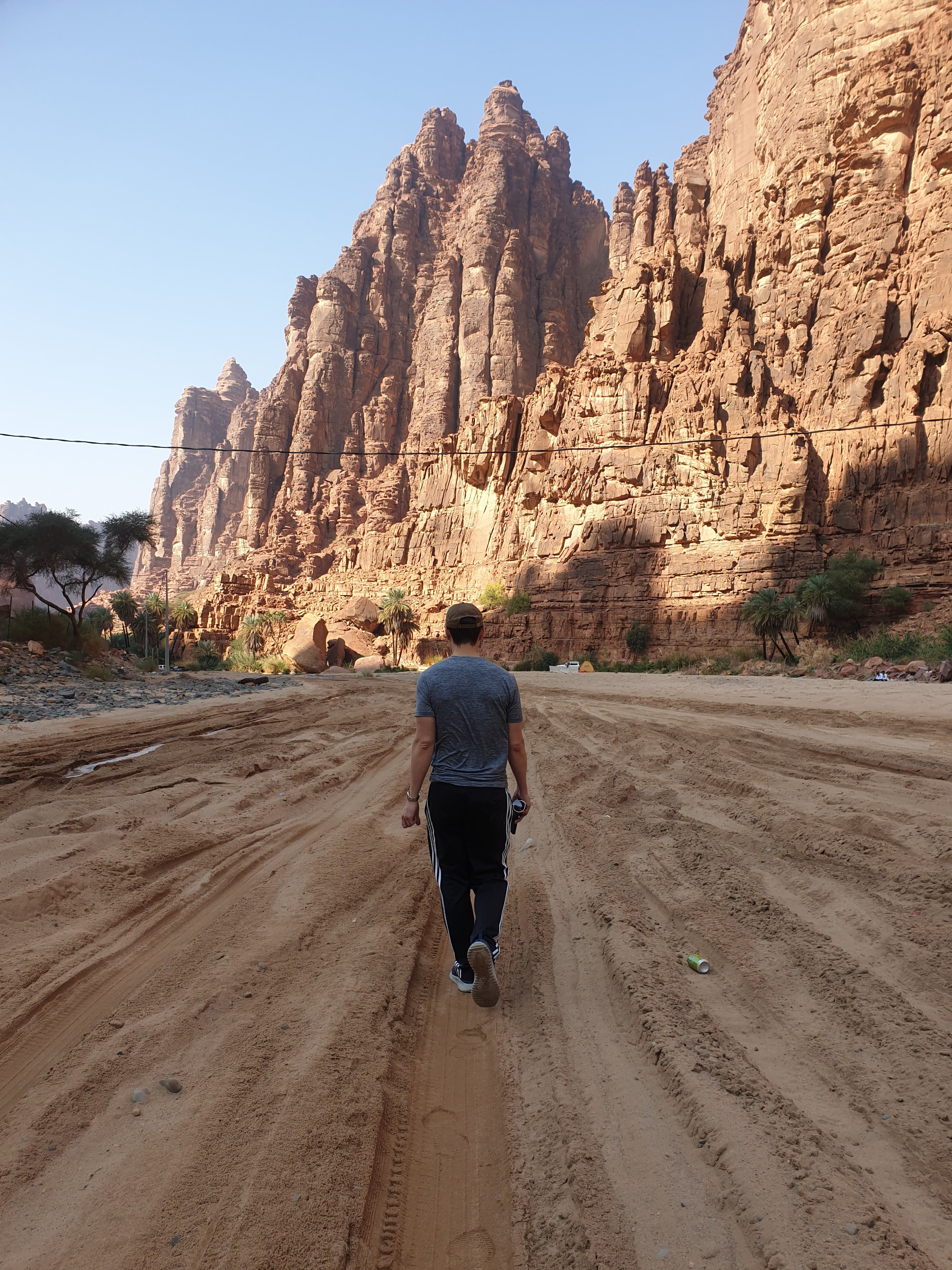

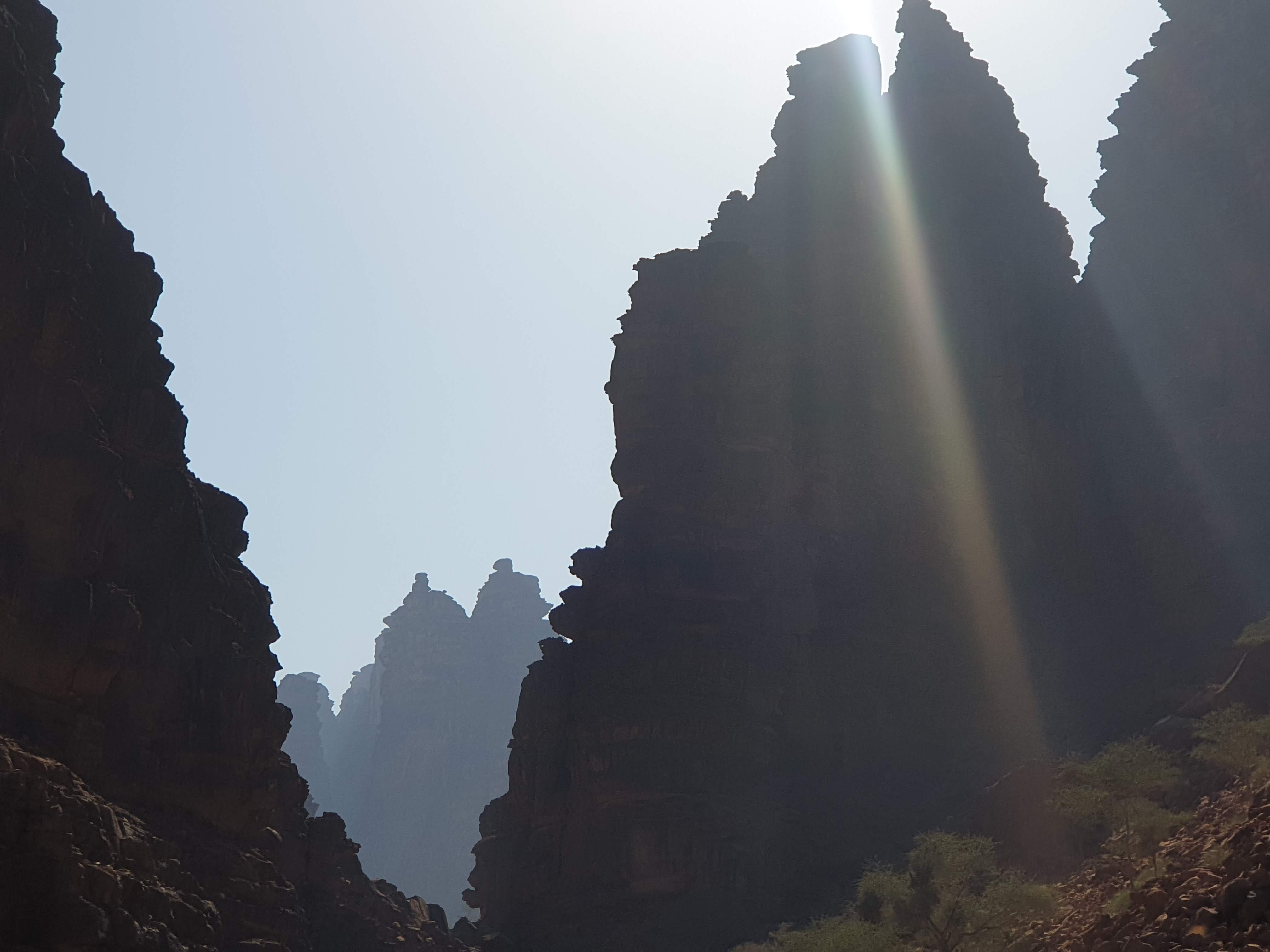
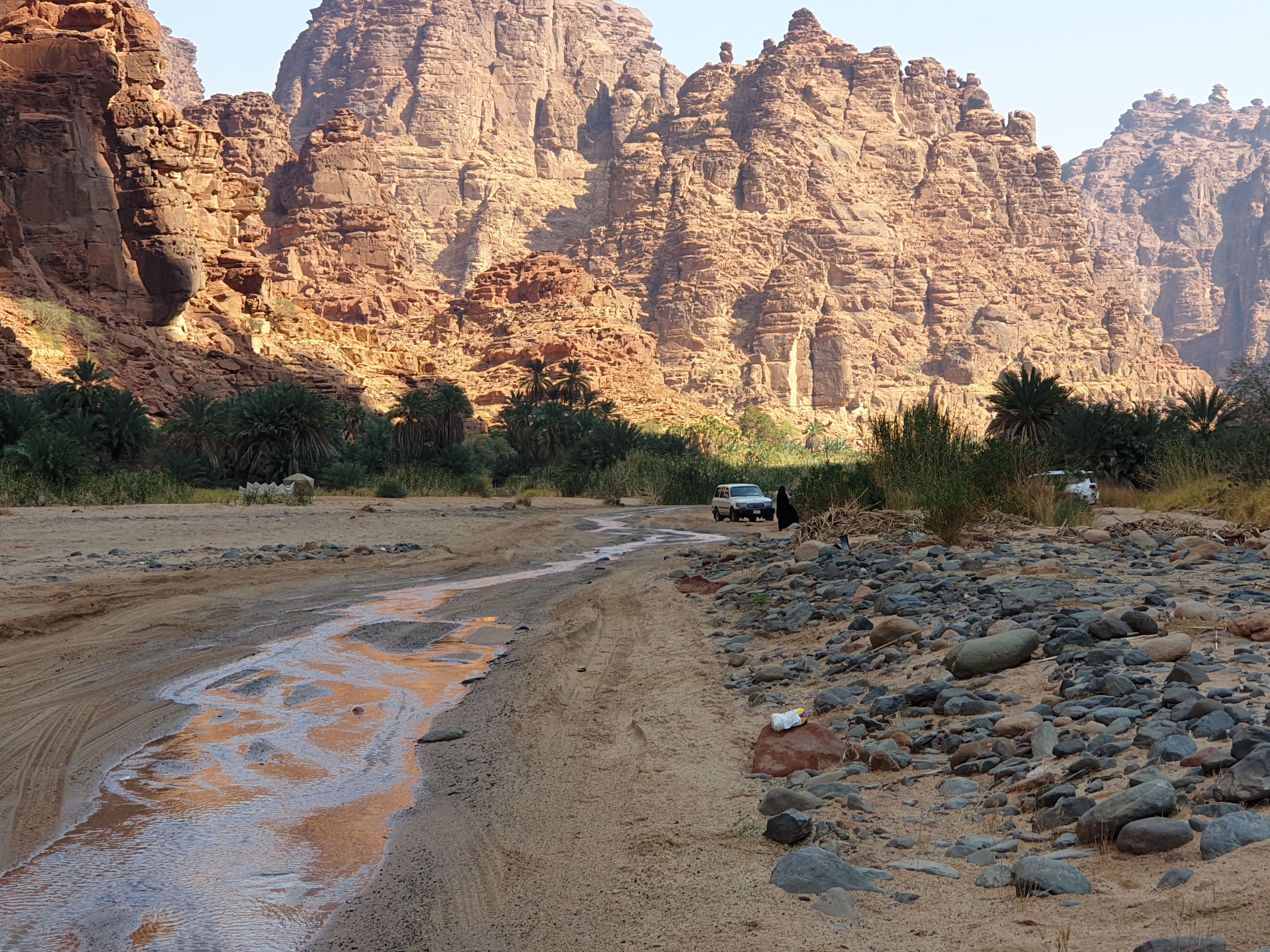
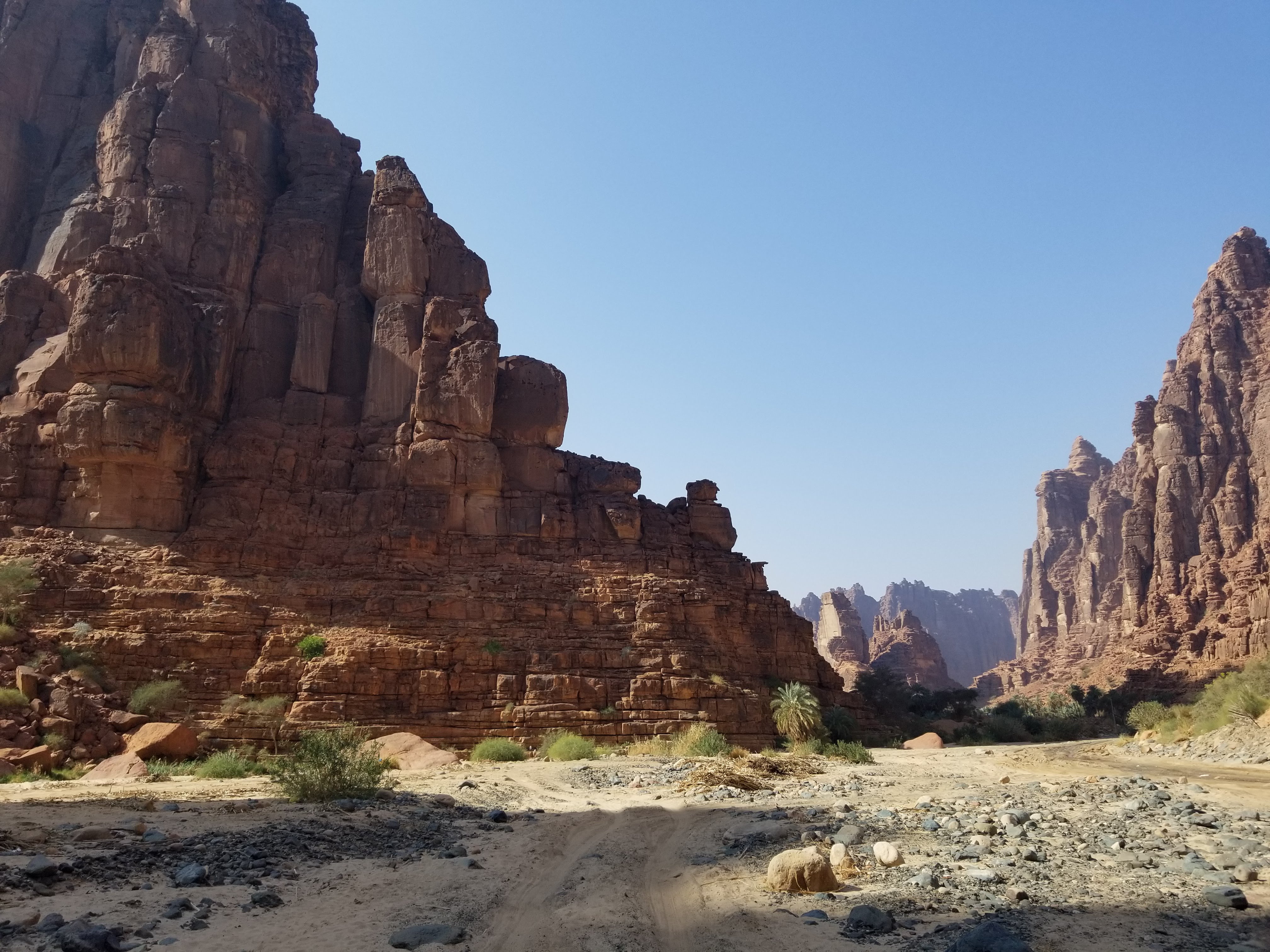

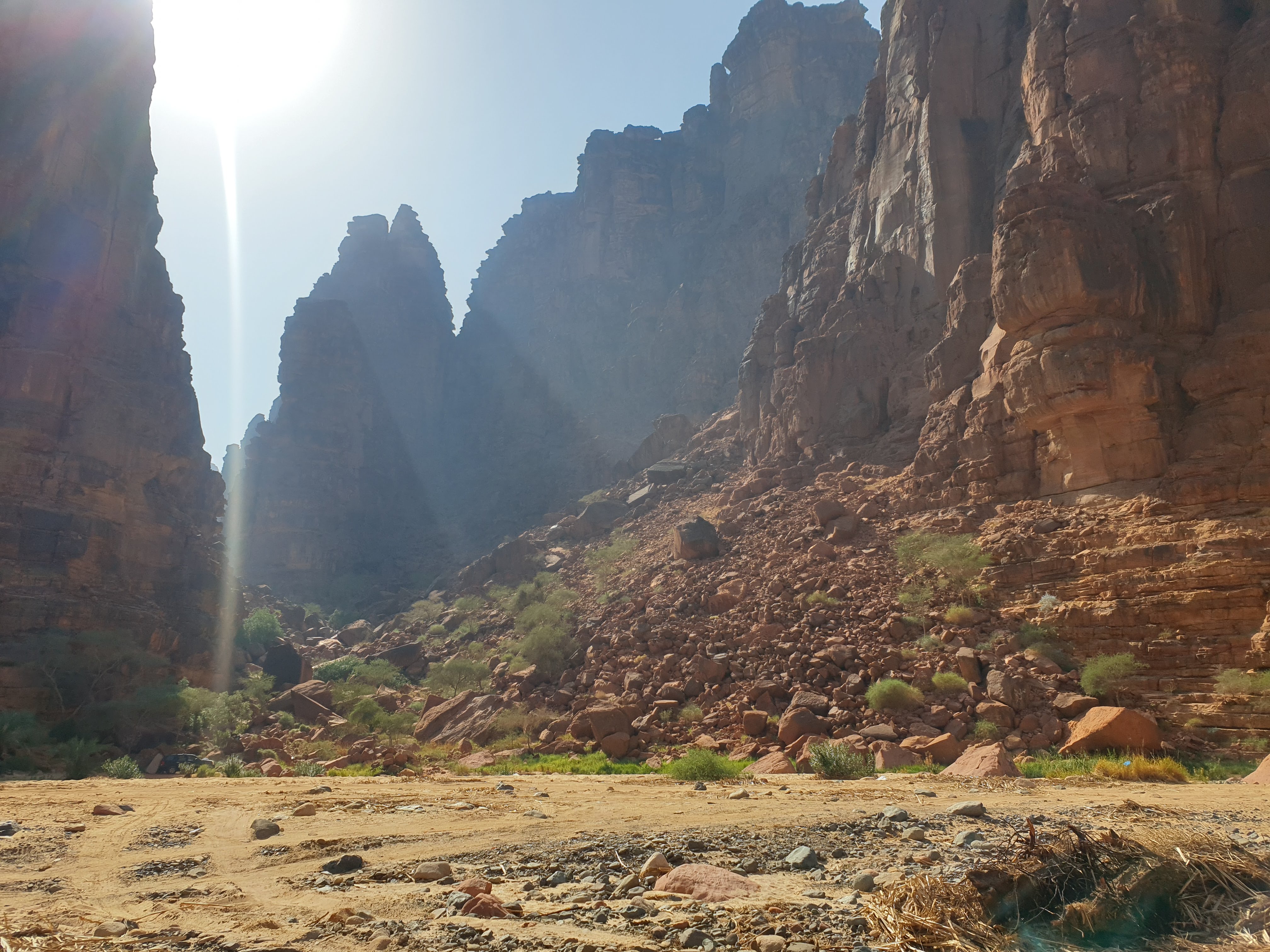
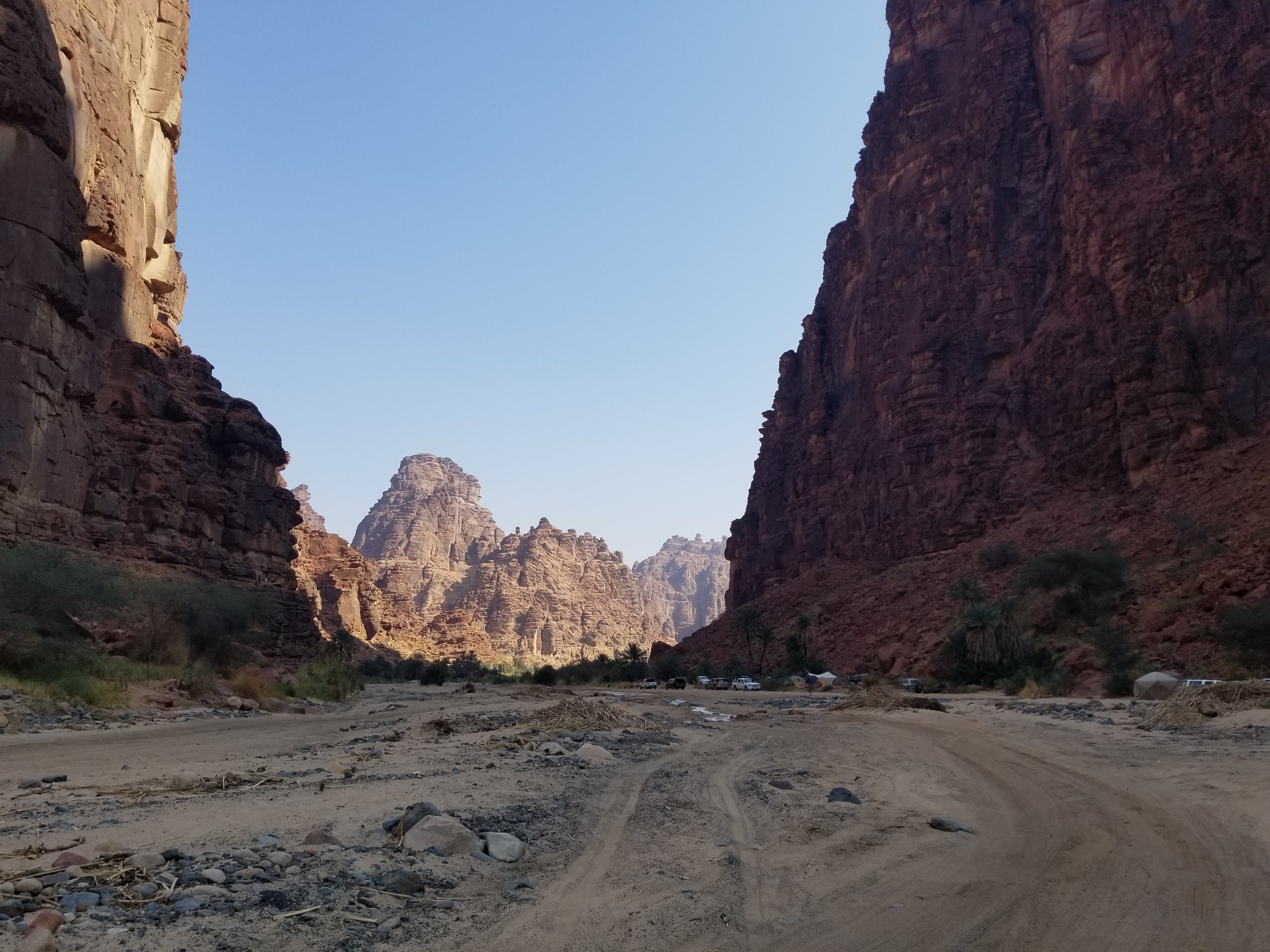

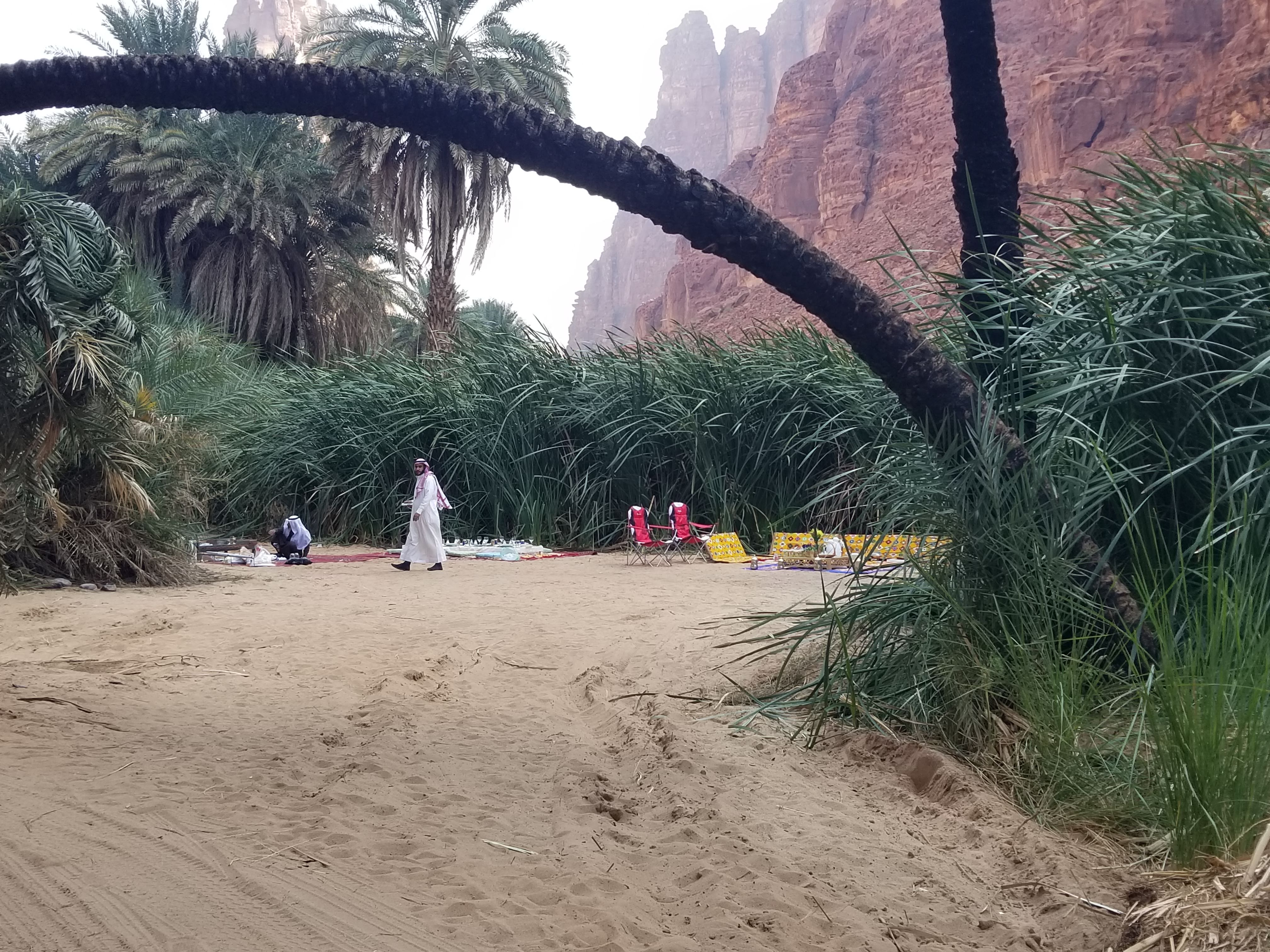


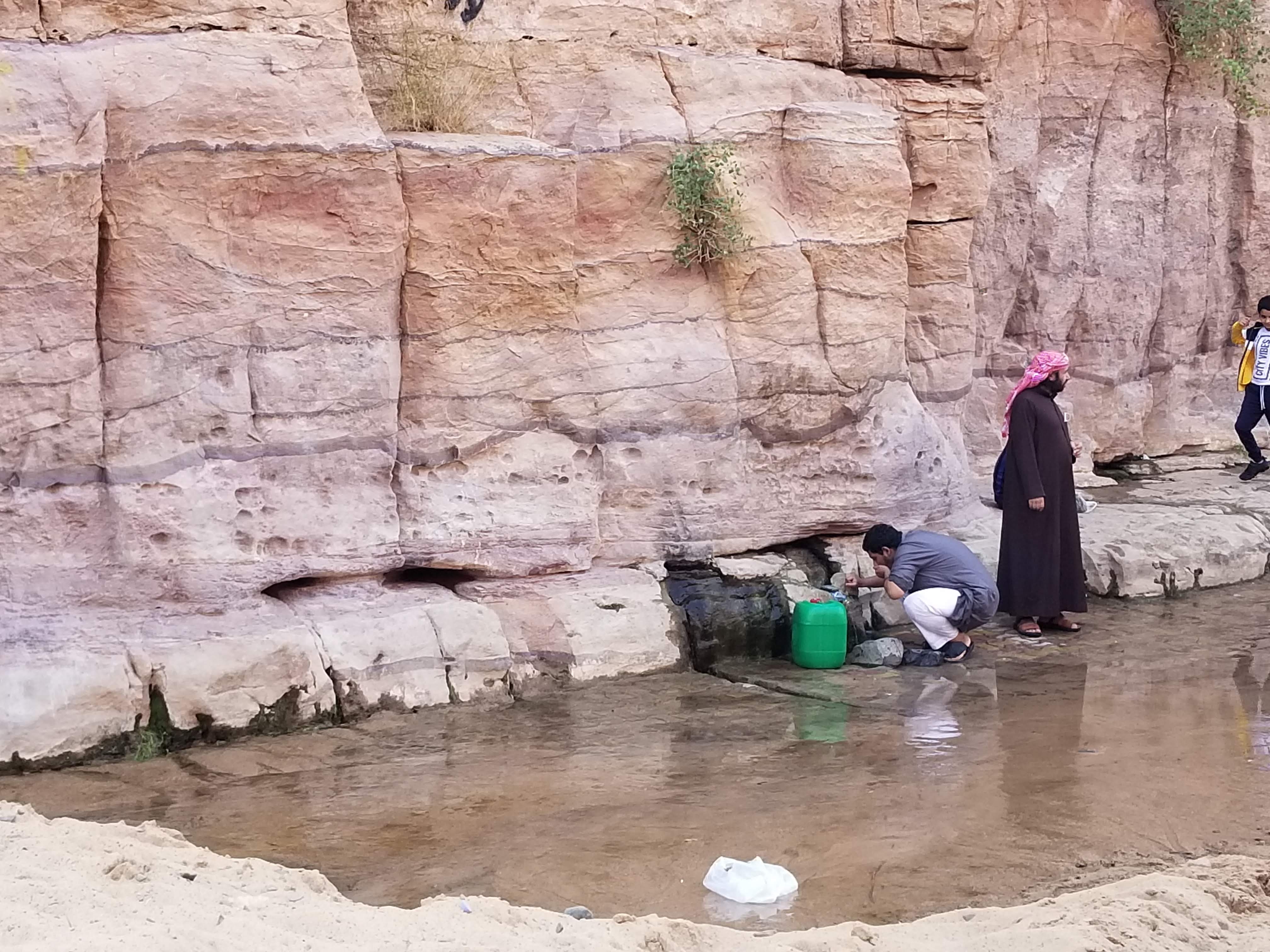
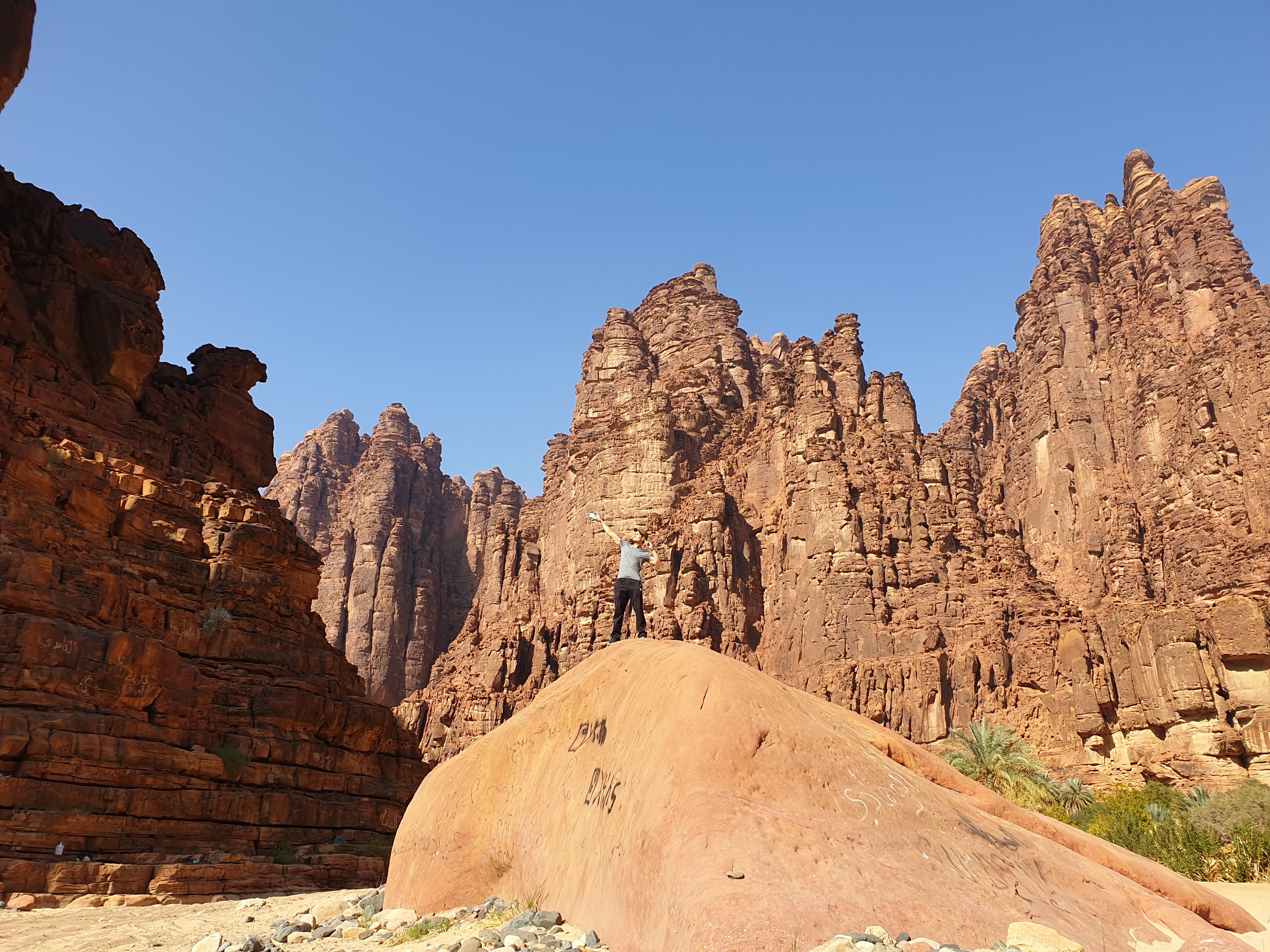
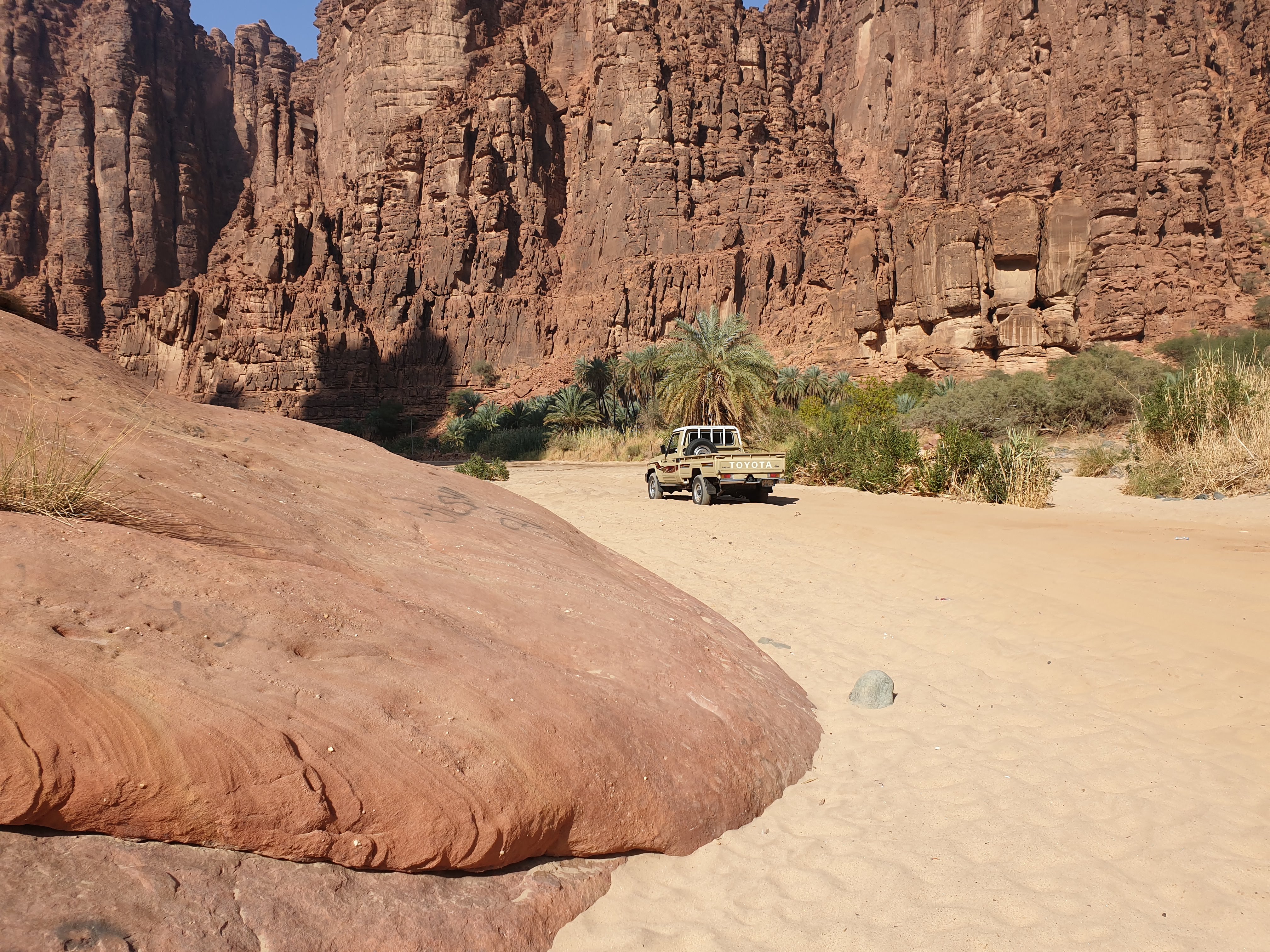
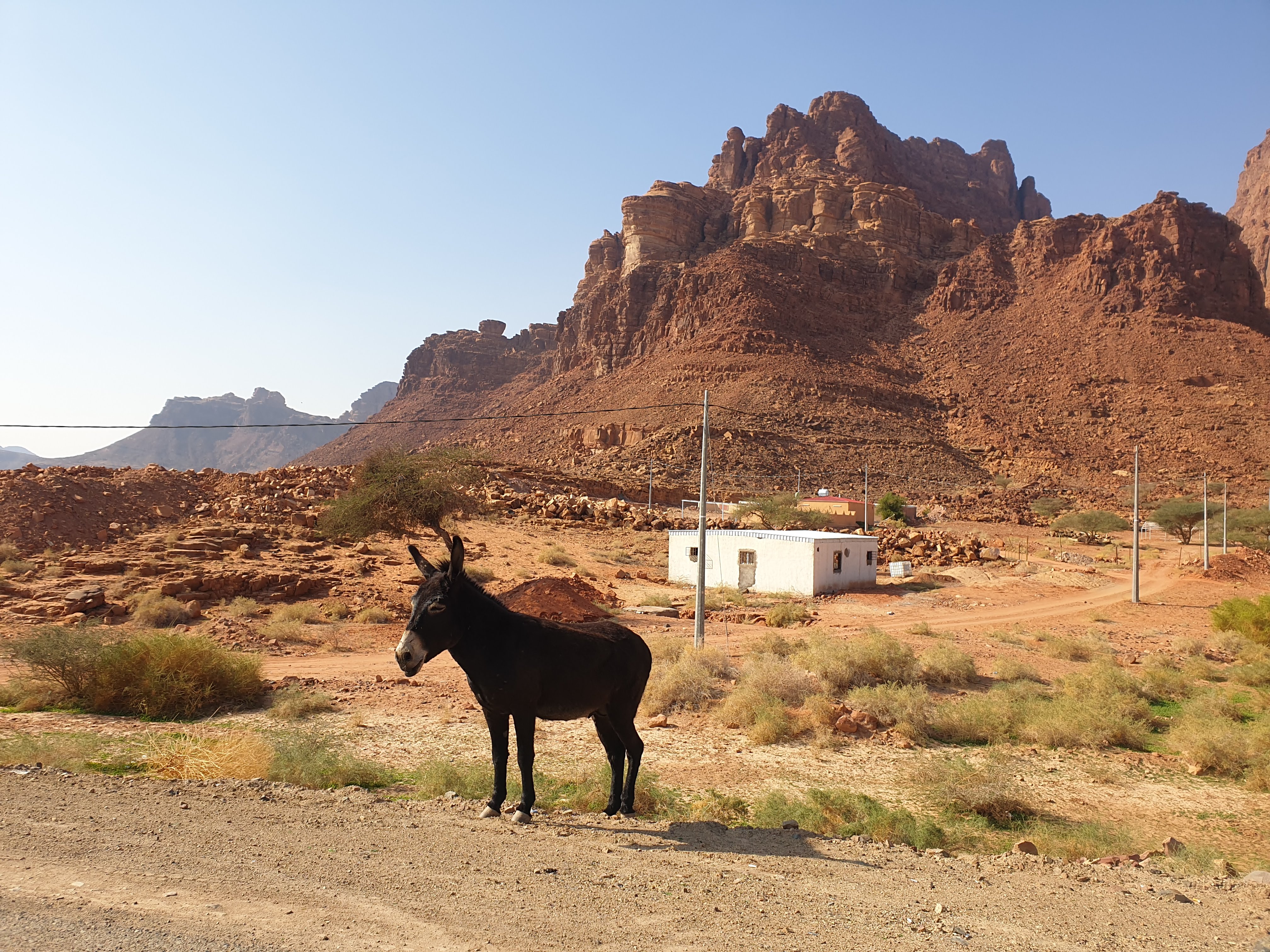

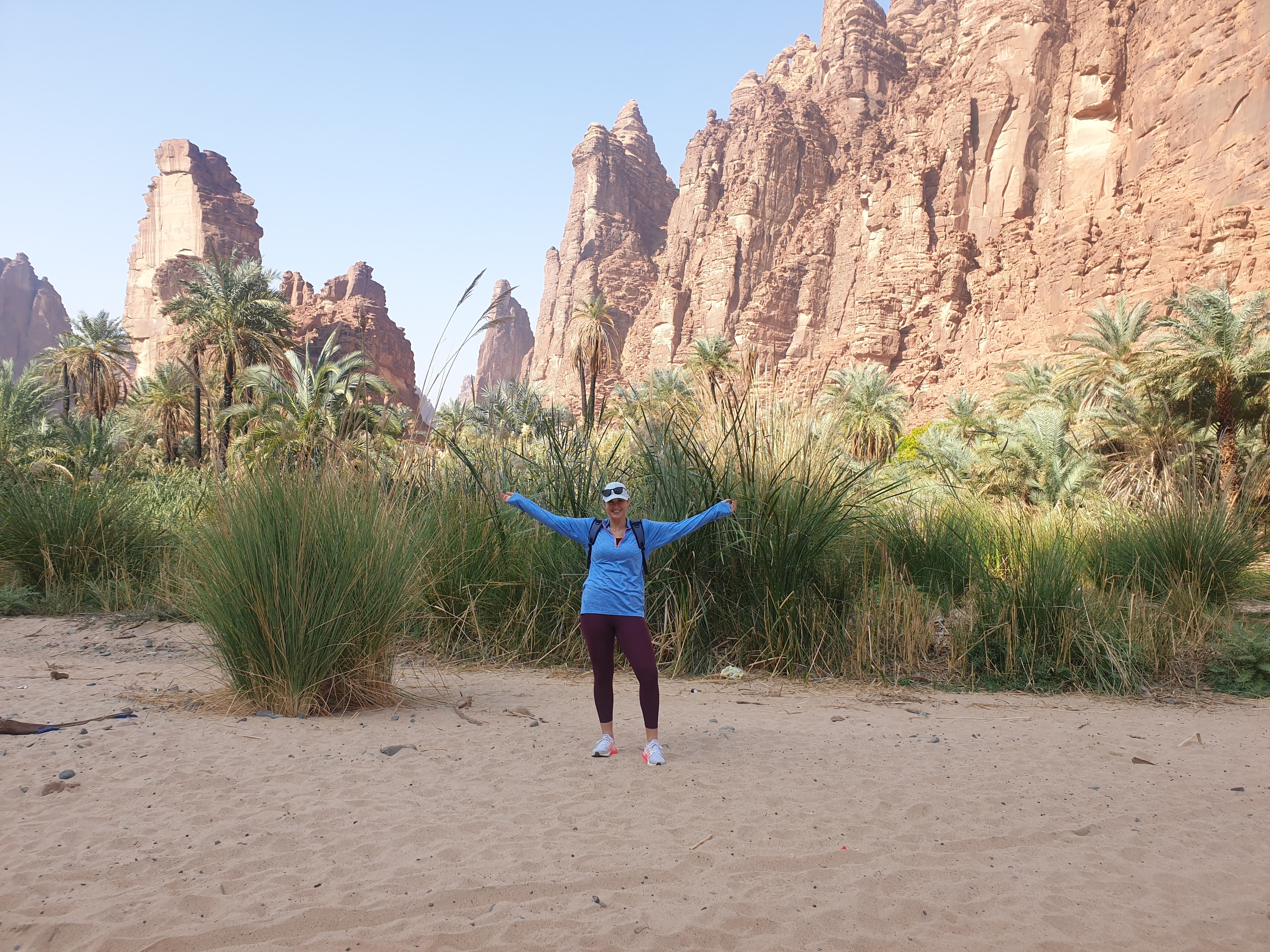
If you find yourself visiting Saudi to experience the historical sights such as Madain Saleh, Old Town Jeddah and the various areas that Moses and/or Lawrence of Arabia once roamed, make sure to put Wadi Al-Disah on your list. It brings the mirage of an Oasis to life and the combination of smells from the local camping sites and stunning surroundings heightens all of your senses.
From Sand to Rock, and Back Again
During this trip, each drive was more scenic than the last. The trip out of the Wadi and towards Al Ula was progressively more impressive as we pushed onward. The 8900 throughway allows drivers to witness beautiful edgy rock formations and silky sand dunes. One 45-minute strip passed through a rocky terrain that made me feel as if I were on Mars. For those that enjoy ocean views and activities, you can visit a pristine diving location in Duba. I’ve read that there are remarkable scuba diving locations off the nearby coastline. We didn’t have enough time to do that this time around, and we decided to push onwards toward our next stop: Al-Ula.
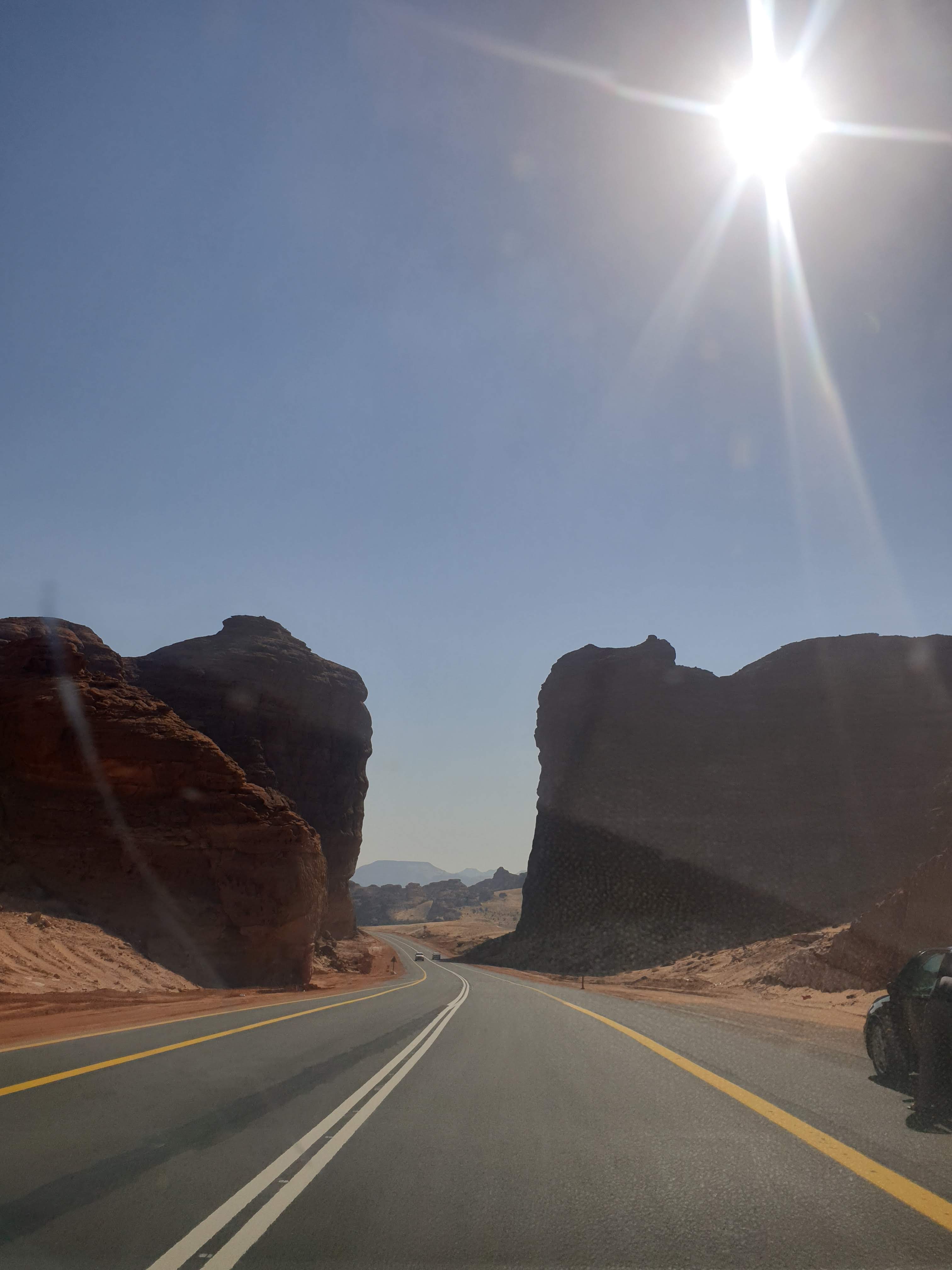
Driving to Al Ula was one of those experiences that can be described in the most visually appealing manner, yet still falls short of the experience itself. Al-Disah Wadi was a warm-up compared to the drive into Al-Ula. Timothy our rental car, swerved in and out of numerous plateaus, rock formations and sand dunes with the spiny Hijaz mountains peaking out of the shadows. With each passing camel, and each George Ezra tune that played from Spotify, the desert sand started to make an impact on my consciousness. Before this trip, my travel destinations were predetermined by books, friends, articles and history. Had it not been for the border closures due to COVID, I would never have explored this part of Saudi Arabia and bizarrely, I have to thank the brutal restrictions of the COVID-19 pandemic for this experience.
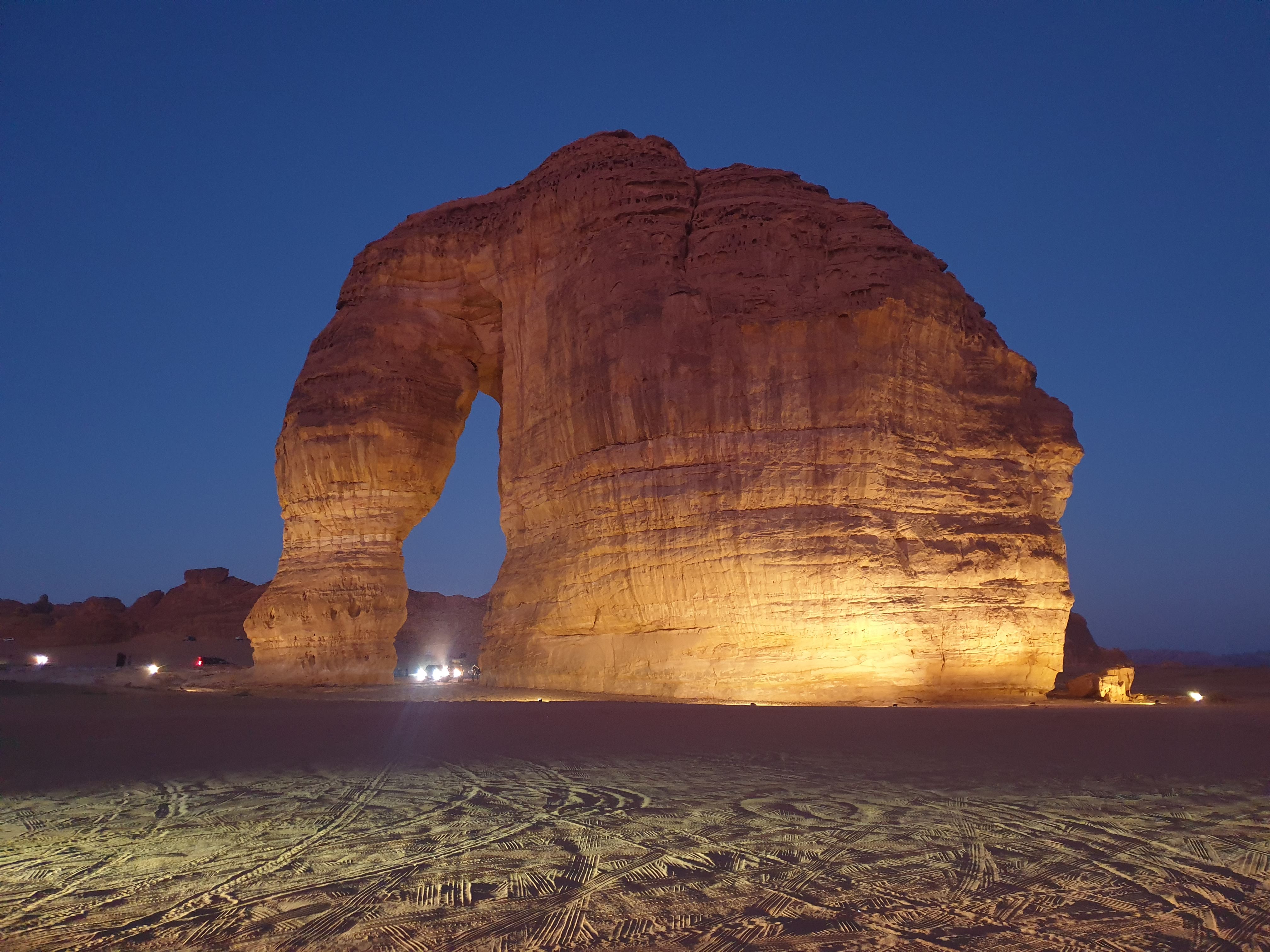
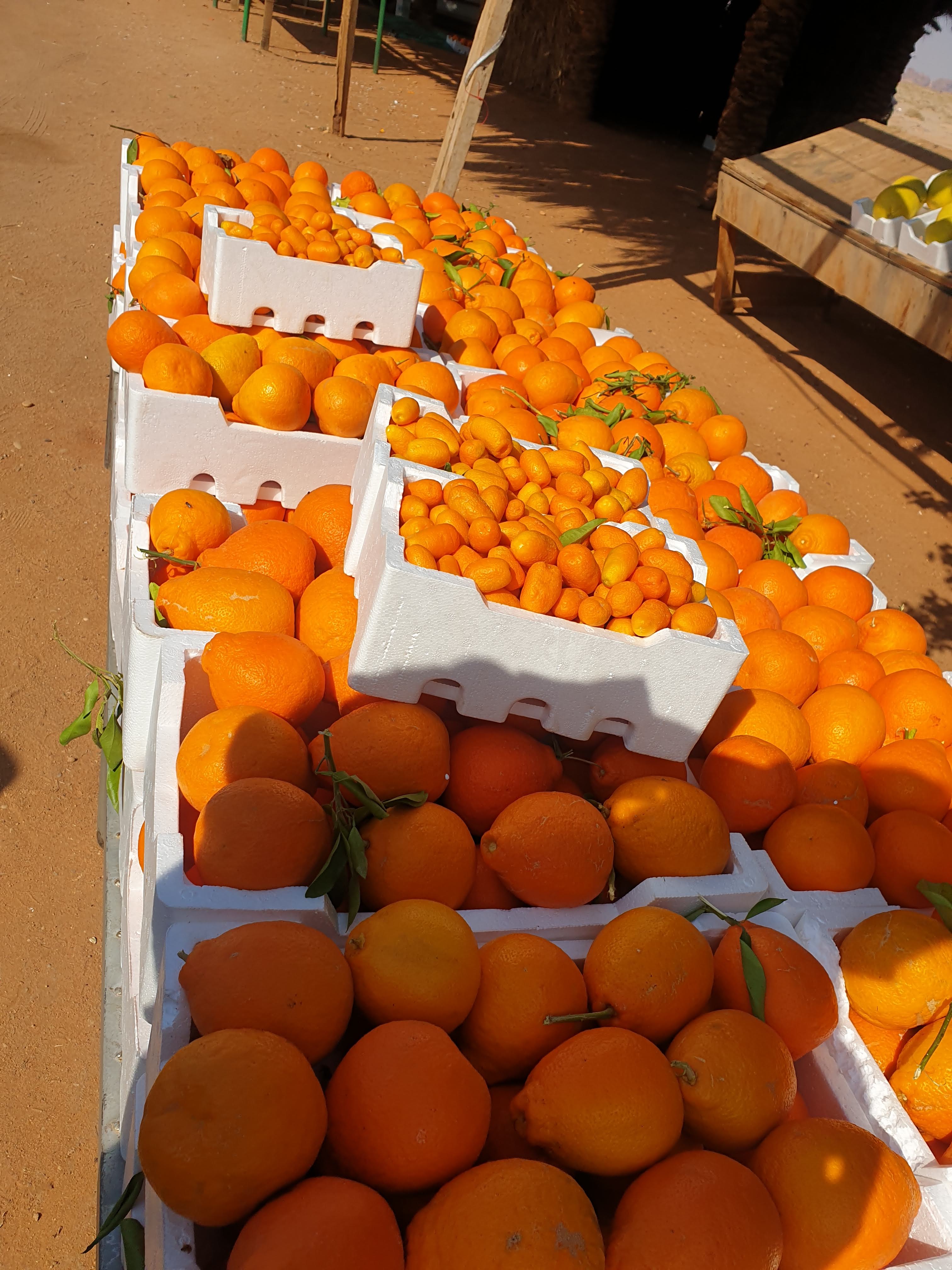
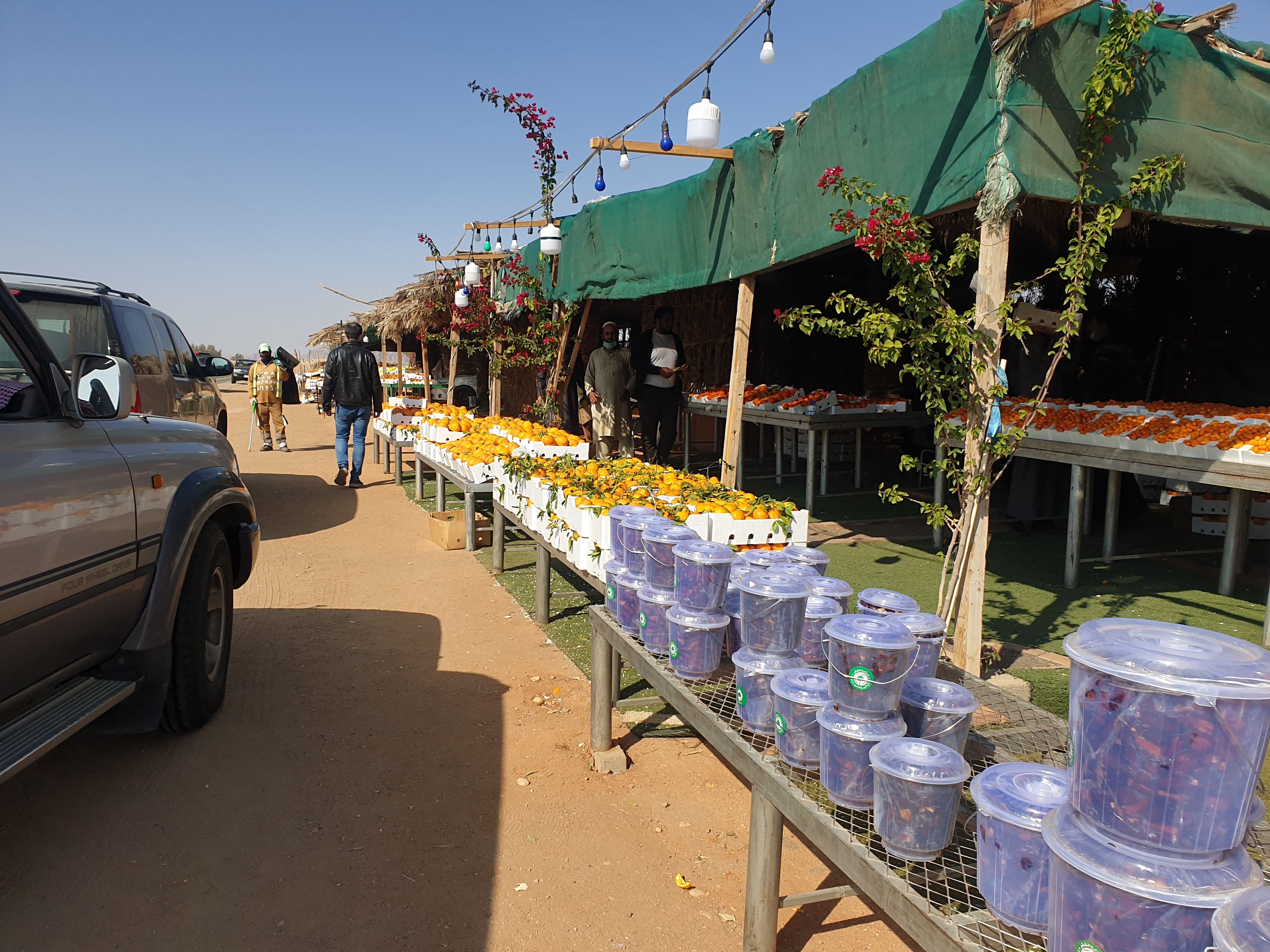
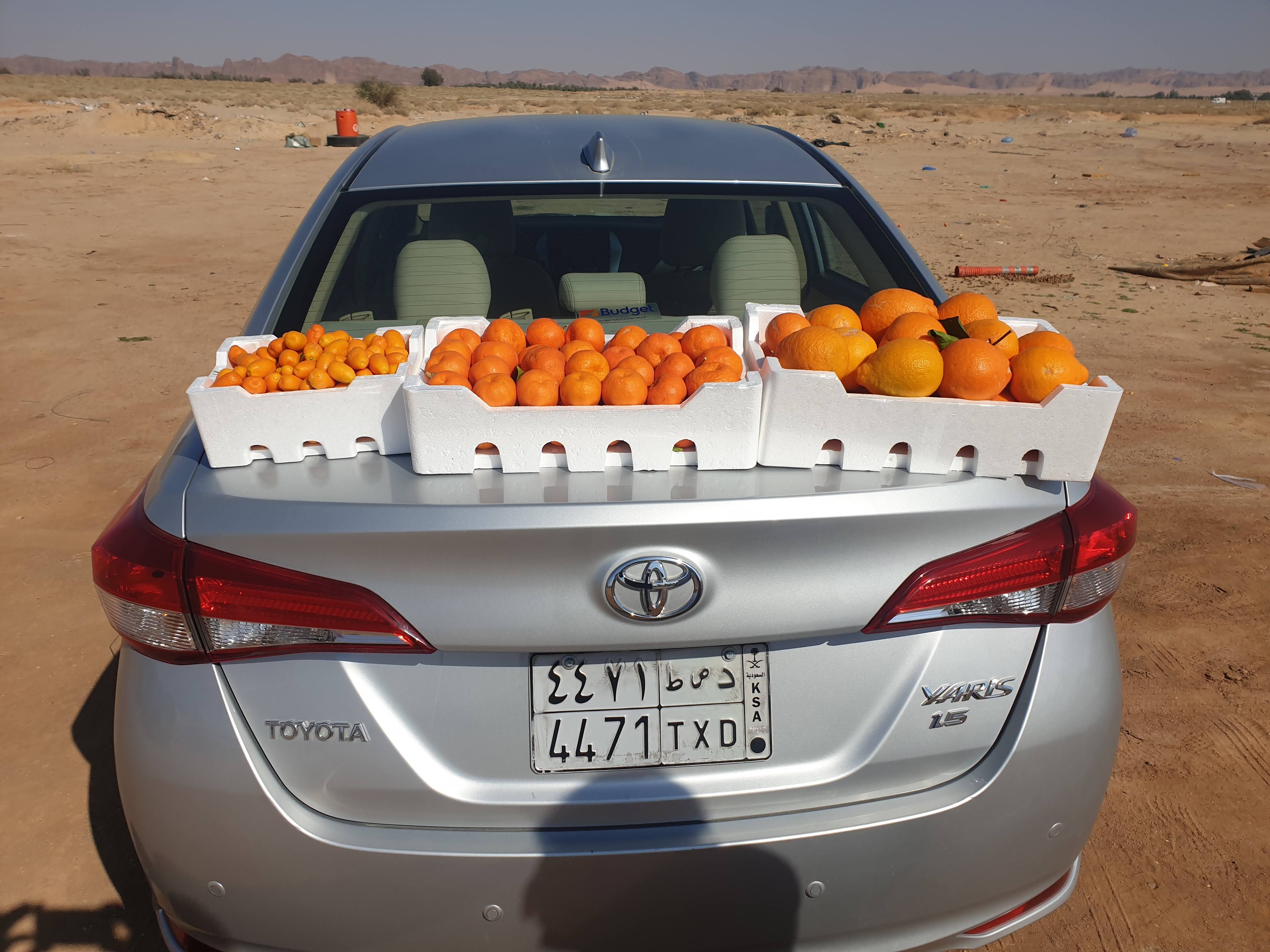
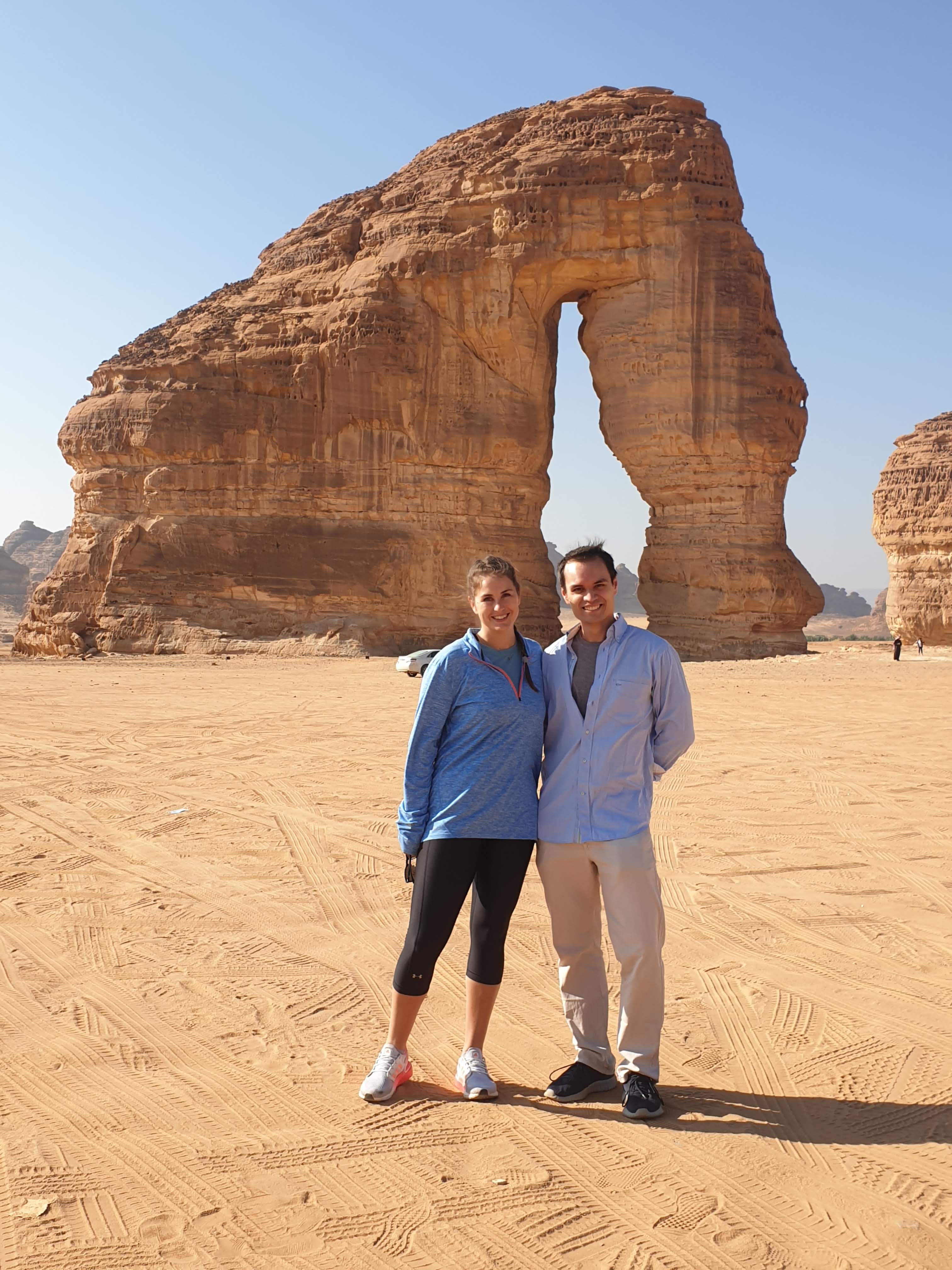
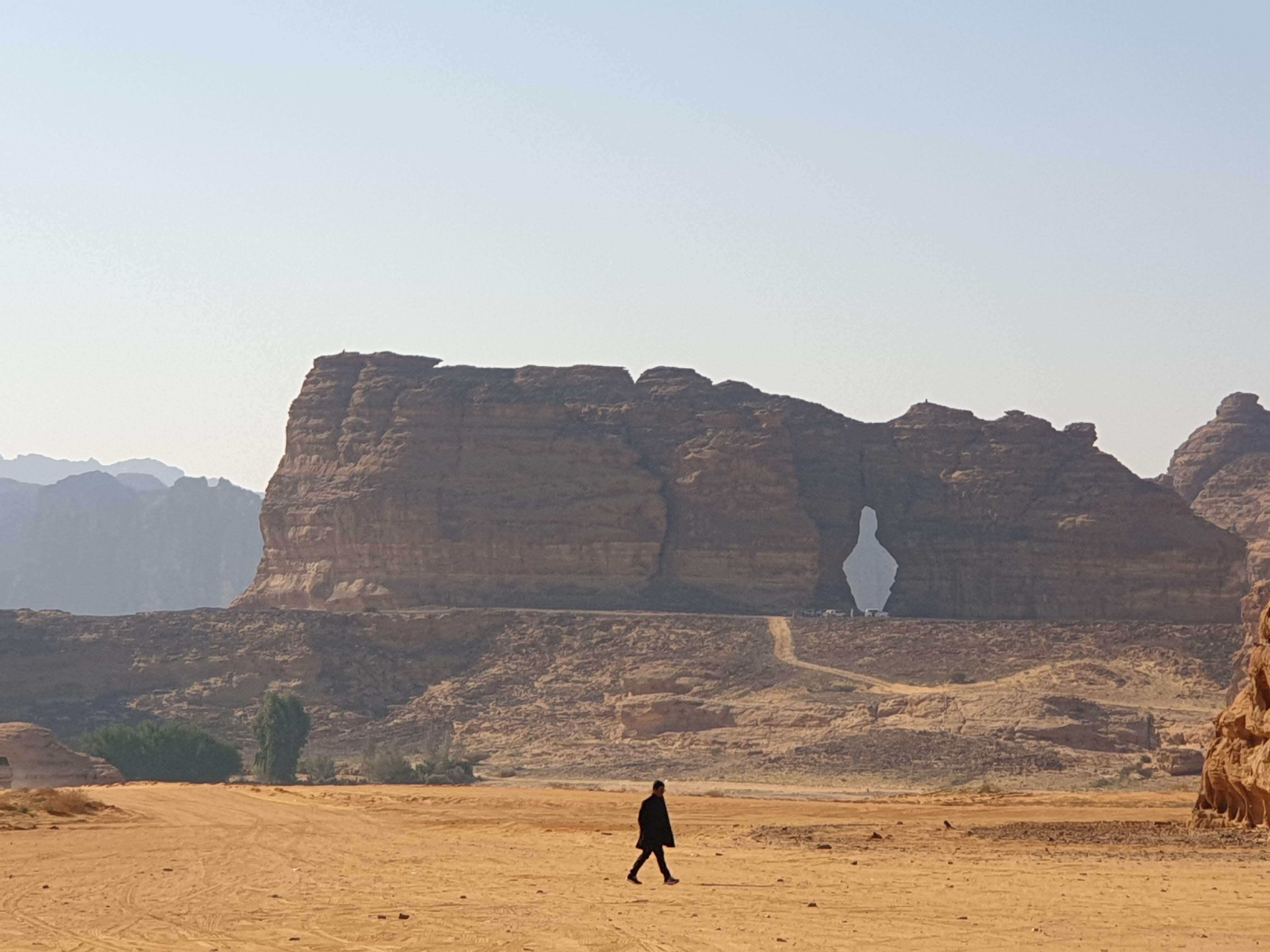
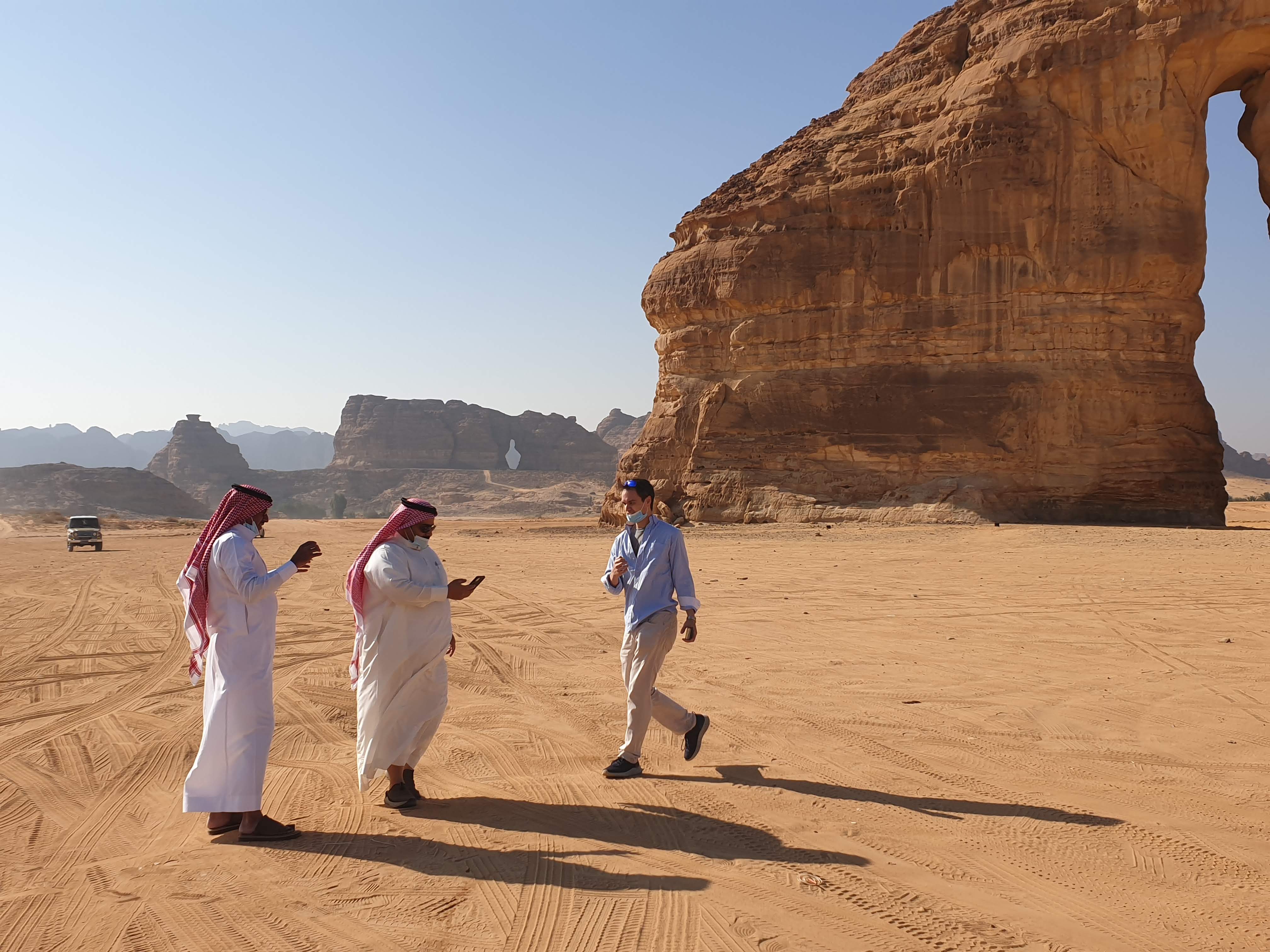
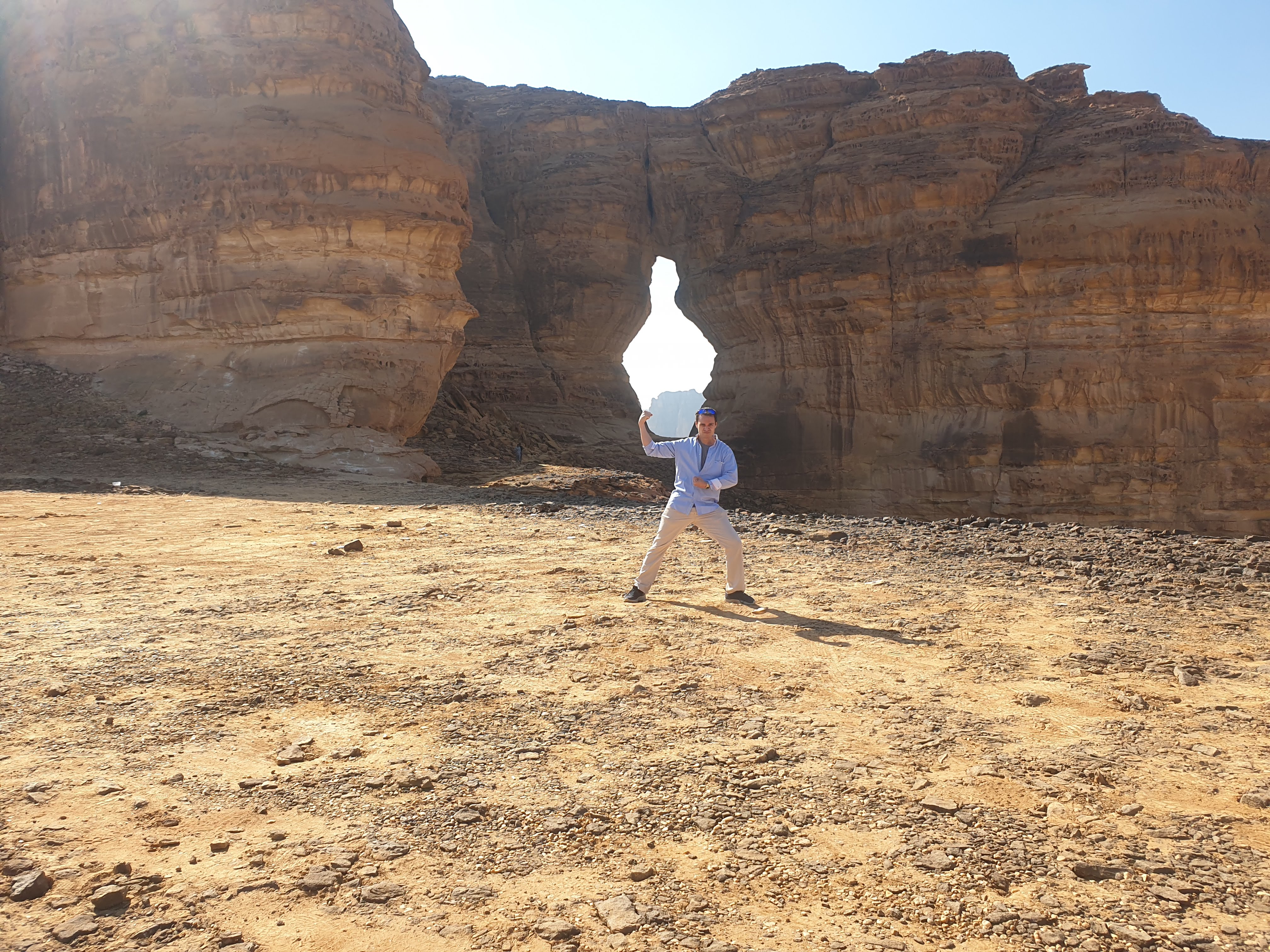
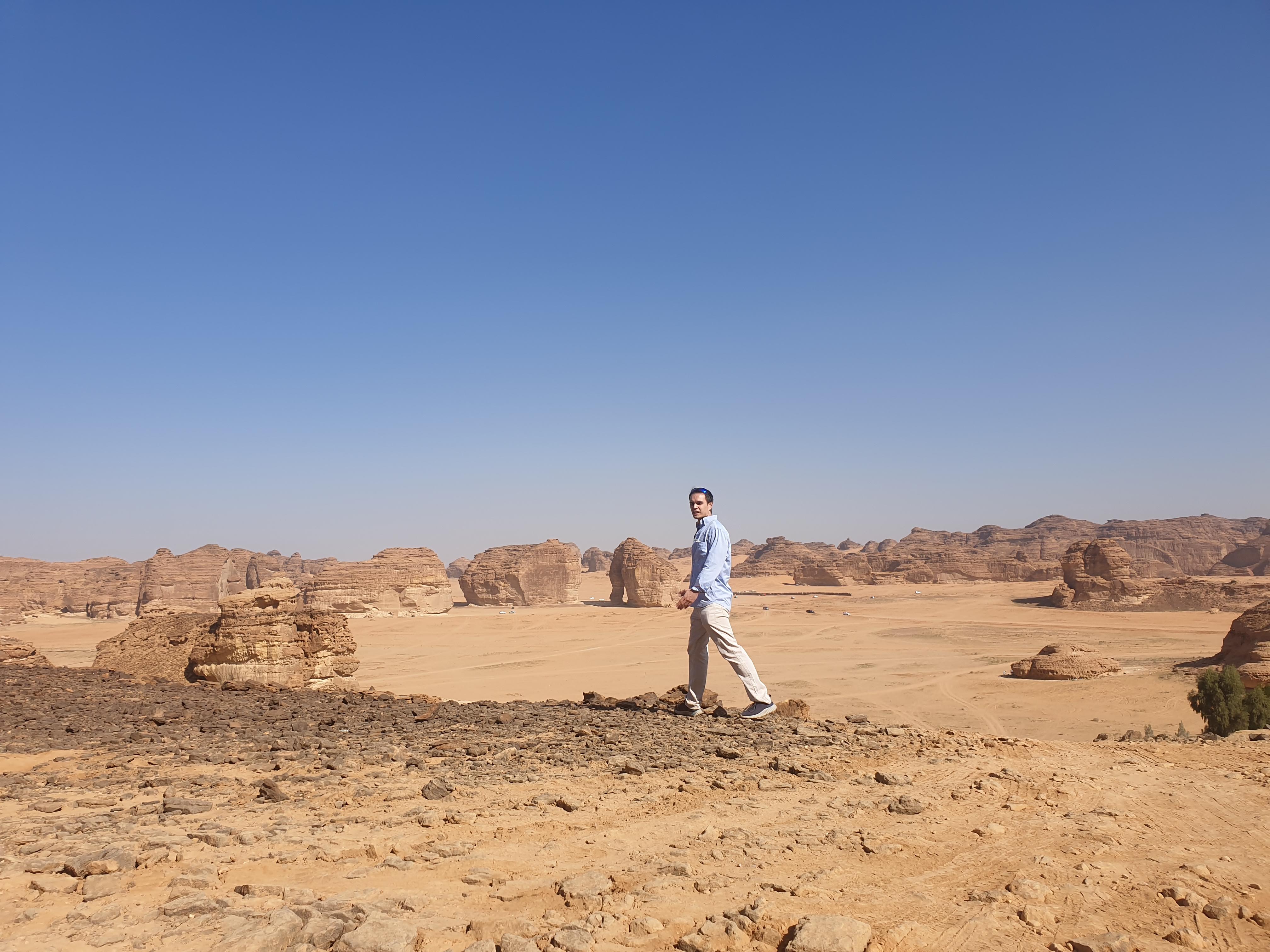
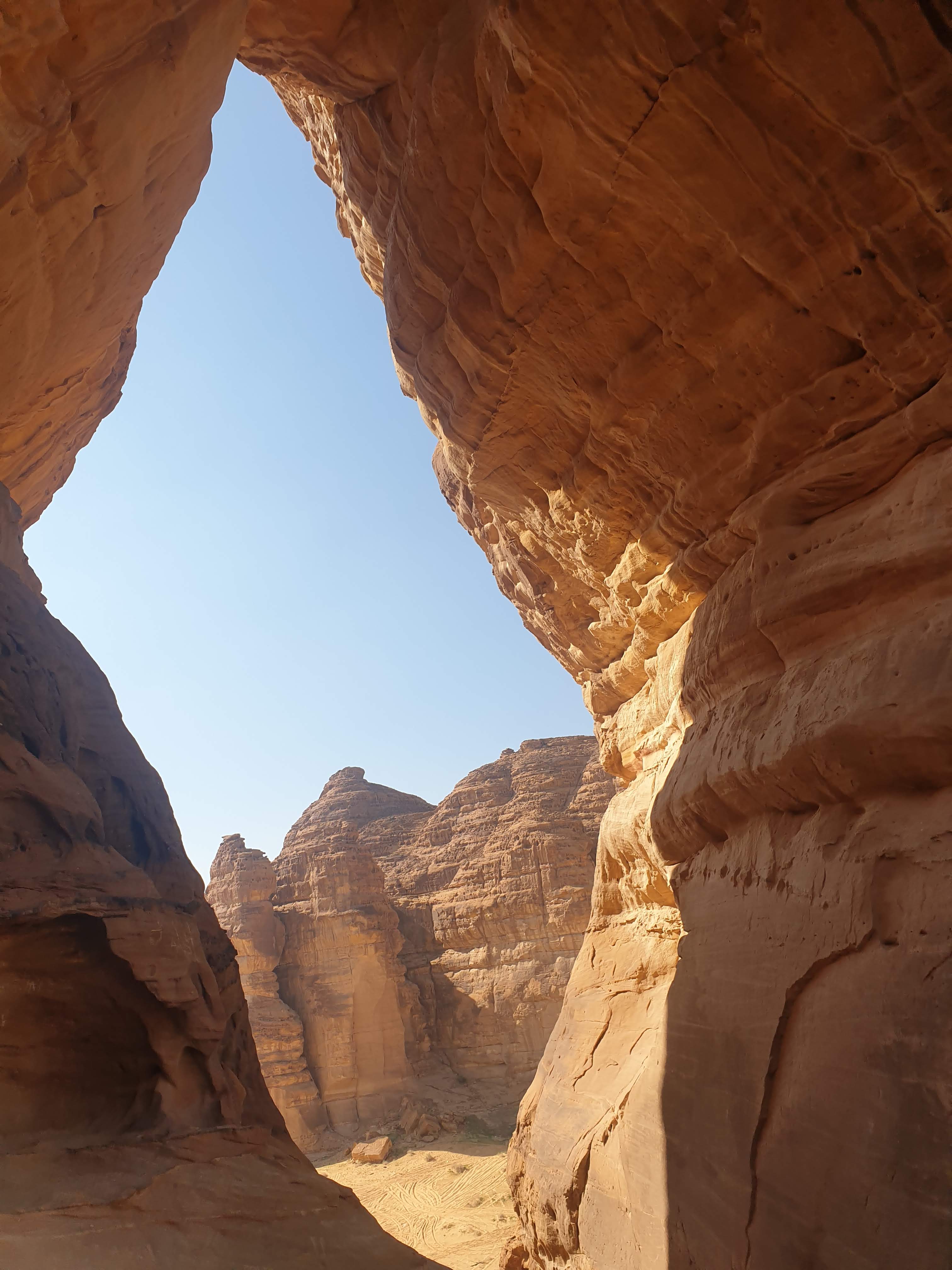
As we approached Al Ula, we passed several Orange stands and decided to help the local economy. We ended up buying 3 whole cases of oranges, one of them being Kumquats. They were locally grown in the surrounding Oasis territory and were delicious! The locals gave us several oranges to try on the spot and we couldn’t resist-fresh, oasis-grown oranges; a welcome surprise for any desert traveler. After strategically placing the foam orange cartons in the back seat, we continued on the path toward Al Ula. The limestone formations became more abstract and glancing at the GPS, I realized why. The names of the attractions include: elephant rock, four fingers rock, vase rock and several others.












Al Ula
For those who are as unfamiliar with the region’s history as I was before this trip, Al Ula was a crucial stop along the incense or spice route that stretched all the way from Ethiopia, Egypt, Israel, Jordan, Saudi Arabia, down towards Yemen. The spectacular landscape of the area has been created by the combined forces of nature and of man. Because of the abundance of water, humanity valued Al Ula as an area fit for a kingdom; hence the plethora of history in and around the area. Consequently, wave upon wave of civilizations have left their mark in this fertile Valley of the Villages.
The lodging options at Al-Ula are quite pricey so I suggest booking far in advance of your trip and using services such as Air B&B or Agoda to ensure quality stays. People are extremely accommodating, sociable and want to help, even if your Arabic is limited. Al-Ula tours can be booked at Experience Al-Ula‘s website, and at their Visitor’s Center office located near the south gate entrance at Winter Park. The park has a Burger King, Dunkin’ Doughnuts, Shrimp Ships, and several other scrumptious, locally owned food stands. It’s a well situated park framed by the limestone rocks that hint at the historical sites in the distance. The first tour we decided to take was that of the Lion’s tomb, the Dadandian caves and Jabal Ikmah, the library that houses many inscriptions of over 2,000 years ago.
Saudi Arabia has restricted tourism solely to this company to preserve the World Heritage Sites, but there are many exciting and awe-inspiring excursions from which to choose. The link above opens to an easily navigable website. An Abaya is also optional as there were many tourists from various countries walking about without one. Be mindful of the traditions and customs of Saudi Arabia however, and always remember that you are their guest.
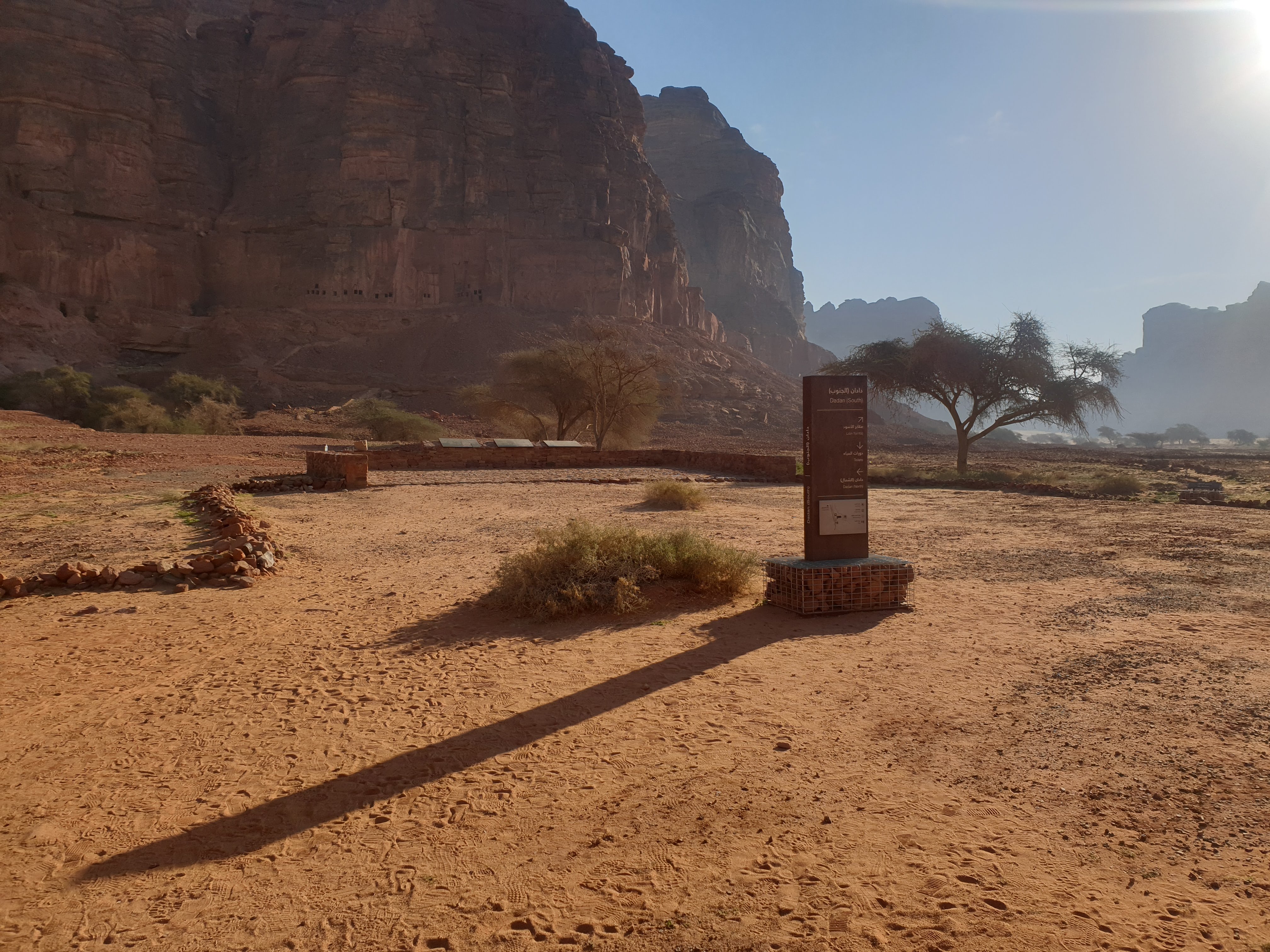
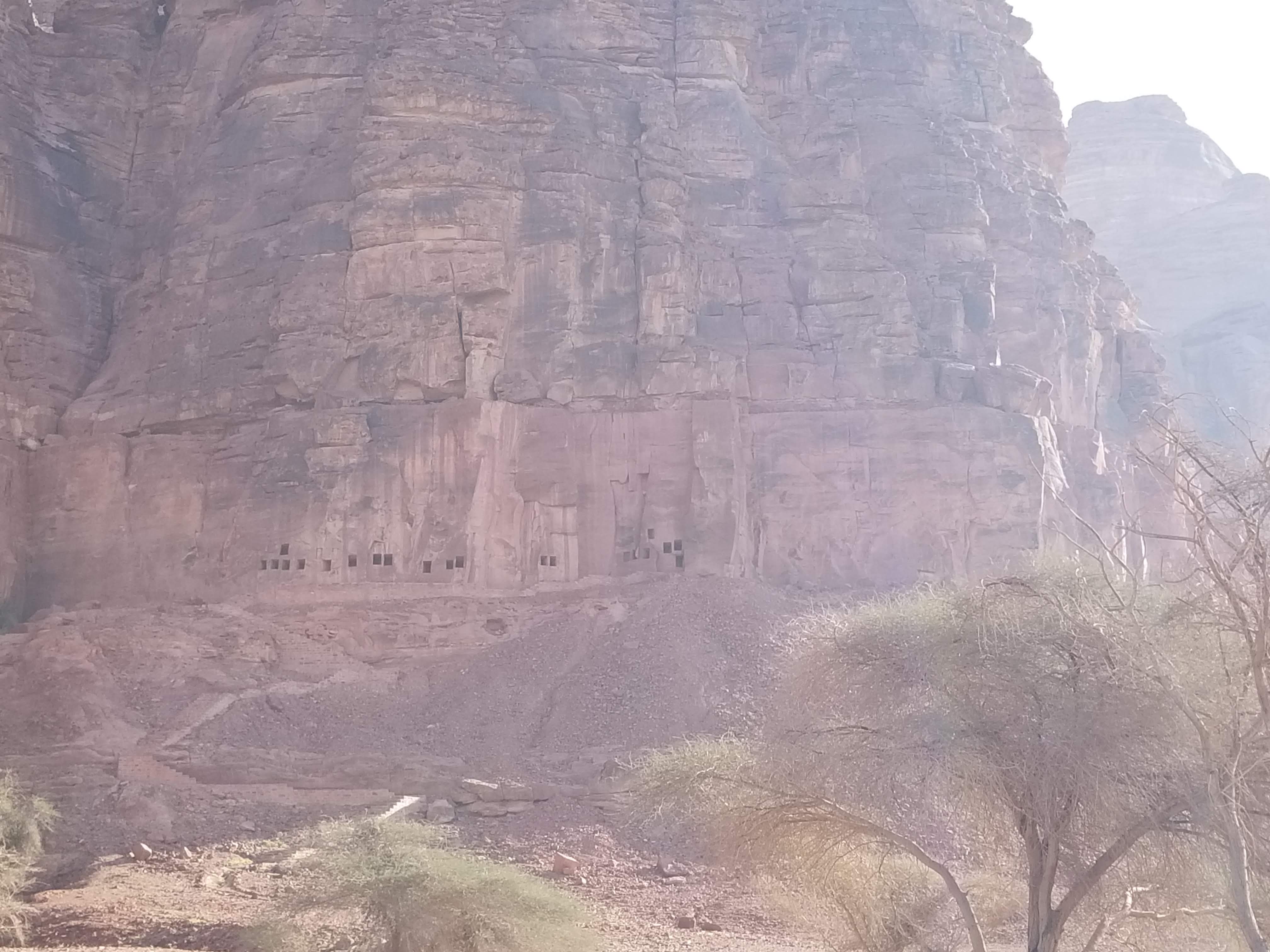
For our first full day in Al Ula, we decided to explore Dadandian tombs (including the infamous Lion’s tomb), the petroglyphs, hieroglyphs and the majestic rock formations in the greater Al Ula vicinity. There were several on the list, but Elephant rock and vase rock were highlighted most frequently so we went to those first. There are hundreds of tombs and most tour guides and archeologists agree that less than 5% of the historical sites have been discovered. The most noticeable tombs were cut into the rock face south of the Dadan historical site, a burial location that likely reflected the social position of the deceased. The grandeur of the Lion’s Tombs for instance probably reflected the the social status of the entombed.
Here’s a timeline of the various civilizations that traversed these lands to help compartmentalize each society.
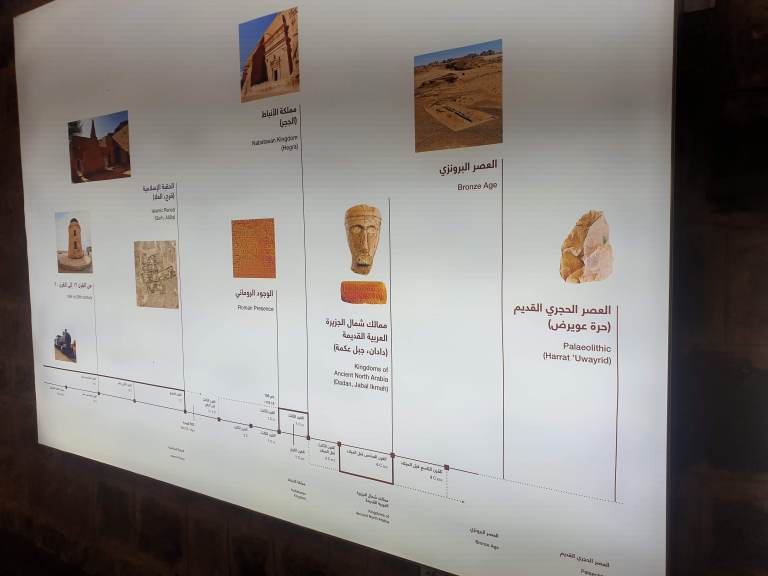
Dadan and its people were located in a fertile and dynamic area of the incense trade routes. The prosperity of Dadan was largely dependent on the practice of intensive agriculture and irrigation, and trade in the key commodities of frankincense, myrrh and spices. The Lihyanites, based in Dadan, played a key role in the movement of these goods across Arabia.




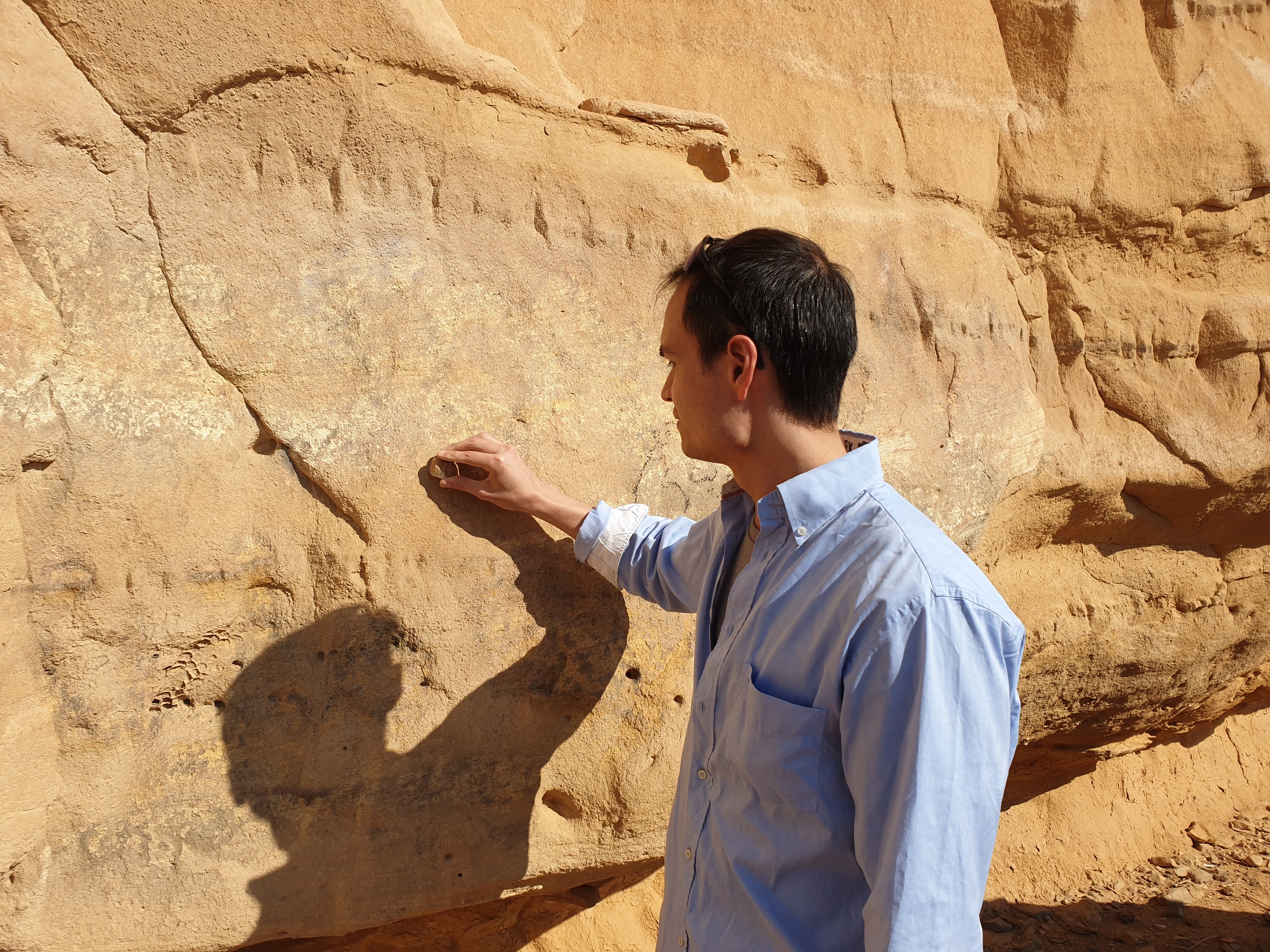
Unfortunately for us, the biking, and sunrise excursions were fully booked throughout the entire week. The tour around the Hegra circle was also fully booked and we had to extend our stay one extra day to ensure that we saw the main attraction: Mada’ain Saleh. There’s a lot of history within Al Ula. From the Bronze age, the Lihyanites (or Dadanites), the Nabataeans and Romans up until the Muslim Era, etchings on the rocks throughout the town make for new discoveries and conversation as you hike around the area. We decided on a sunset hike and our tour guides Rawa and Abdulrahman skillfully drove us through Locust storms and soft sand in their 4-by-4. There was no way our little Toyota rental was making it through that terrain so we were quite thankful that they drove us to the site of our hike. As it turns out, approximately half of the 2 hour hike wound through the seasonal river beds that fill up when it rains, and we hiked about and swam through several ponds of cool rain water, all the while learning about the 2,000+ year old inscriptions that surrounded us on the basaltic and limestone rocks. Due to the volcanic activity hundreds of years ago, there were copious basaltic and volcanic rocks. The symbols emblazoned on them depicted war scenes, mathematical computations and letters from the age of antiquity. It was a once-in-a-lifetime experience that was simultaneously educational and scenic. If you are interested in this type of activity, please visit Husak Adventures. Our tour guide, Rawa, recently graduated from UC-Davis and had a plethora of geological and historical facts to share with us about the surrounding ecosystem. This was a quality experience that I would recommend to anybody who’s willing to trek through some of the most beautiful nature this planet has to offer.

Posing, because why not? Where else will I find such serenity? 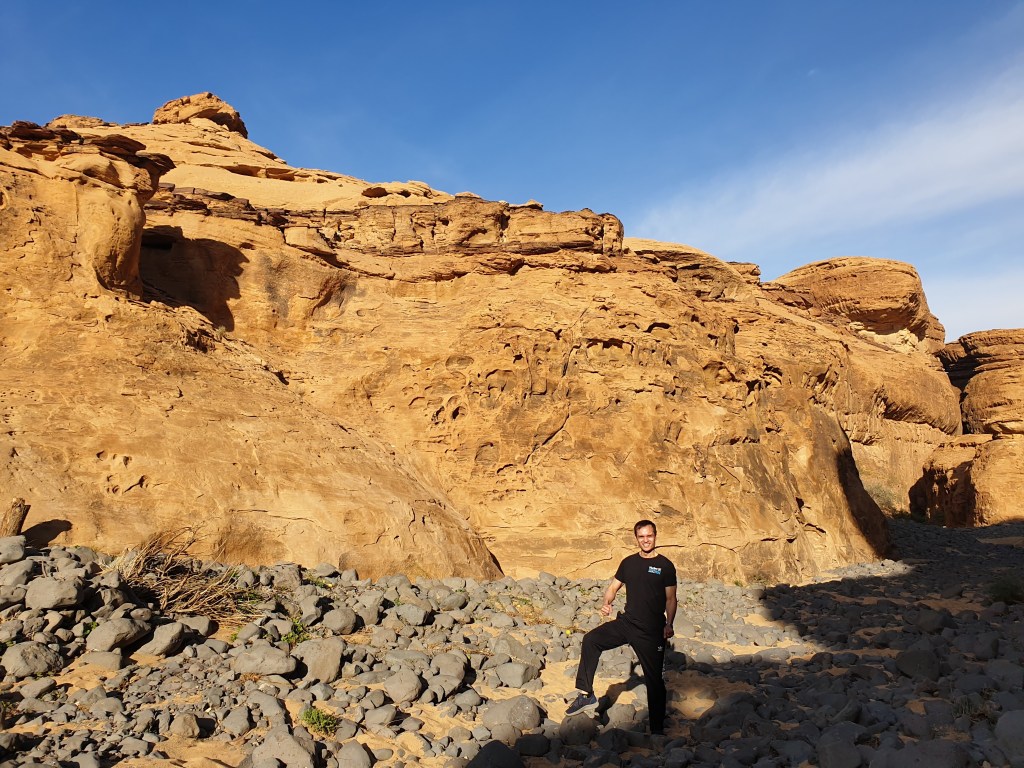
I like this pose better. Camera credit: Nicola Goosen. 🙂 
More inscriptions before my first plunge into the cold wadi water. 
The circle with a line above indicated a watering hole for the ancient civilizations that lived here many eons ago. 
Oxidation makes the limestone rocks look as though they are bleeding. 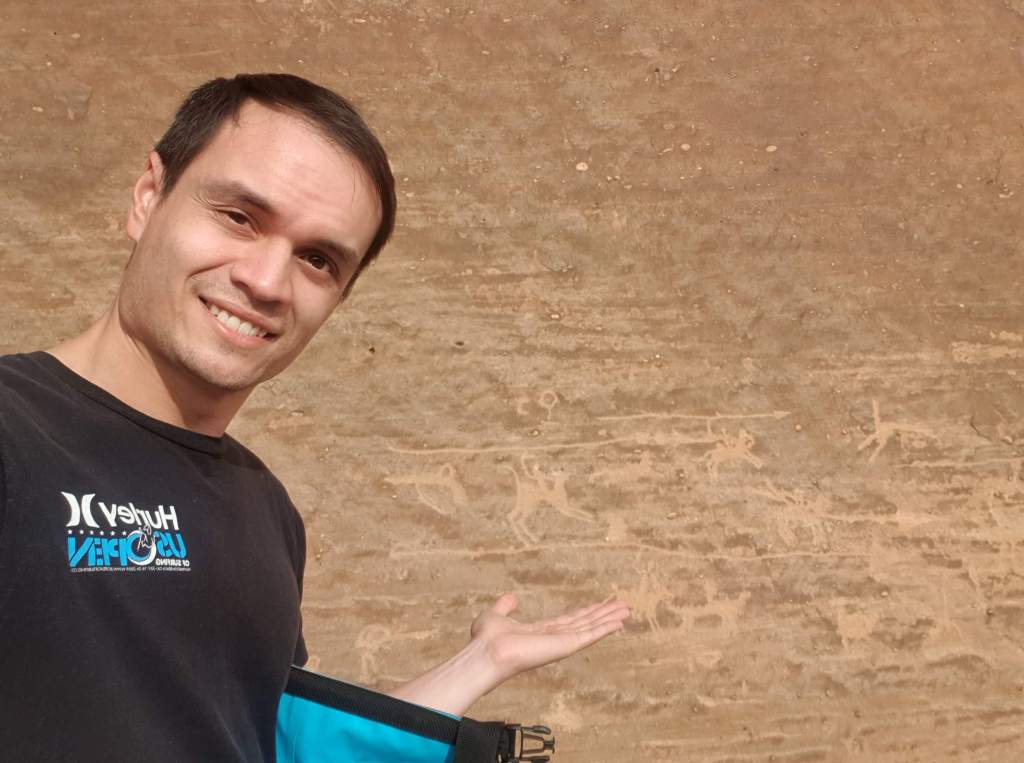
A war scene depicting the many battles between Dadandians and their conquerers. 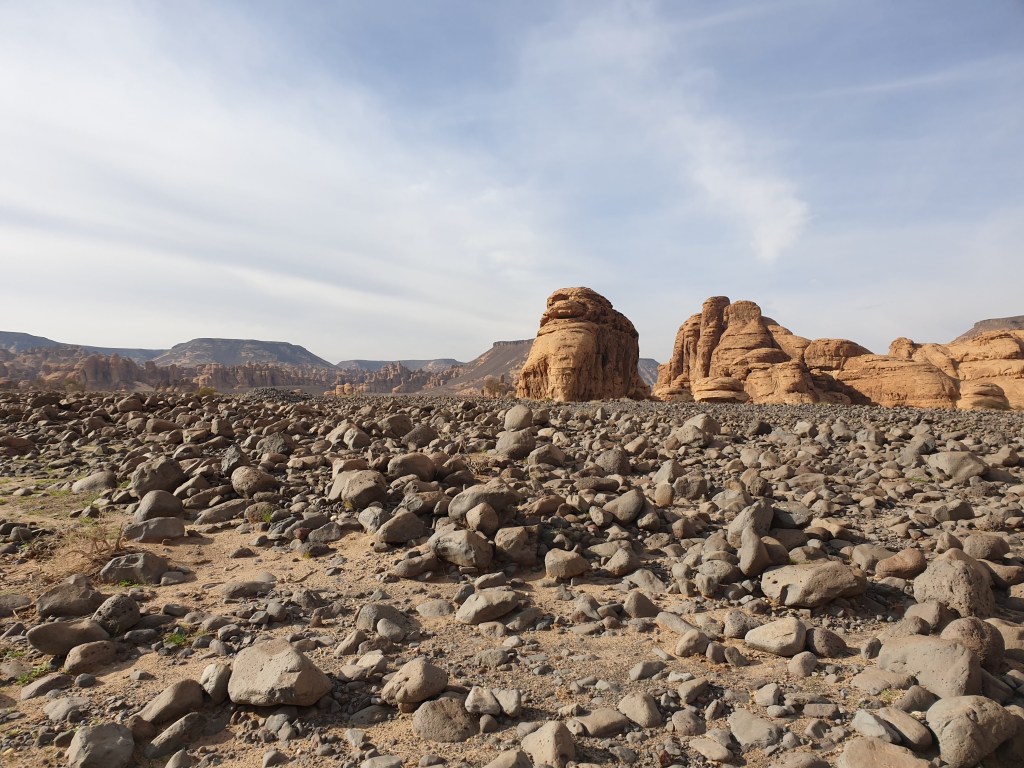
Basaltic rocks form the majority of what once was a river bed. 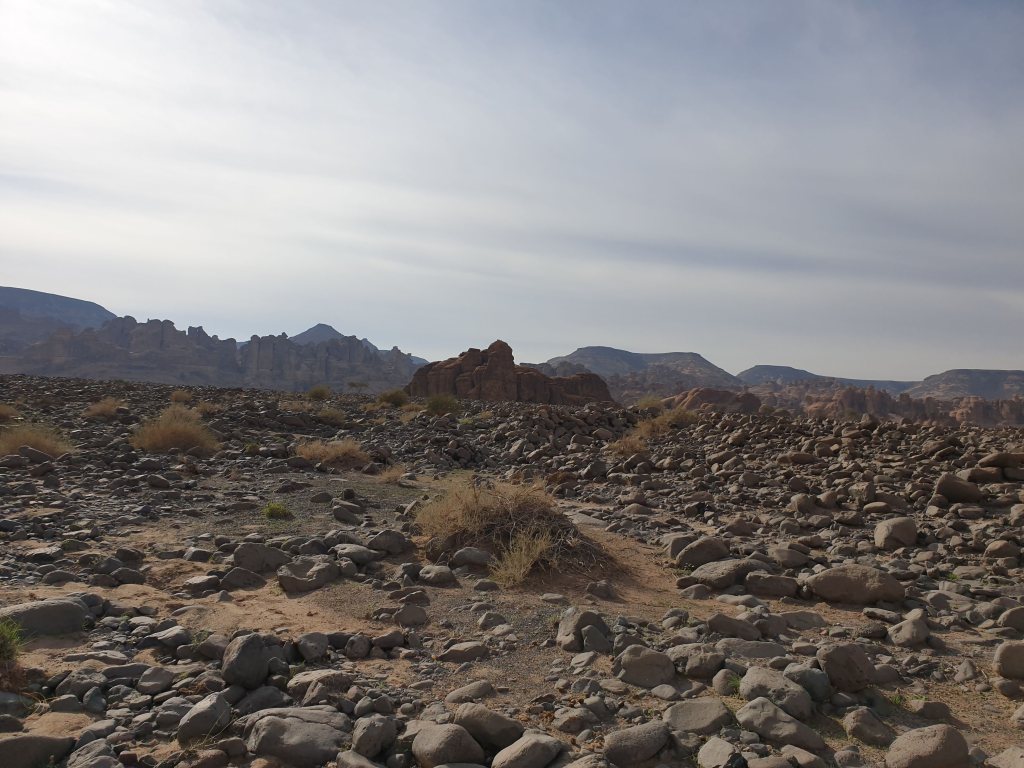
The river basin. 
Lush trees and greenery signify rich, nutritious soil and an abundance of water. 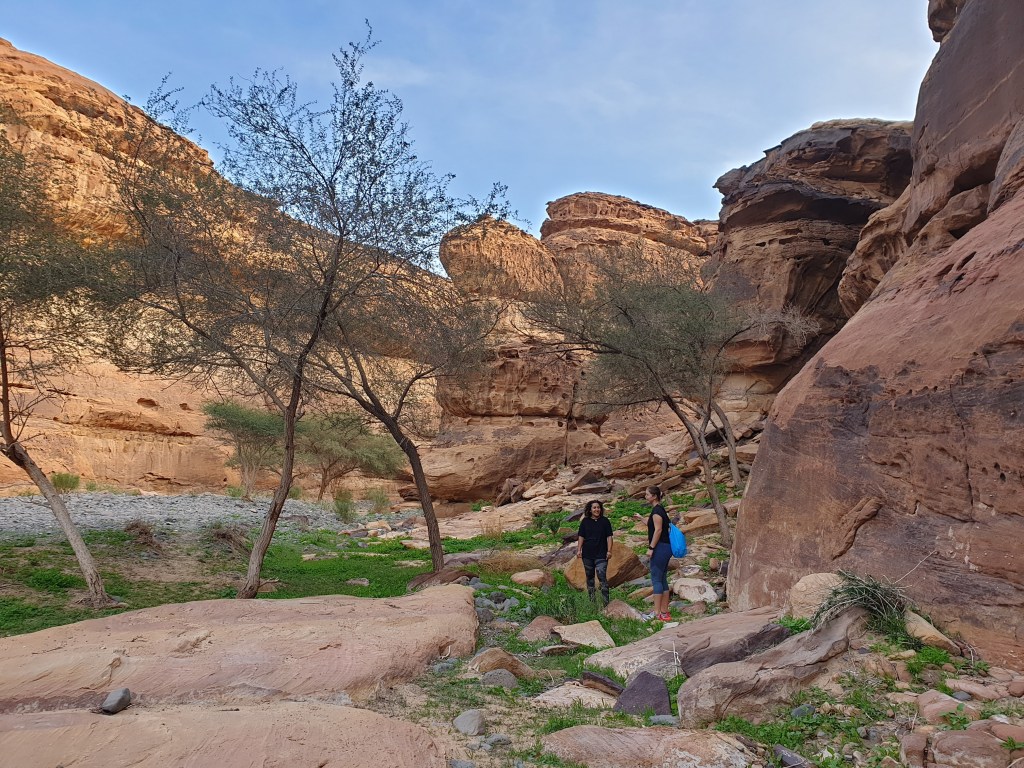
Nicola and Rawa (tour guide) tasting some wild-grown vegetable. 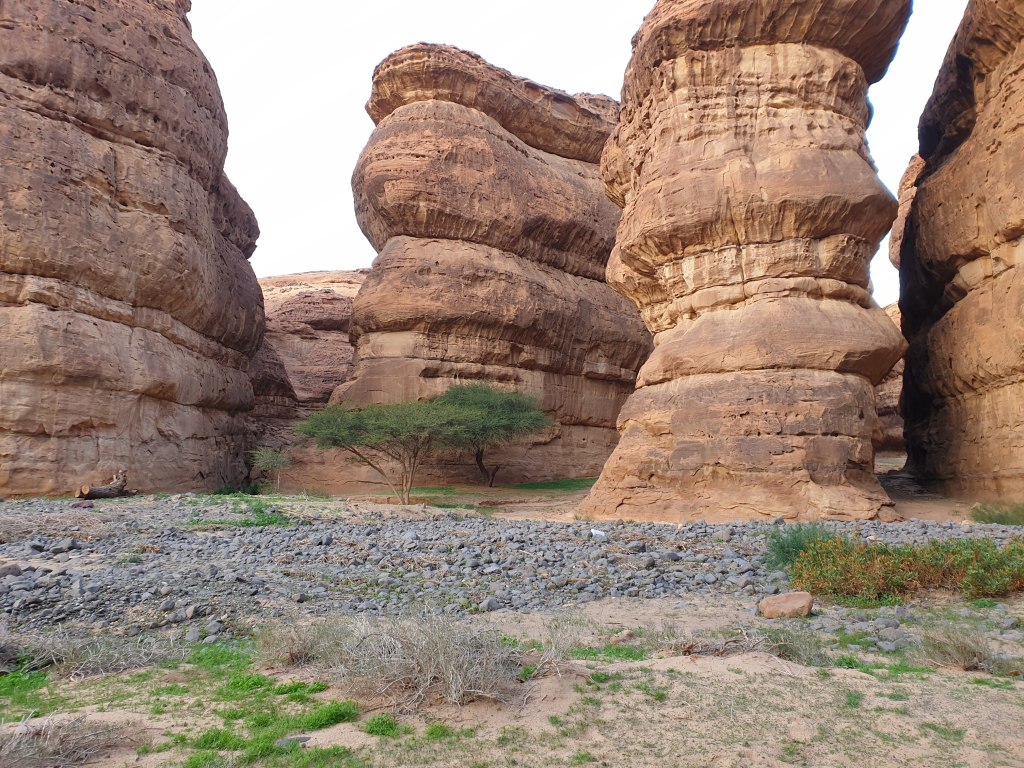
Perfection. 
More beautiful trees along the hiking trail. 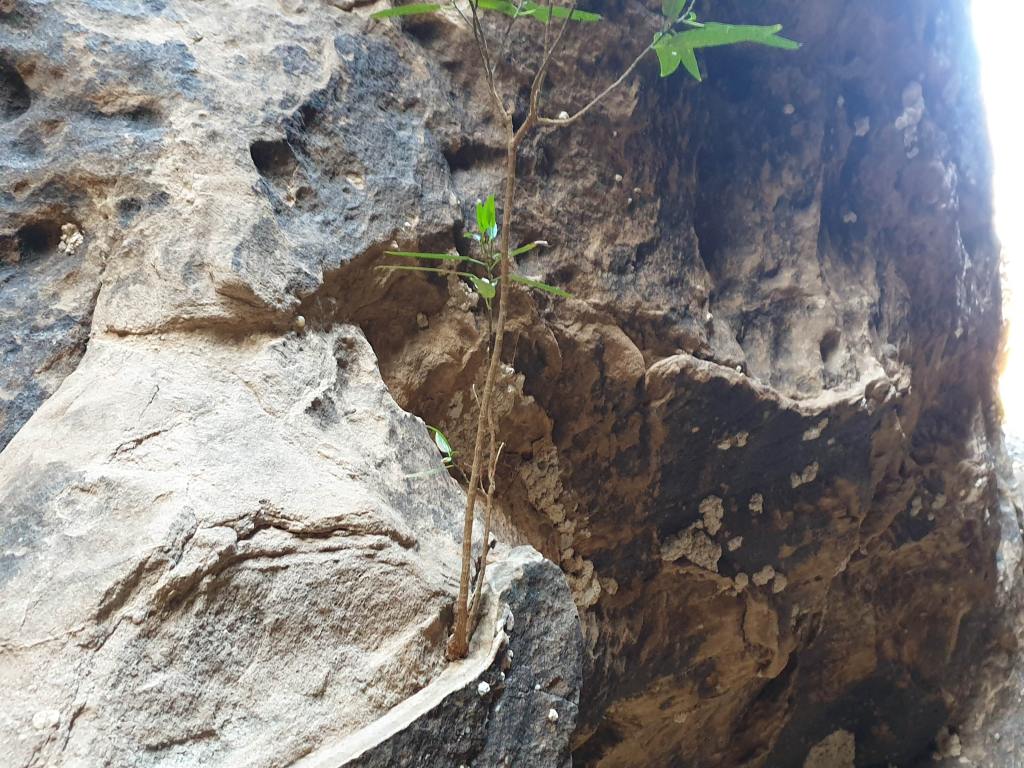
This tree grew out of a rock. Anything is possible. 
According to Rawa, the white growths are a result of the rocks attempts to rid themselves of water. Rocks sweat too. 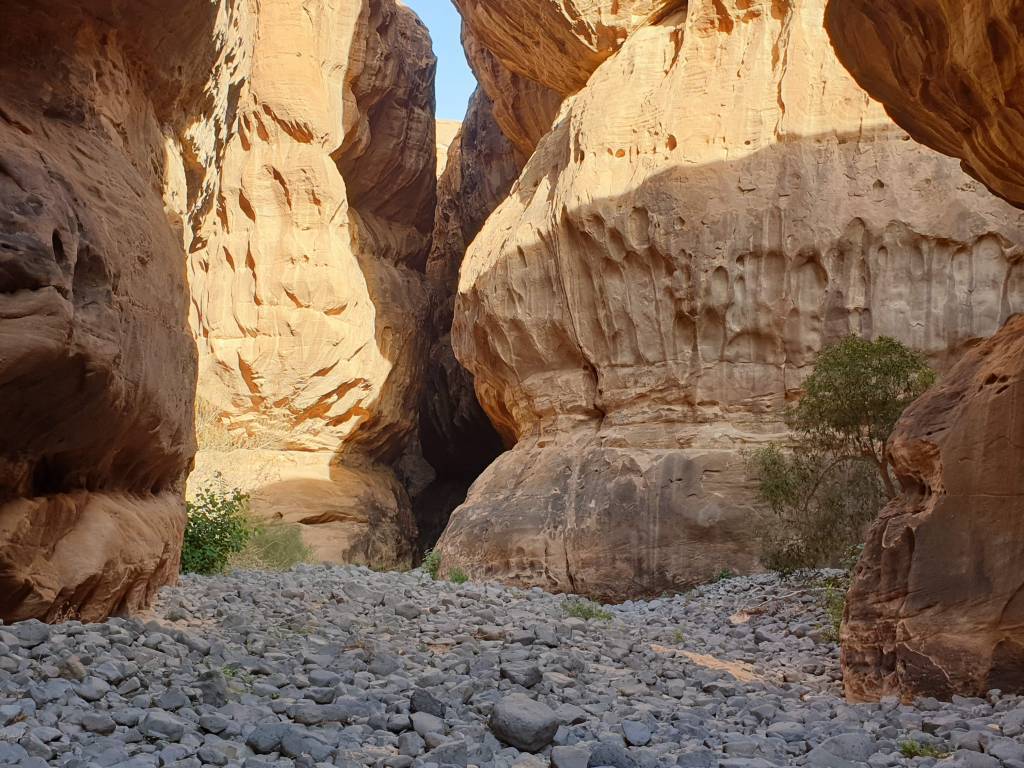
Every corner was begging for exploration, but we only had 3 hours. 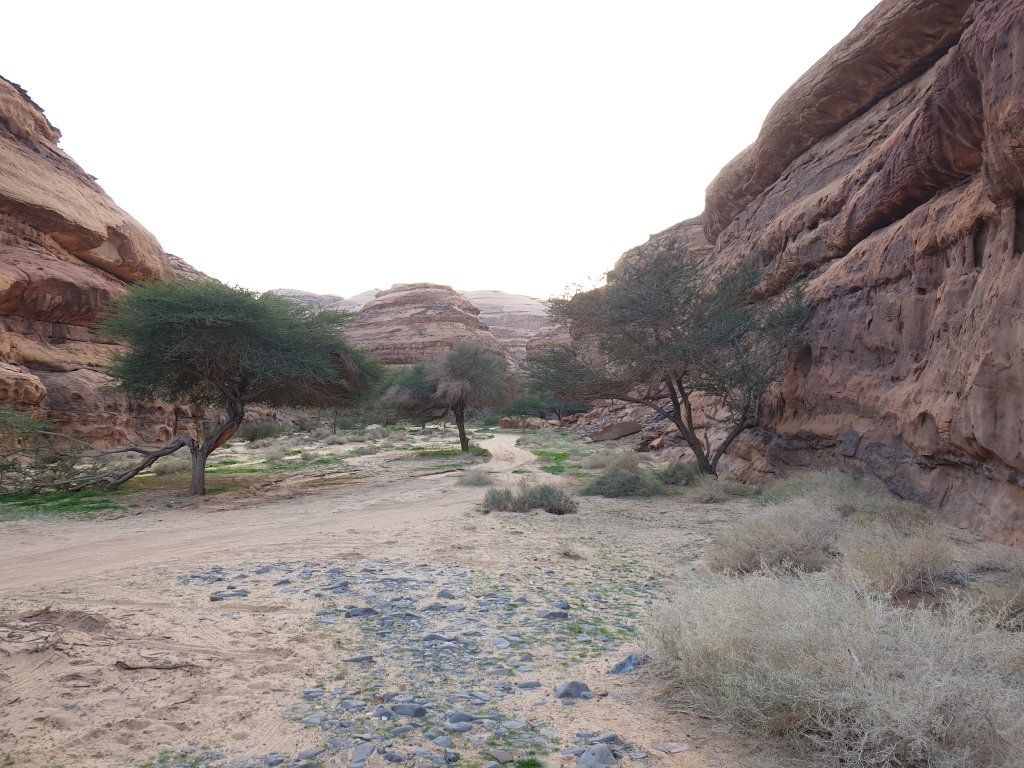
Beautiful! 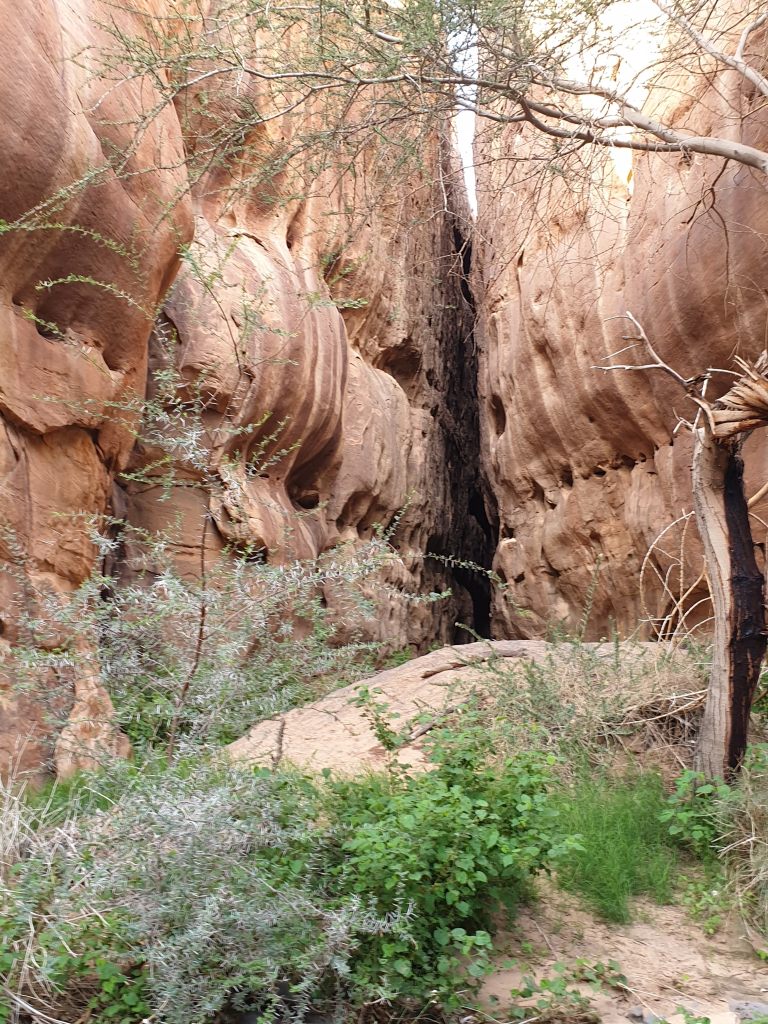
More foliage. 
Spiny needles evolved to help the trees in the river basin defend themselves against camels and other animals. 
Another sun ray, another shadow. 
Hieroglyphics from afar. 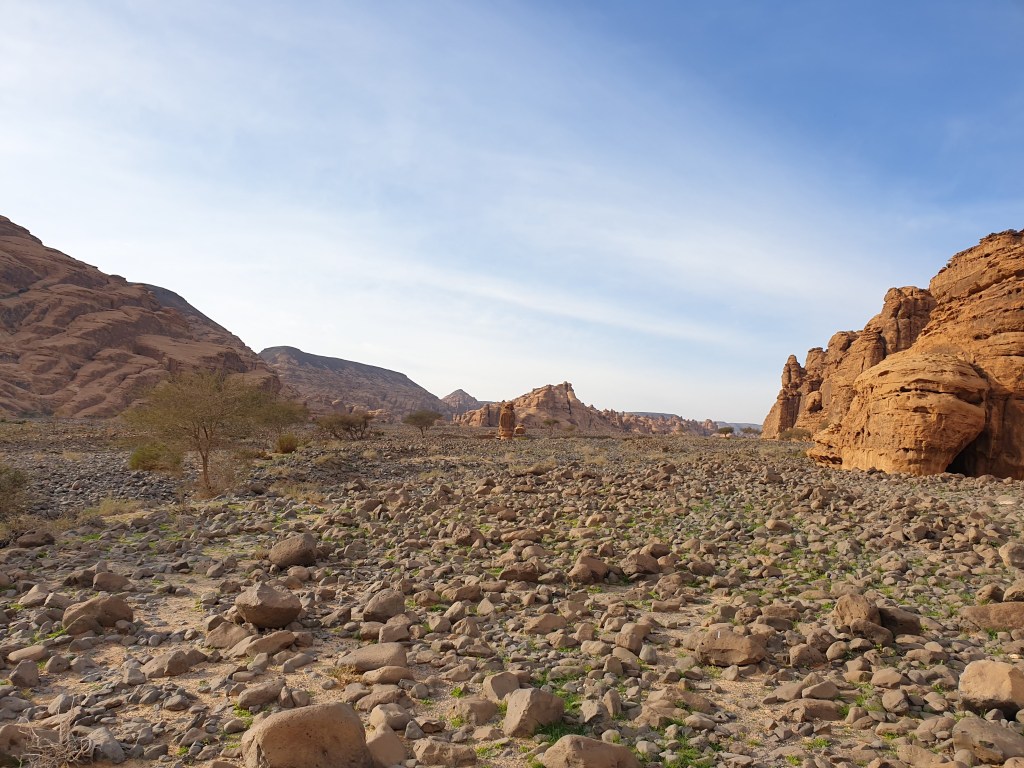
Majestic scenery. 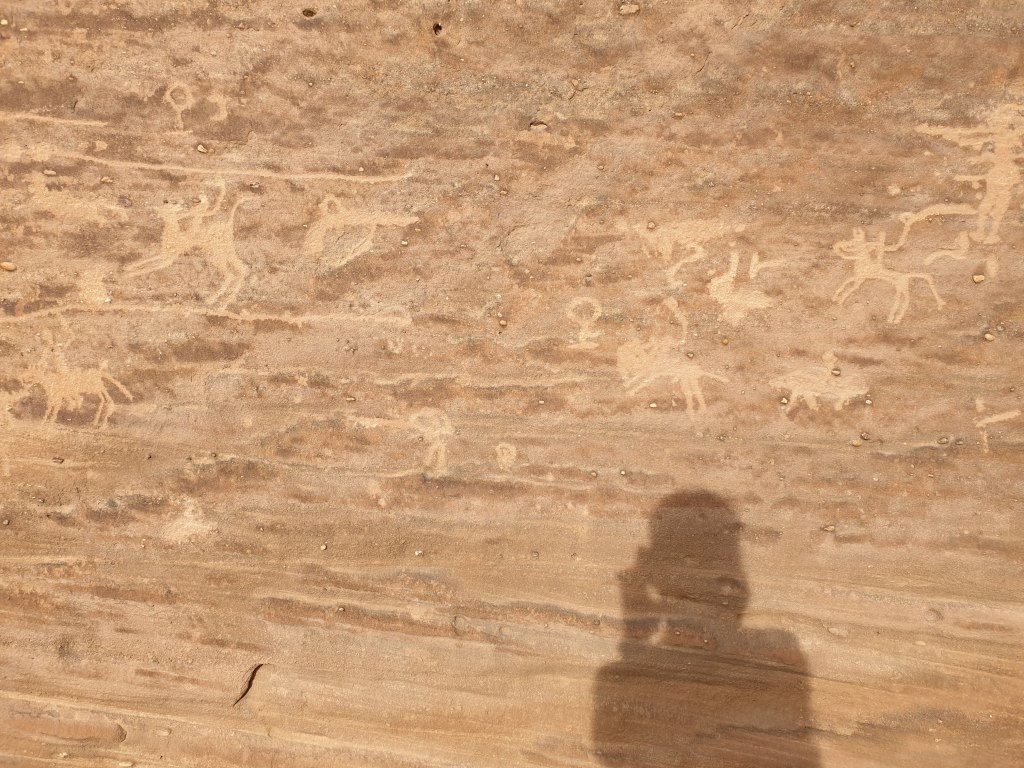
One of many war scenes from the ancient Lihyanites. 
Symbols from yester year. 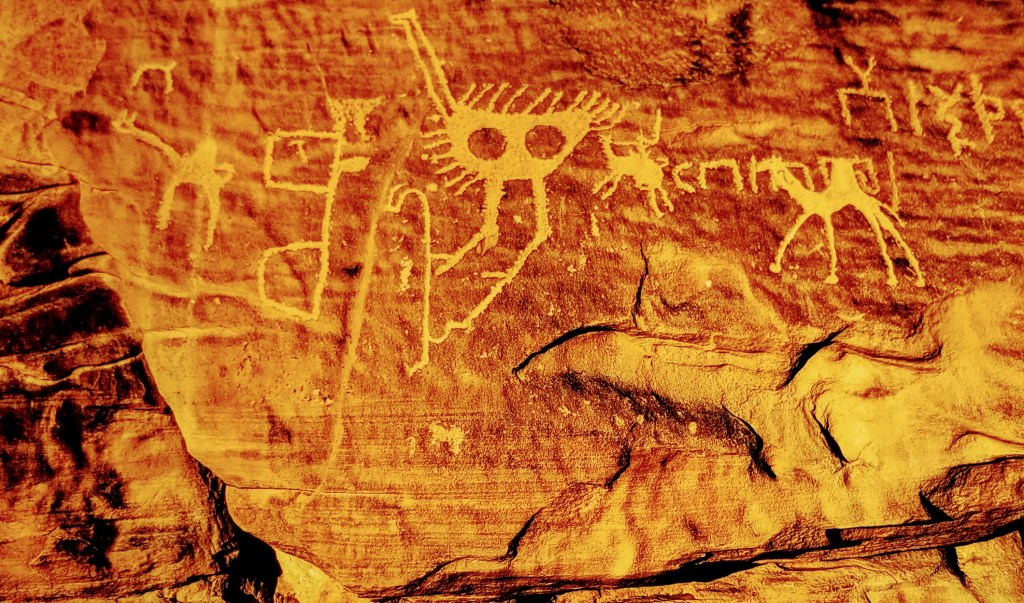
Ostriches roamed these lands thousands of years ago, and were documented by the ancient people who drew pictures of the animals they offered up to their Gods.

Inscriptions incised and carved into rock faces across AlUla are some of the most enduring reminders of the civilizations who lived in and visited A Ula more than two thousand years ago. The texts often record the names and occupations of their writers as well as the reasons for their visit to Al Ula: Religious pilgrimage and offerings are frequently mentioned. Old Town showcases the many connections between modern inhabitants and ancient civilizations who thrived in the valleys millennia ago. Situated among weathered sandstone cliffs, Al Ula has many secrets that will undoubtedly reveal themselves as scientists and explorers continue excavating this culturally rich part of Saudi Arabia.
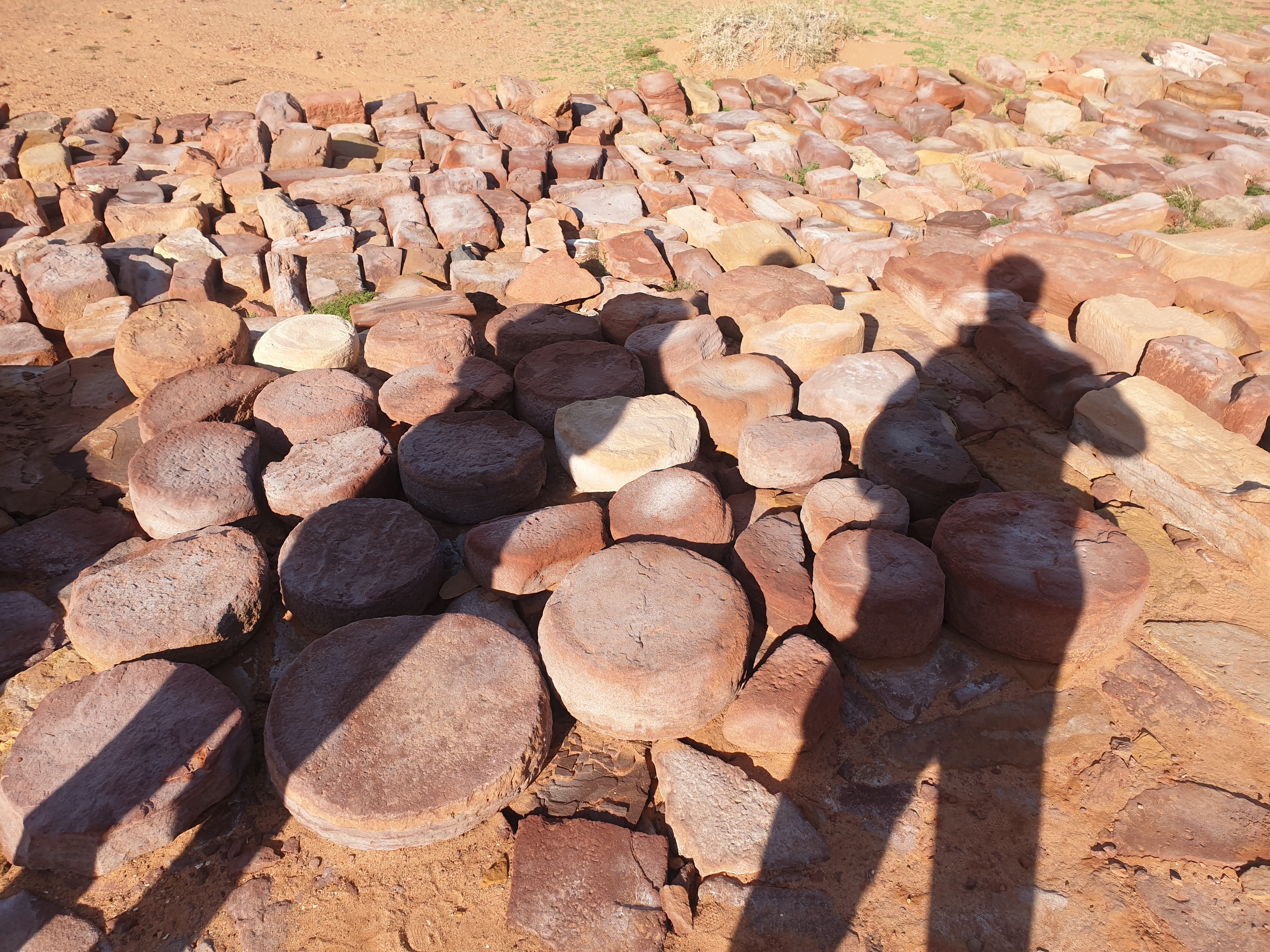
Below are some photographs of “Old Town” Al-Ula, where the Lihyanites made their dwellings. The Saudi government has plans to turn this millenia-old village into a bazaar to help bring excitement to the history surrounding this area.

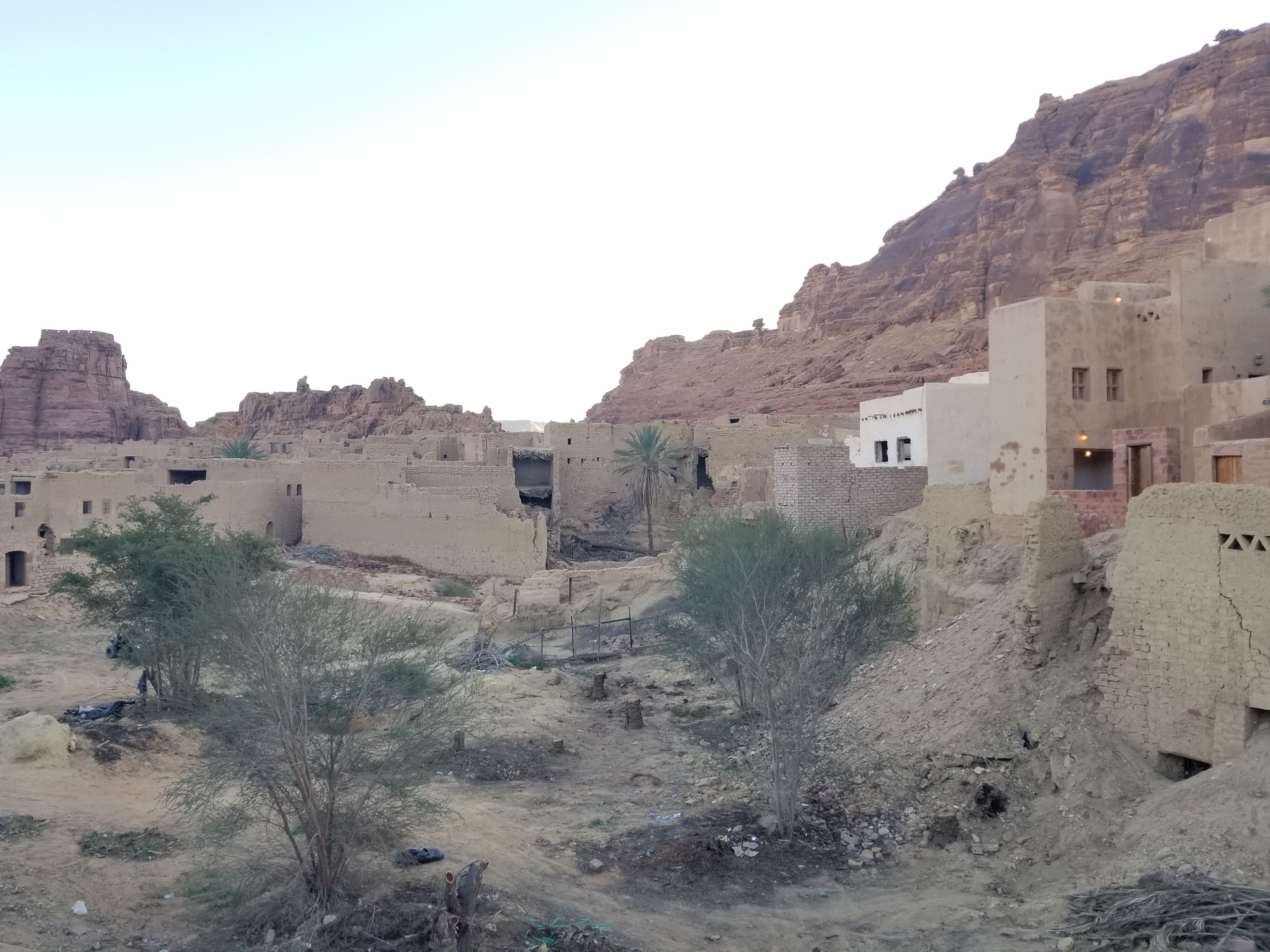
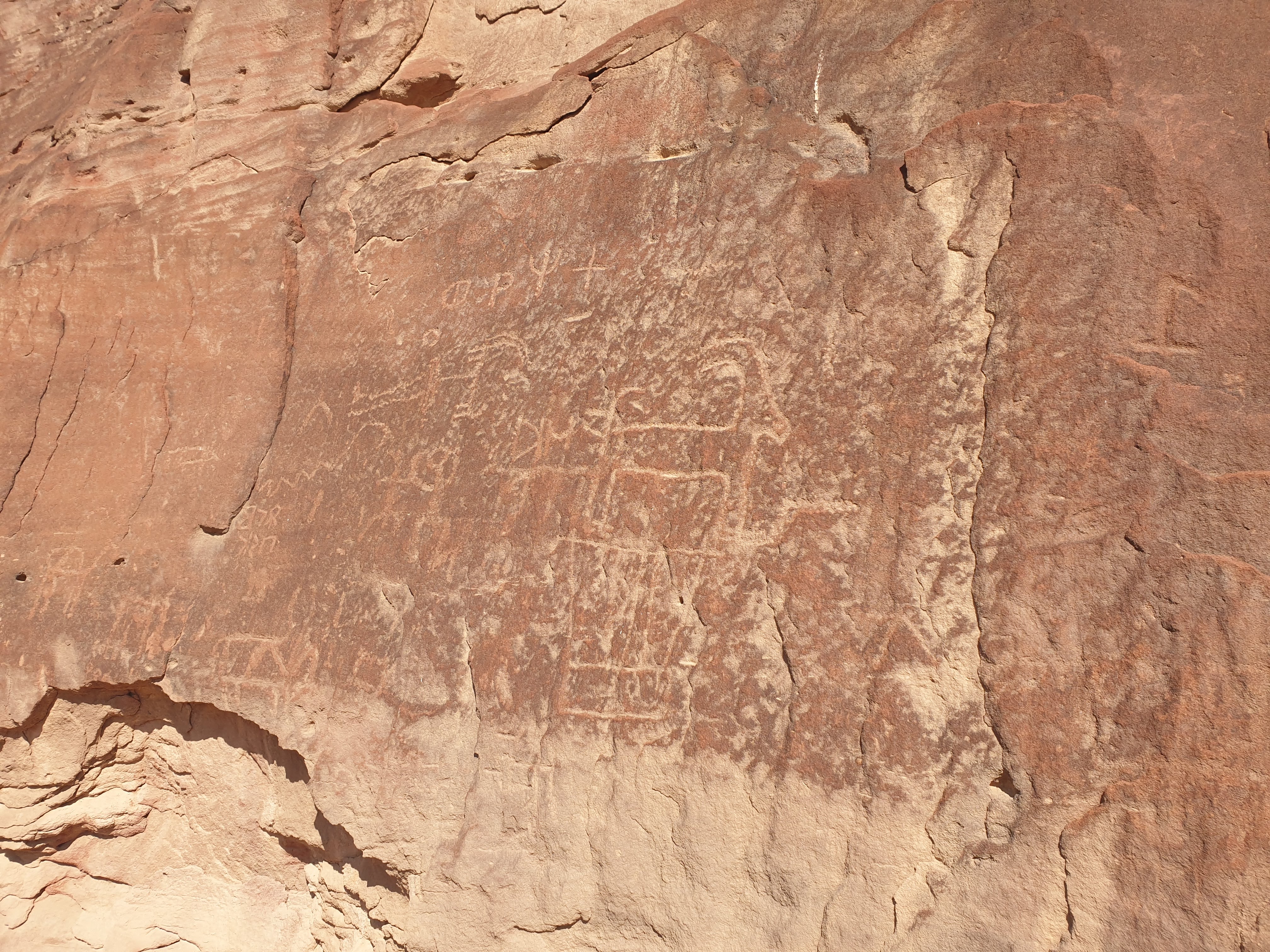
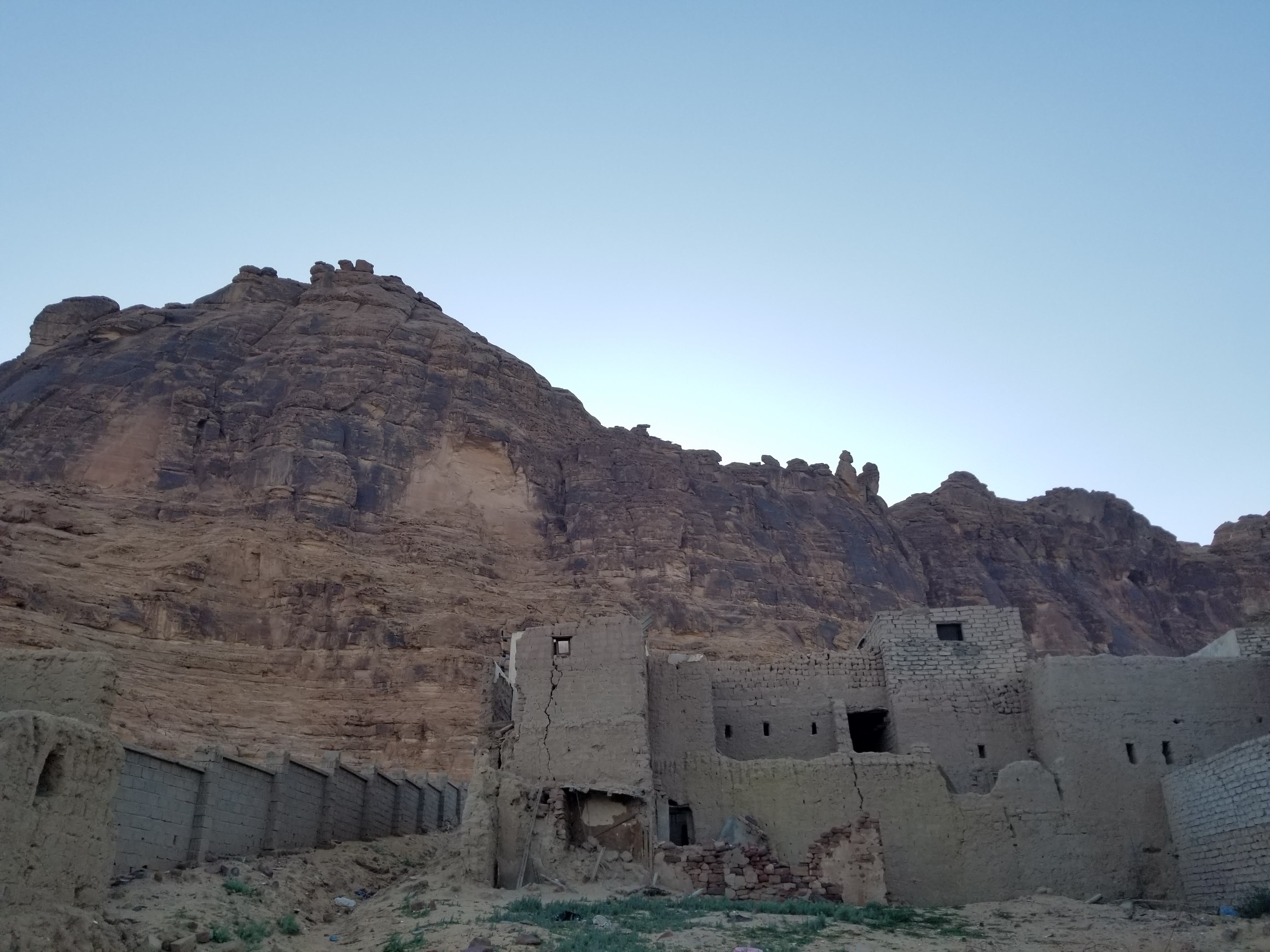

Moving forward, Lihyanite ceramics dating between the fifth and sixth centuries BCE have been found in the sandy hills of Tell al-Kathib, and contain artifacts such as incense holders, cooking tools and building methods. According to our tour guide, incense was as valuable as gold is today. It drove the economy and served as the fulcrum of a society’s successes and failures. The largest incense stands and figurines are currently on display in museums throughout France and Russia.

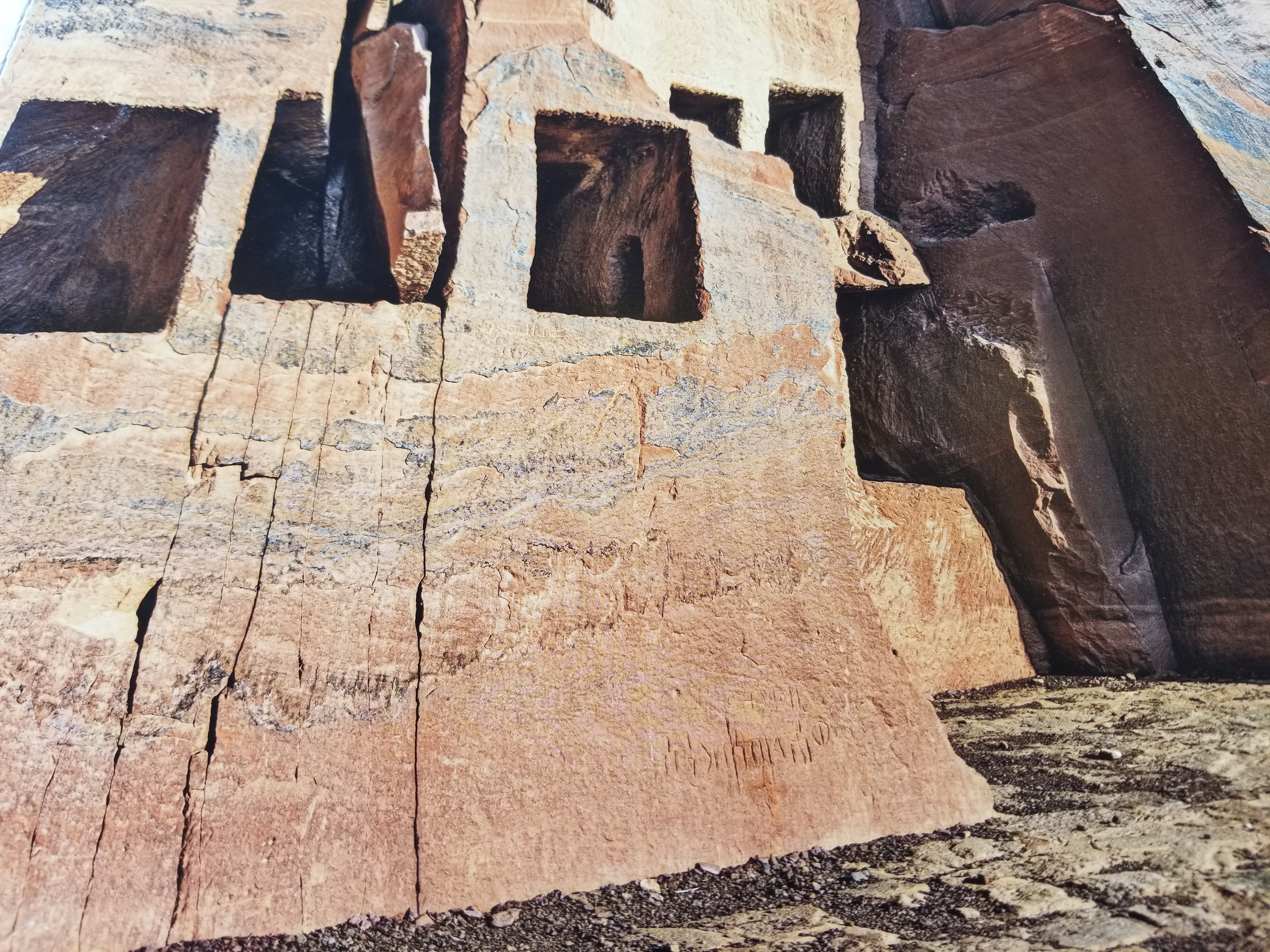
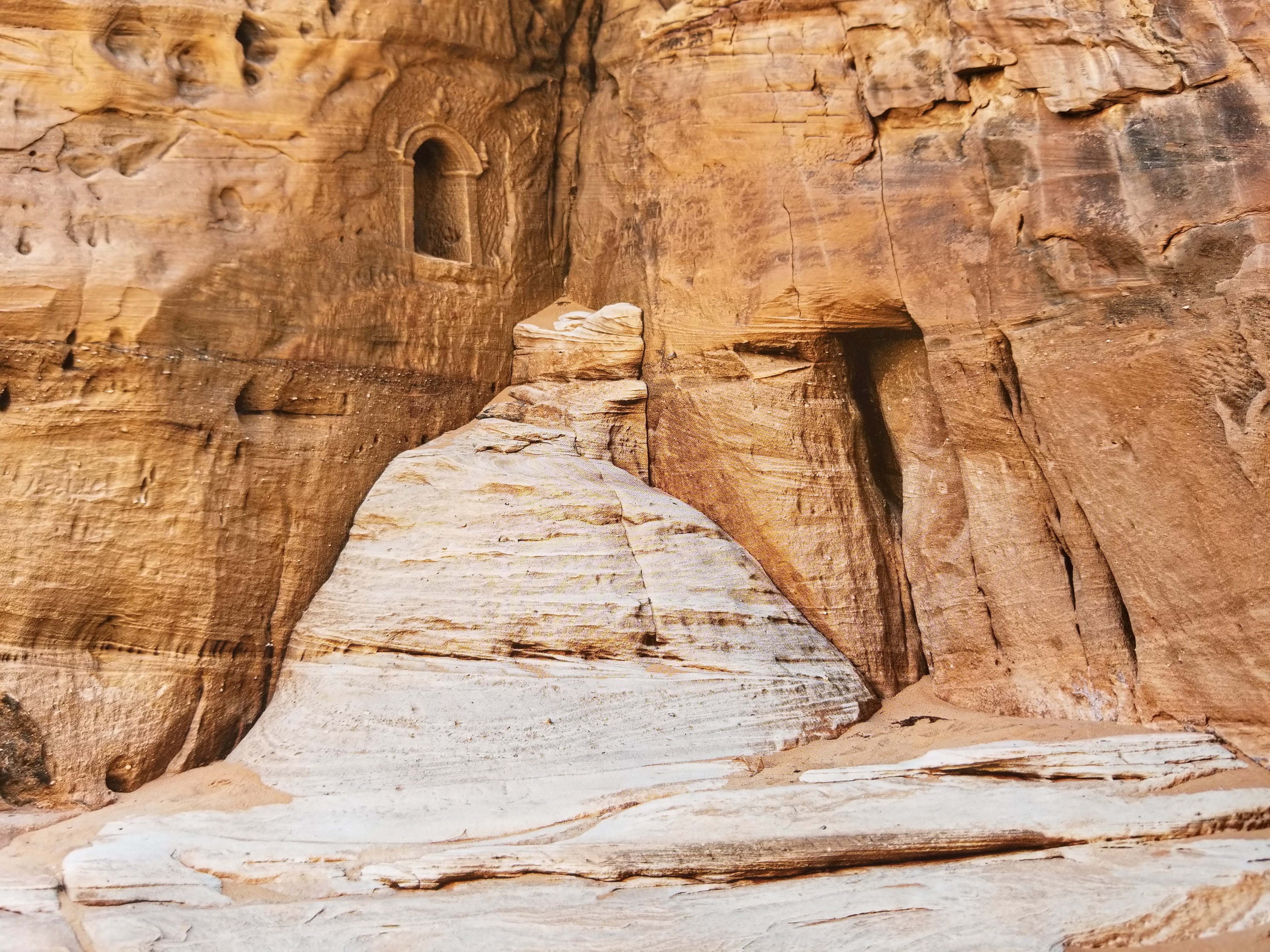

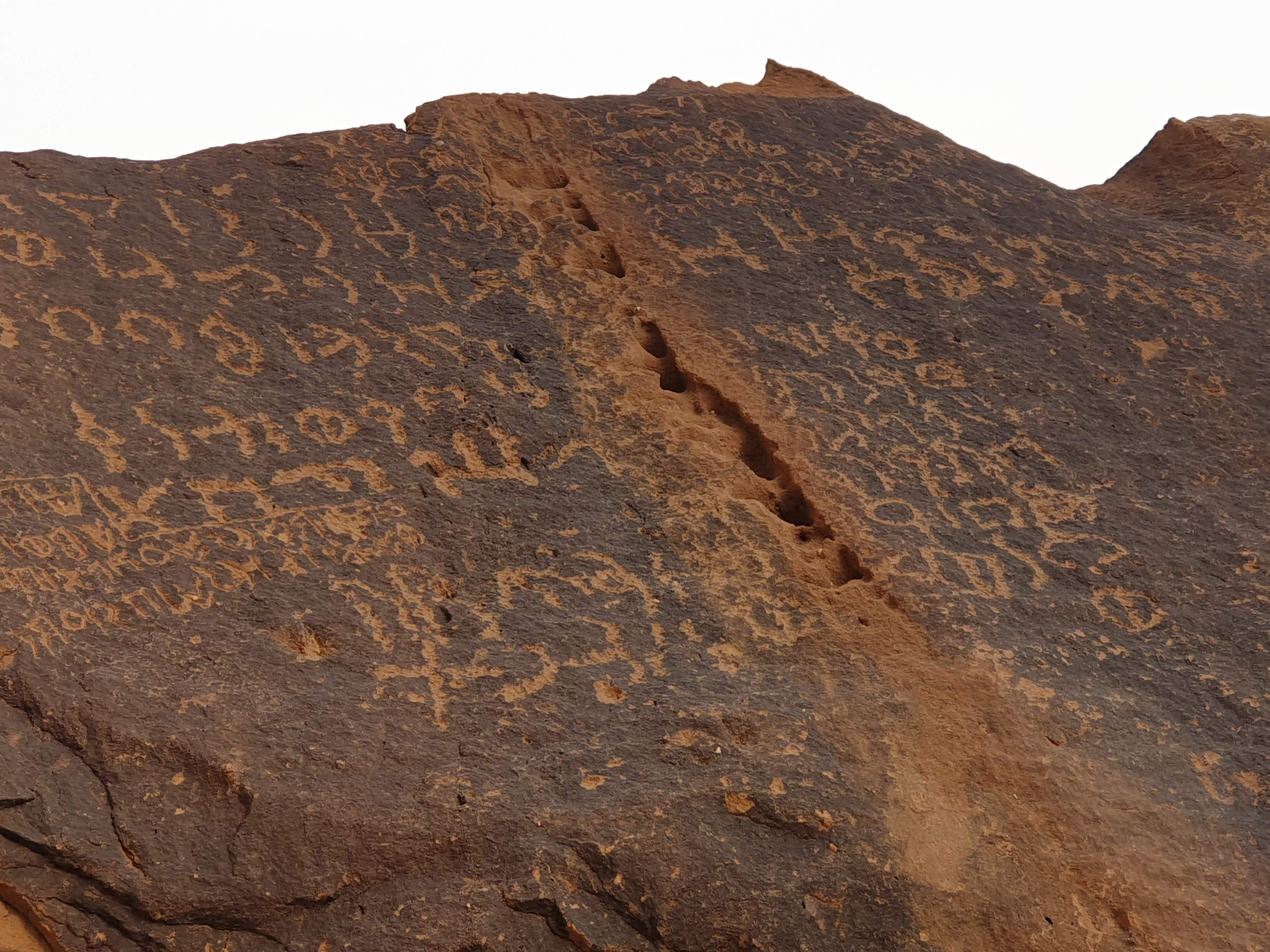


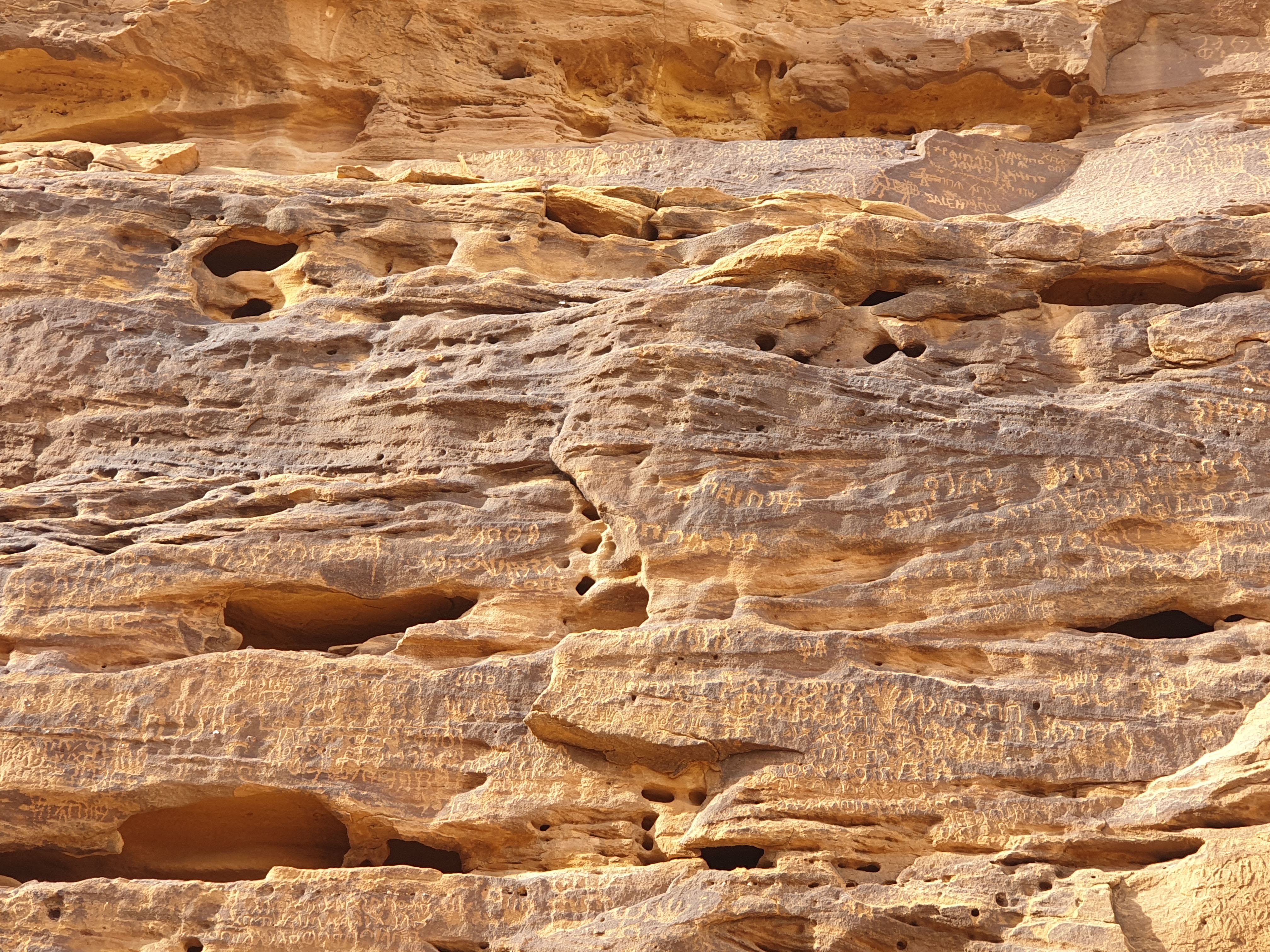

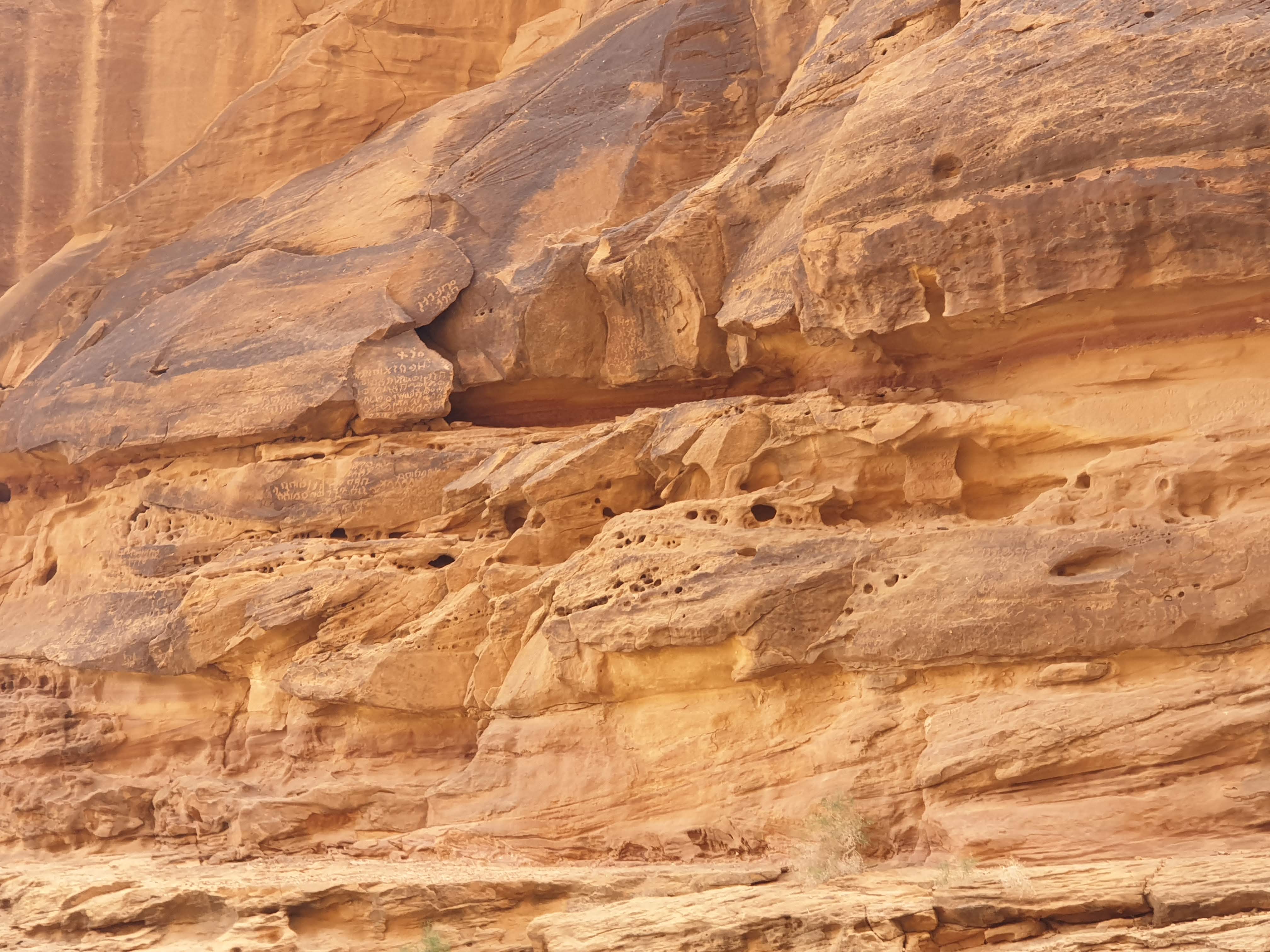
Our esteemed tour guide Rawa from the hike informed us that Saudi Arabia is focusing on tourism in the coming years and ramping up Al Ula as one of the premier travel destinations. There’s the Winter at Tantoura Festival that caters to an elite crowd to bring them artists such as Lionel Richie and Seal in a one-of-a-kind desert RV camping experience fit for kings. The price tag for this is quite steep and the first year of the festival was 2018. There are many other ways to enjoy Al Ula, but if the most recent GCC 2021 summit is any indication, Al Ula is a sound choice for making impressions.
The Nabataeans
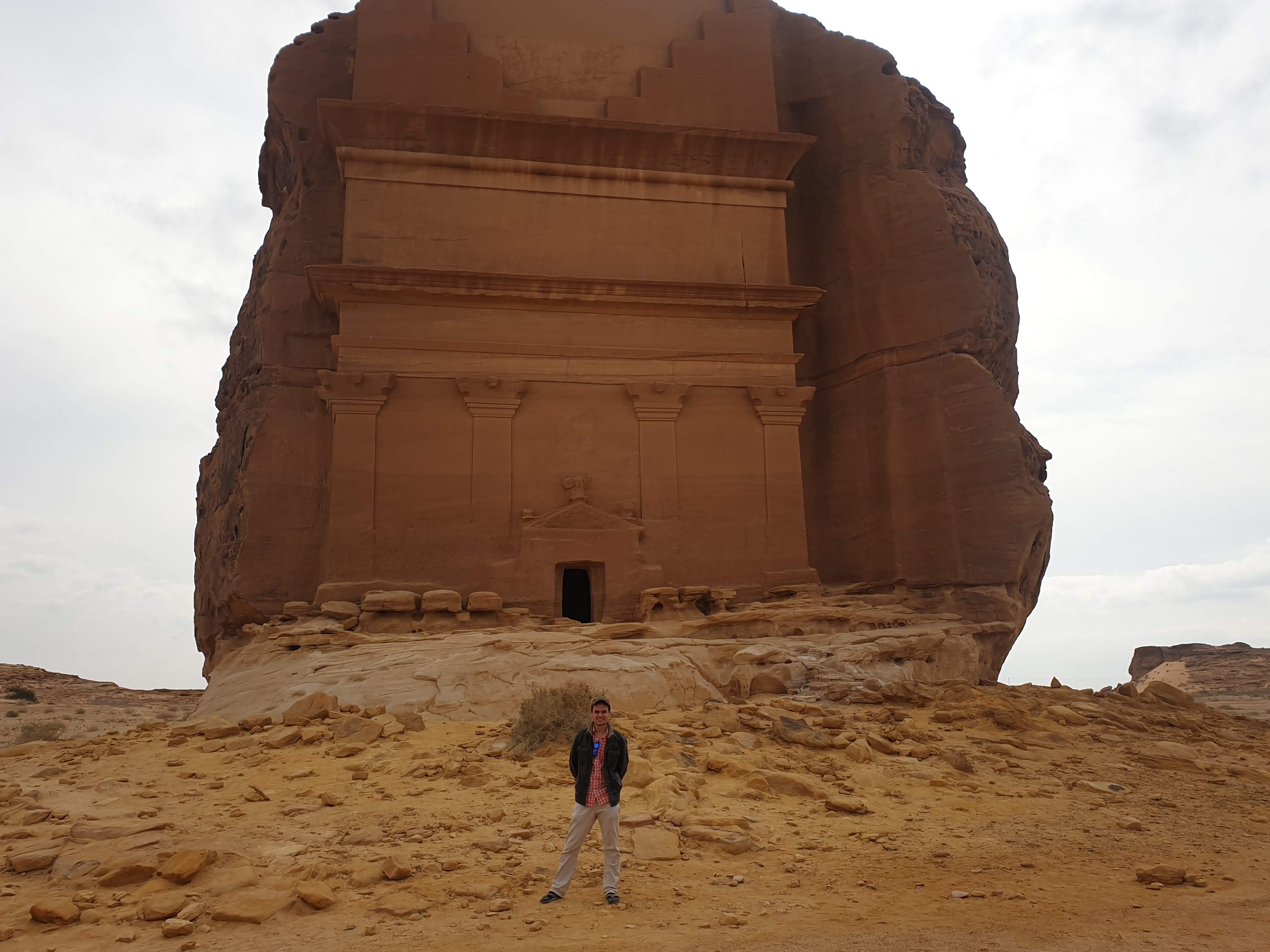
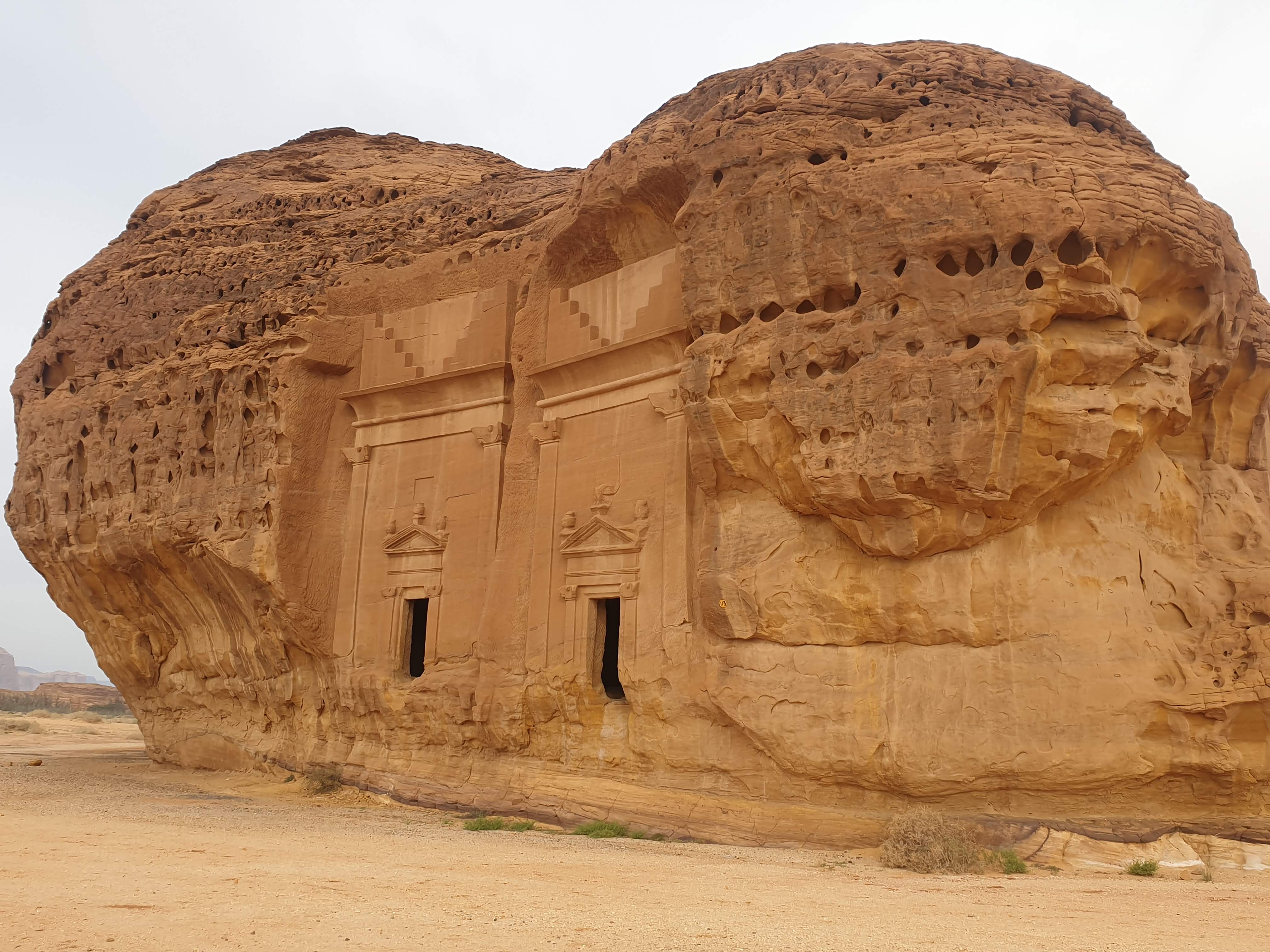
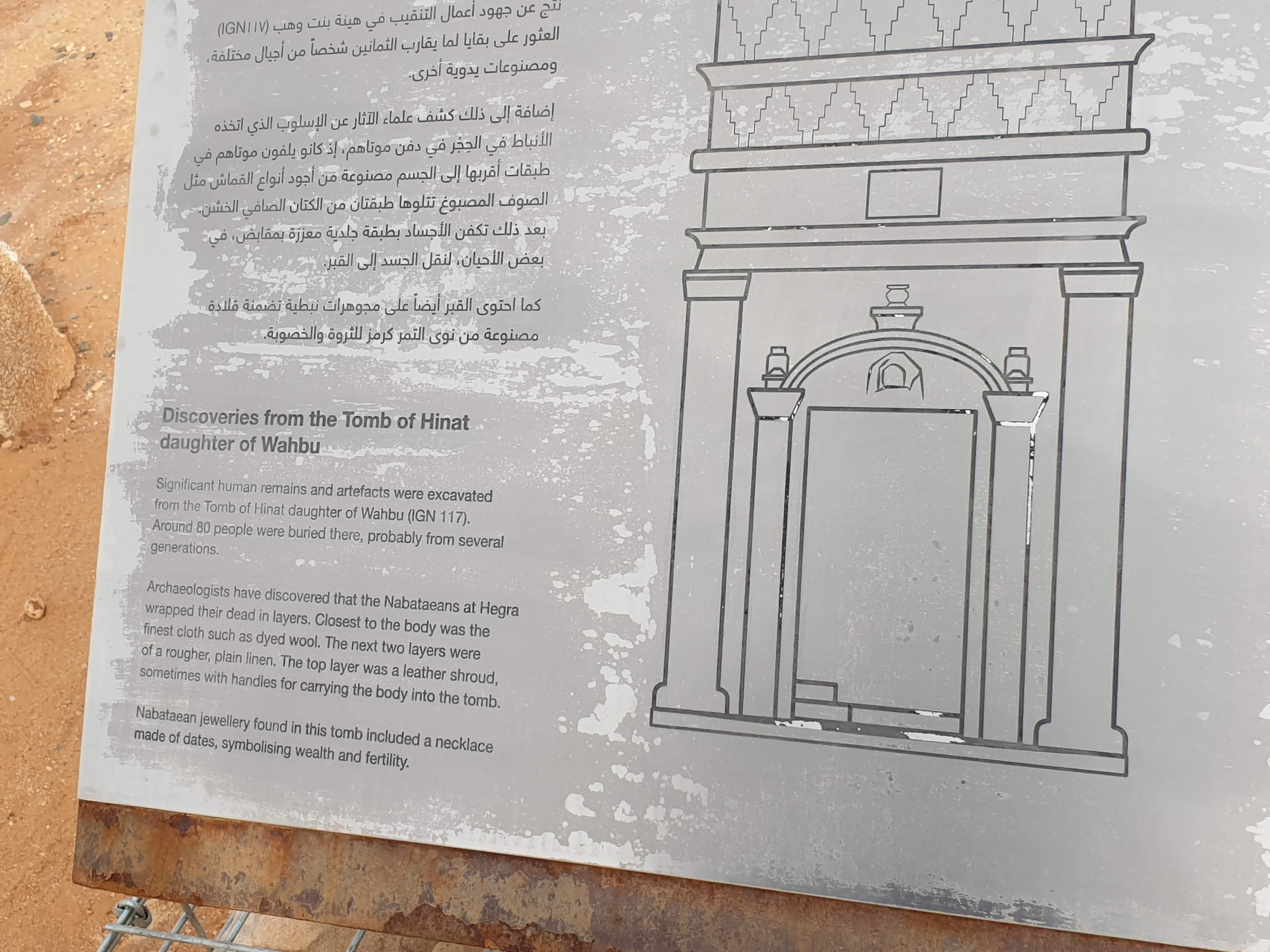
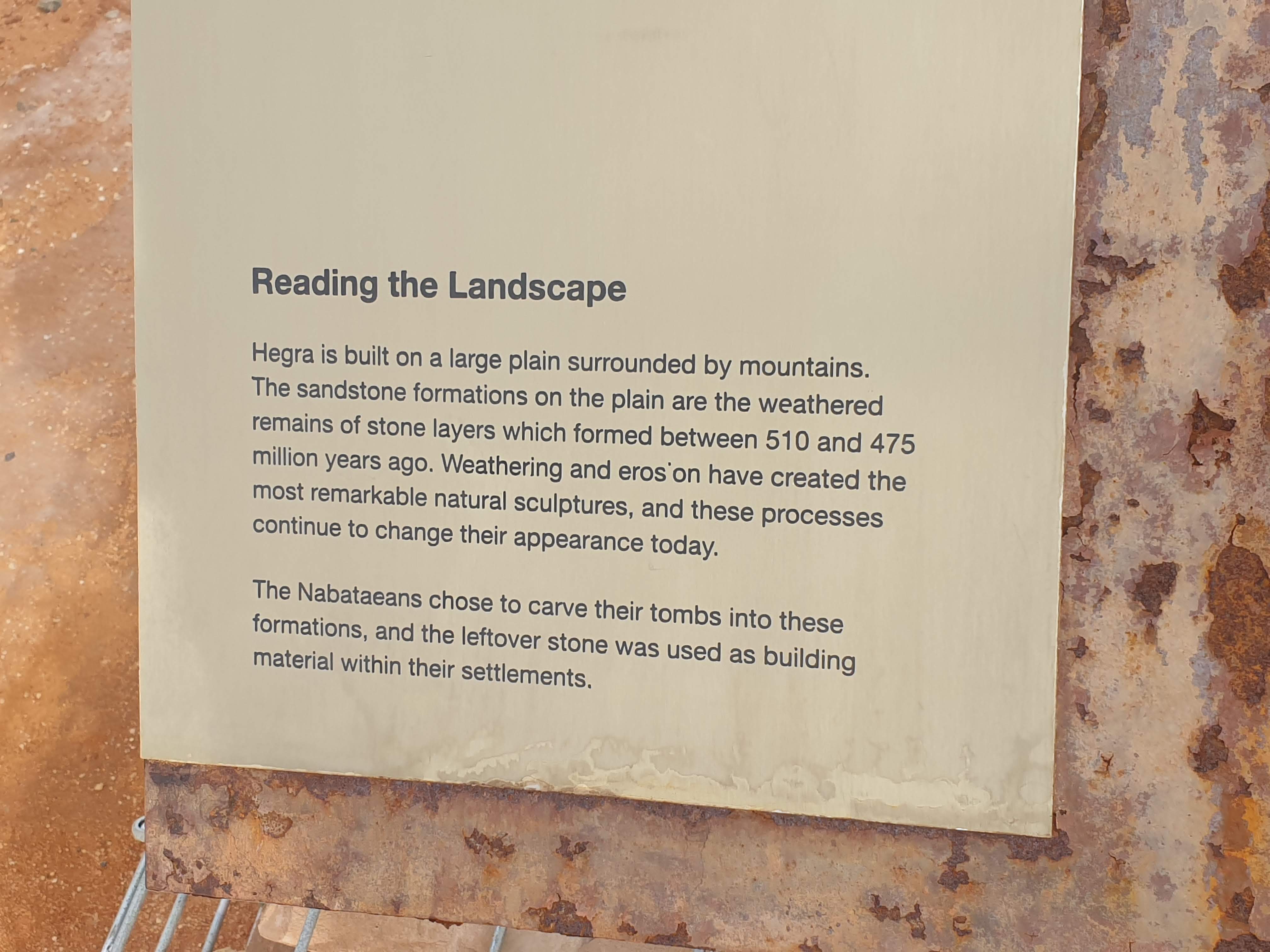
Hegra, otherwise known as Mada’ain Saleh was our final destination. Fortunately, we were able to purchase tickets for January 14th without having to extend our trip for too many more days. The tour bus left the park promptly at 8:30 AM and drove to two locations. The tour took us to the Hijaz Railway station, then continued to the site of the Nabataean tombs, including the infamous General’s Tomb. There are over 111 tombs (that have been found and located) and the craftsmanship is symbolic of the Nabaetean’s spiritual culture.


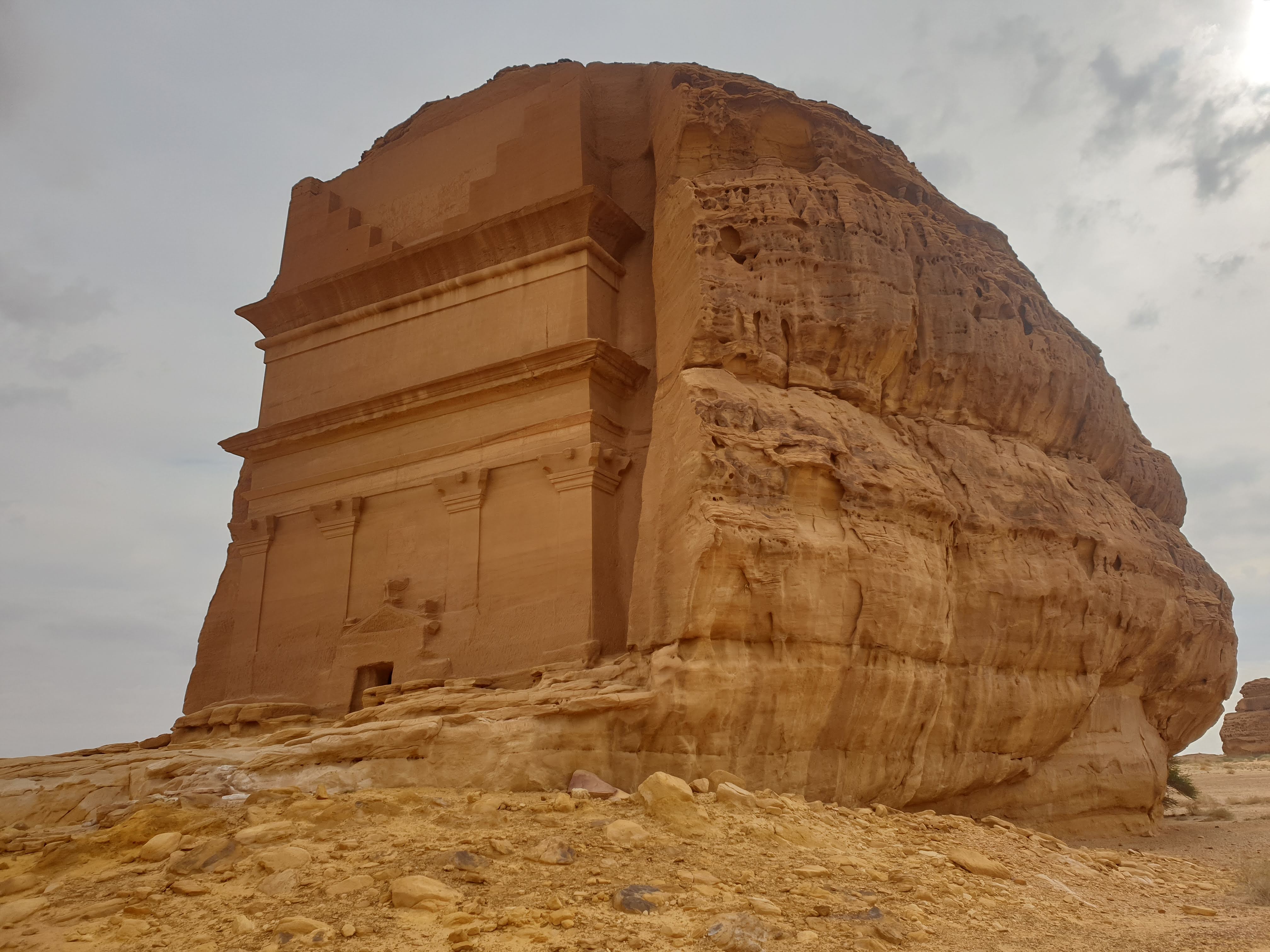


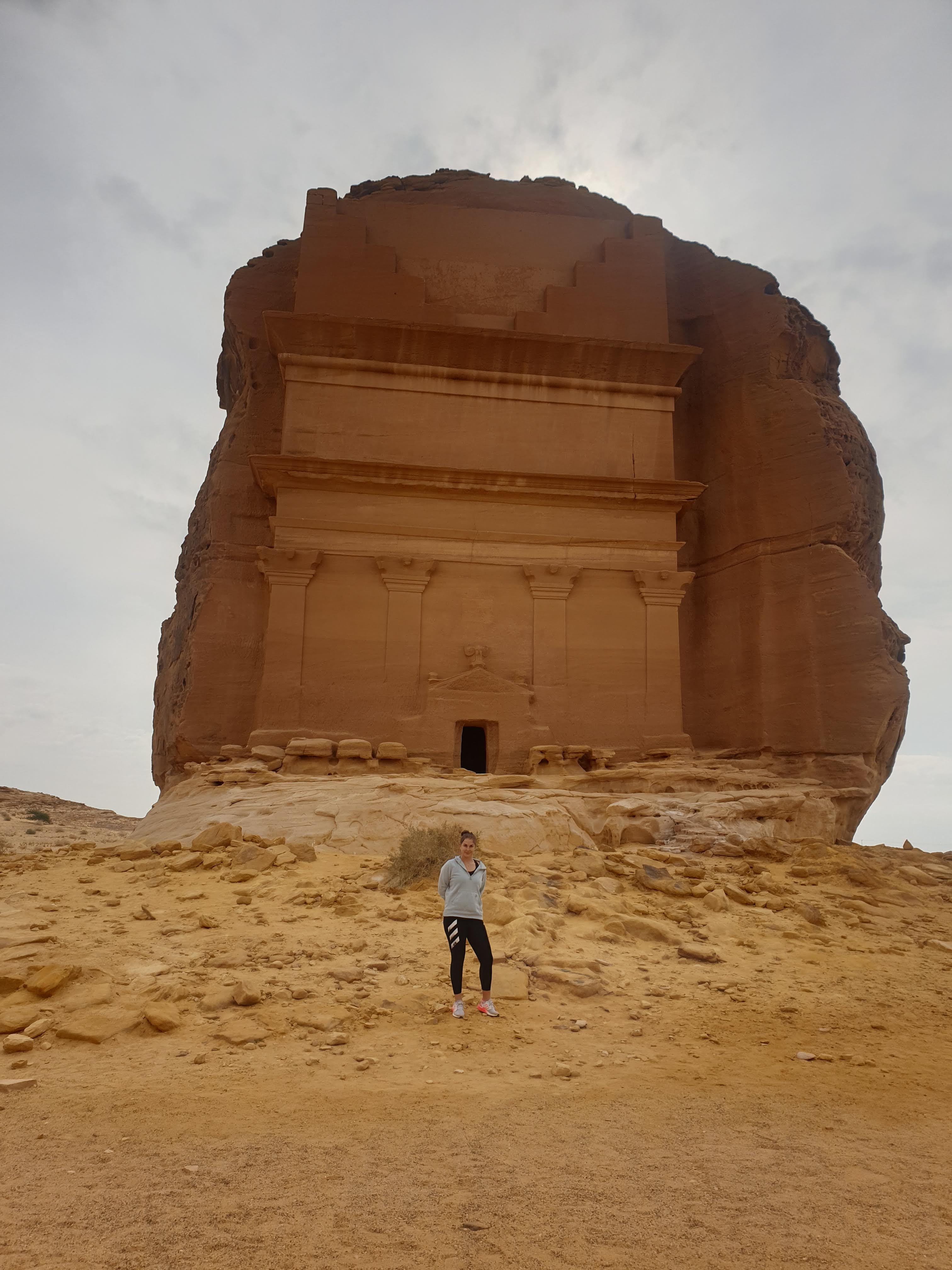


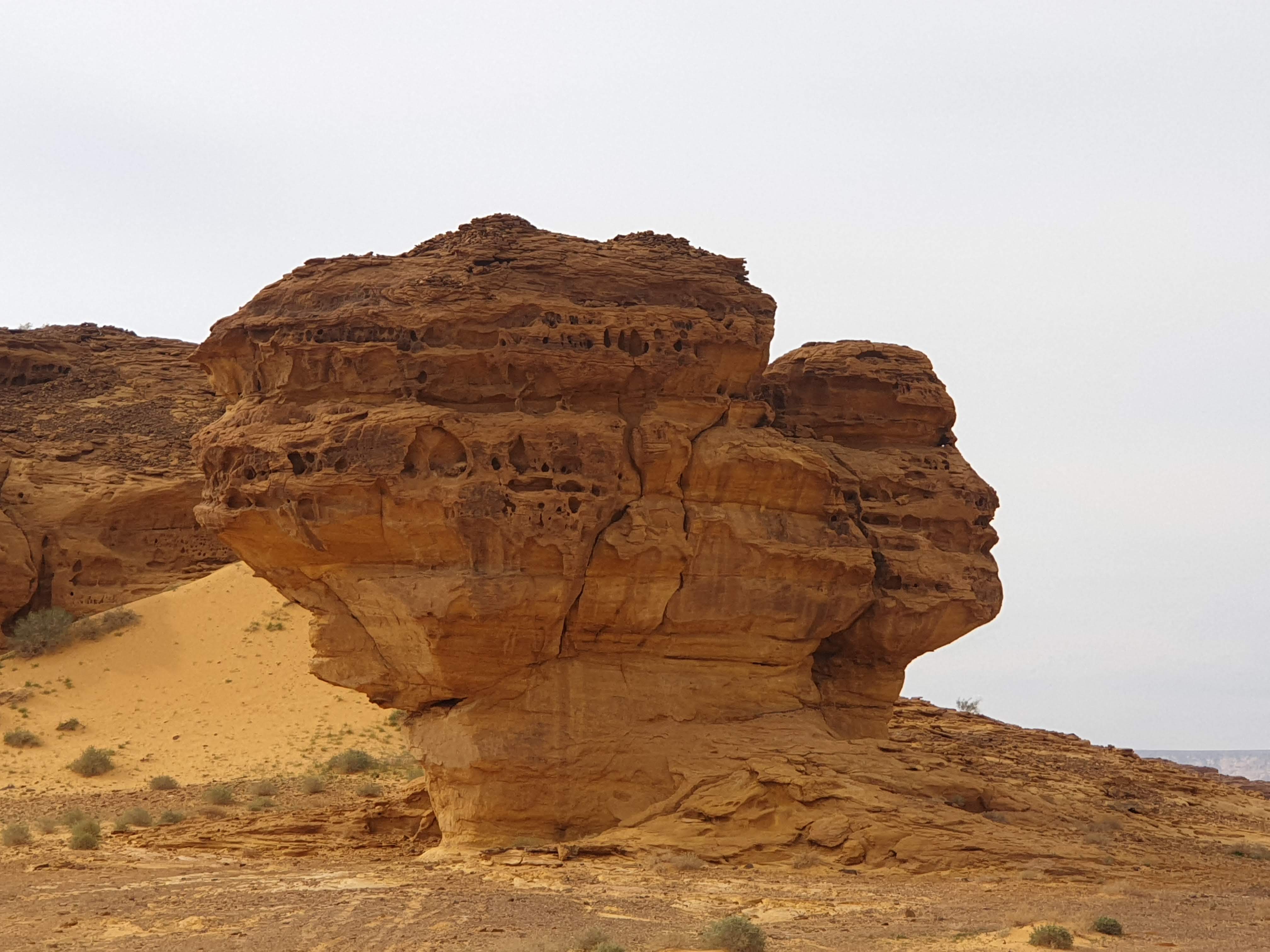
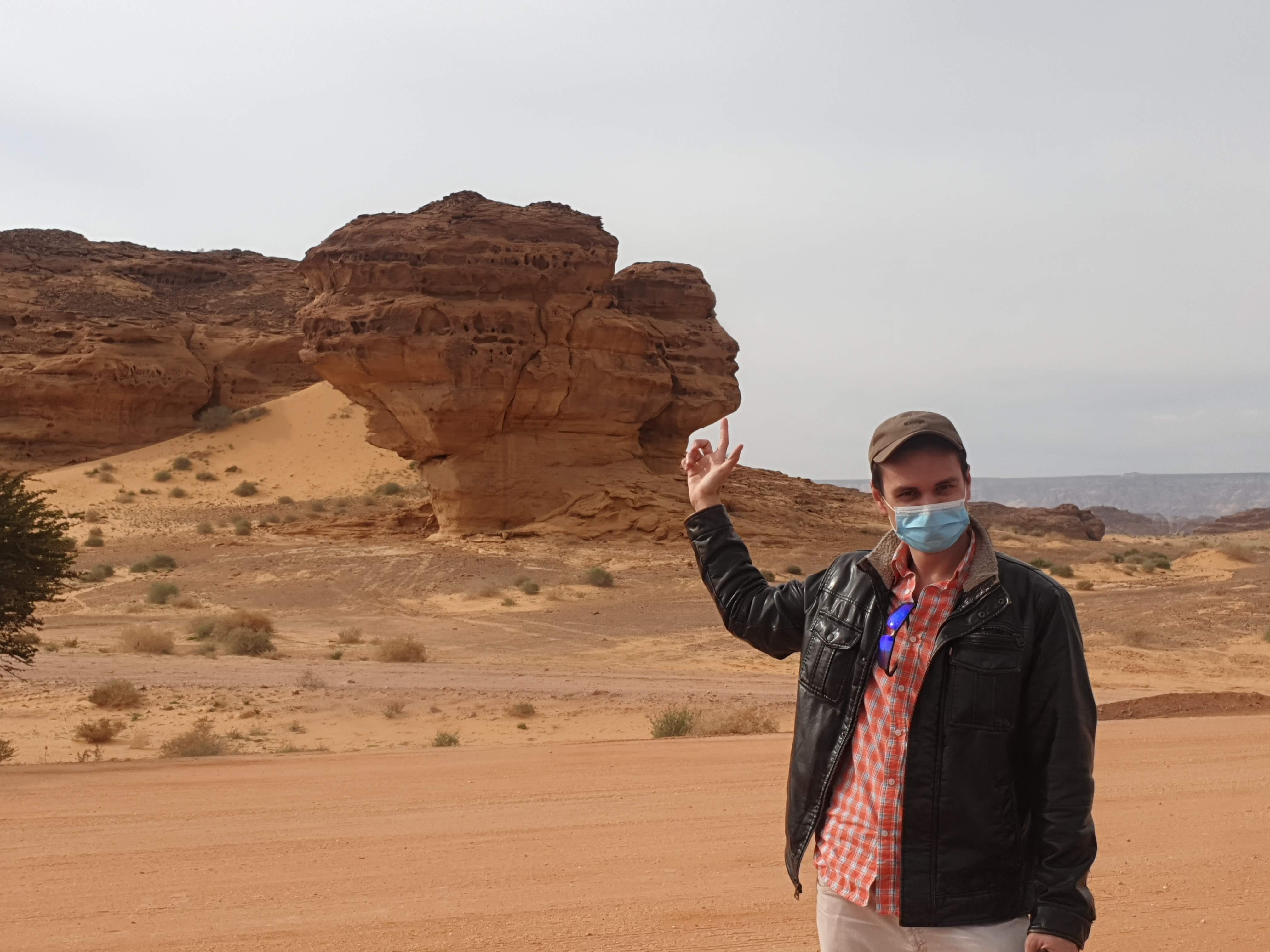

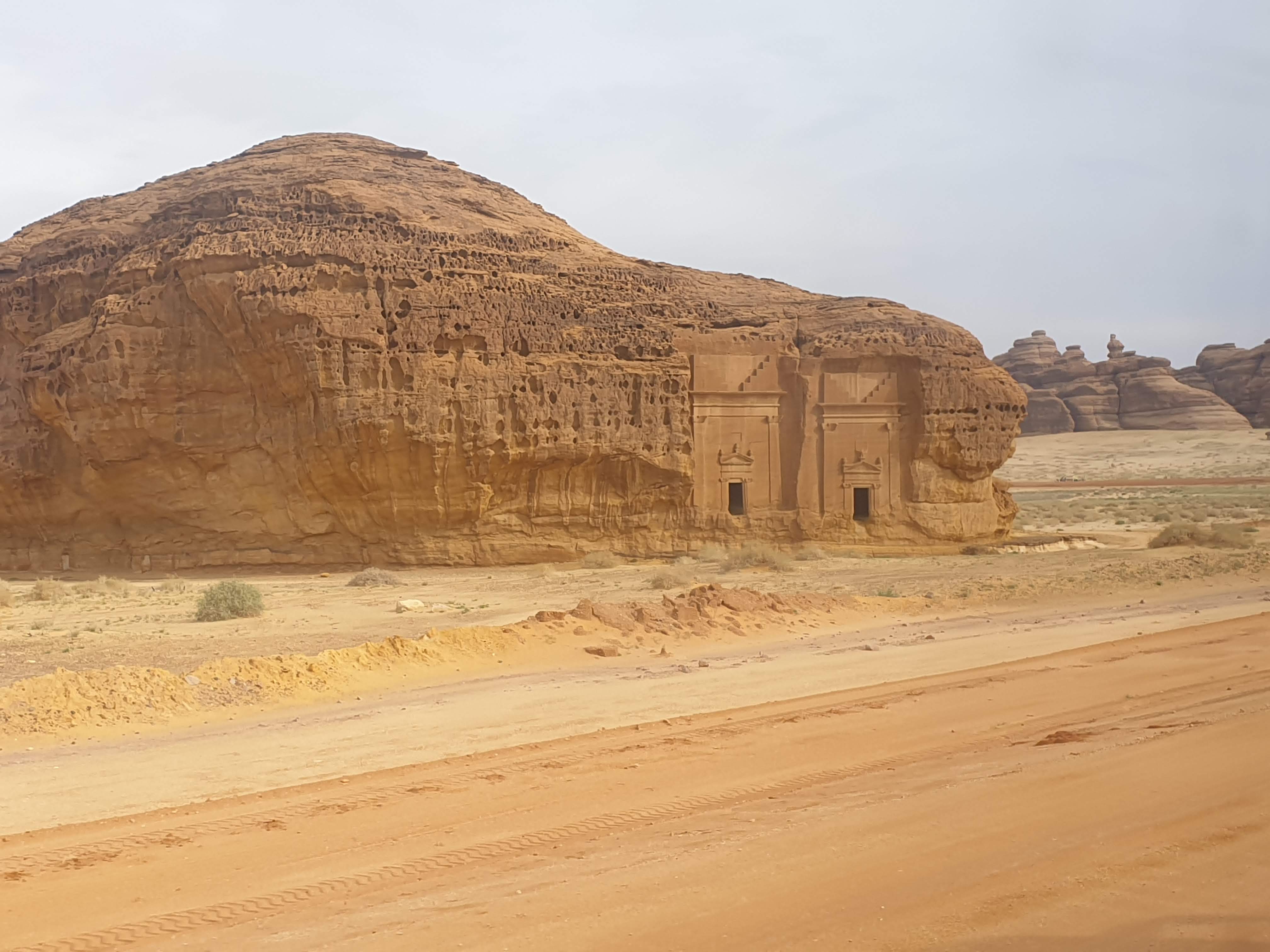
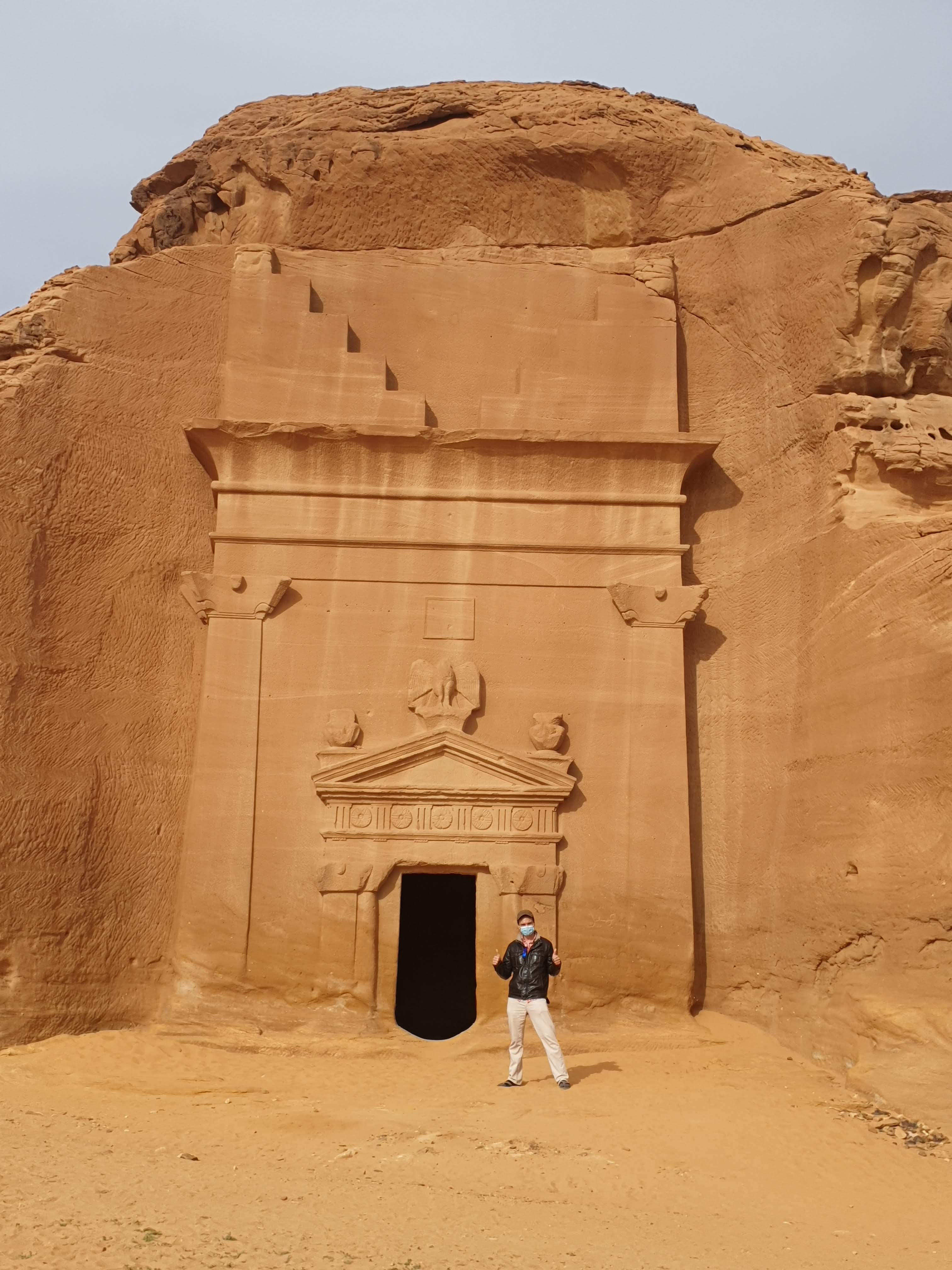
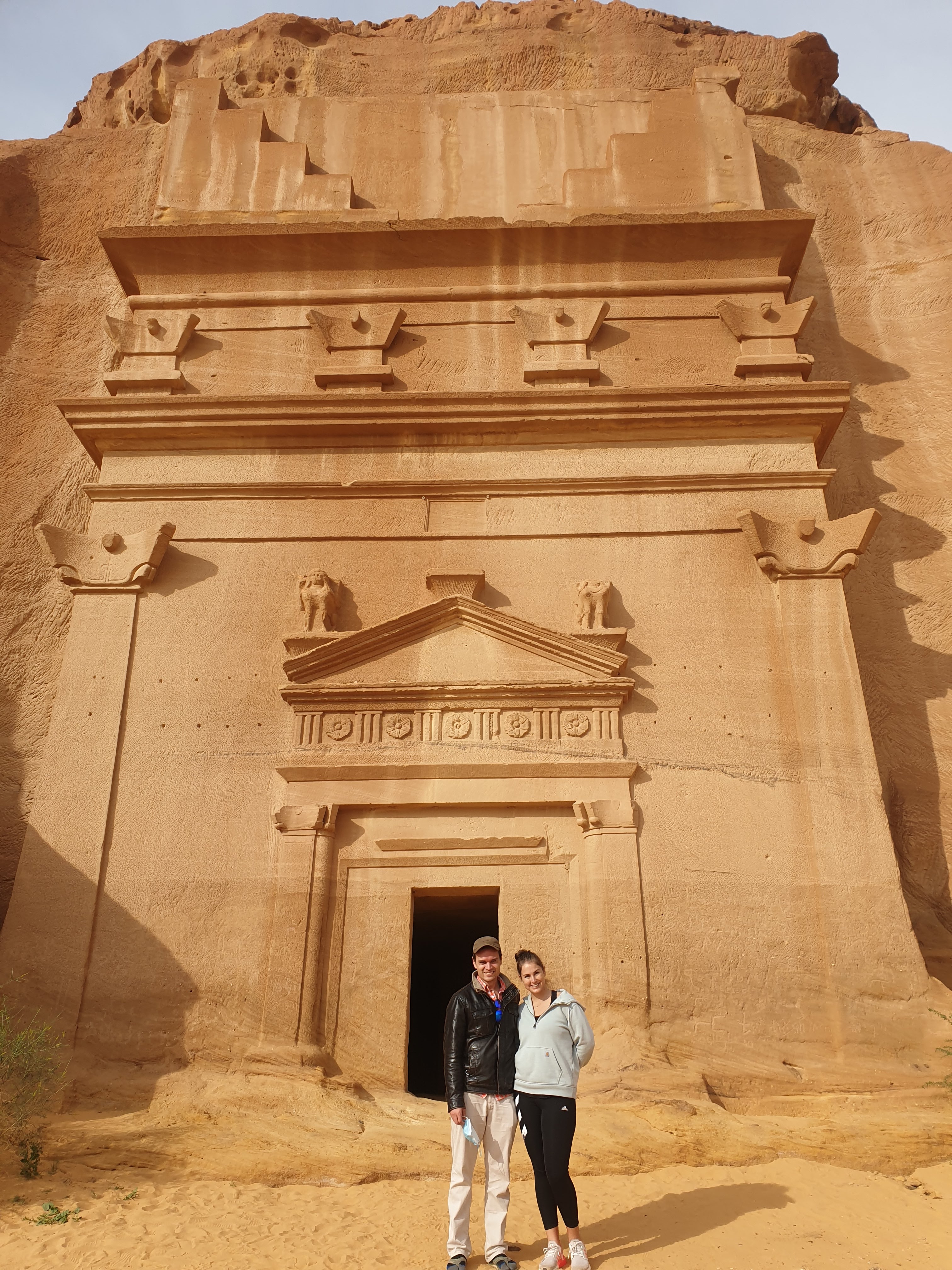
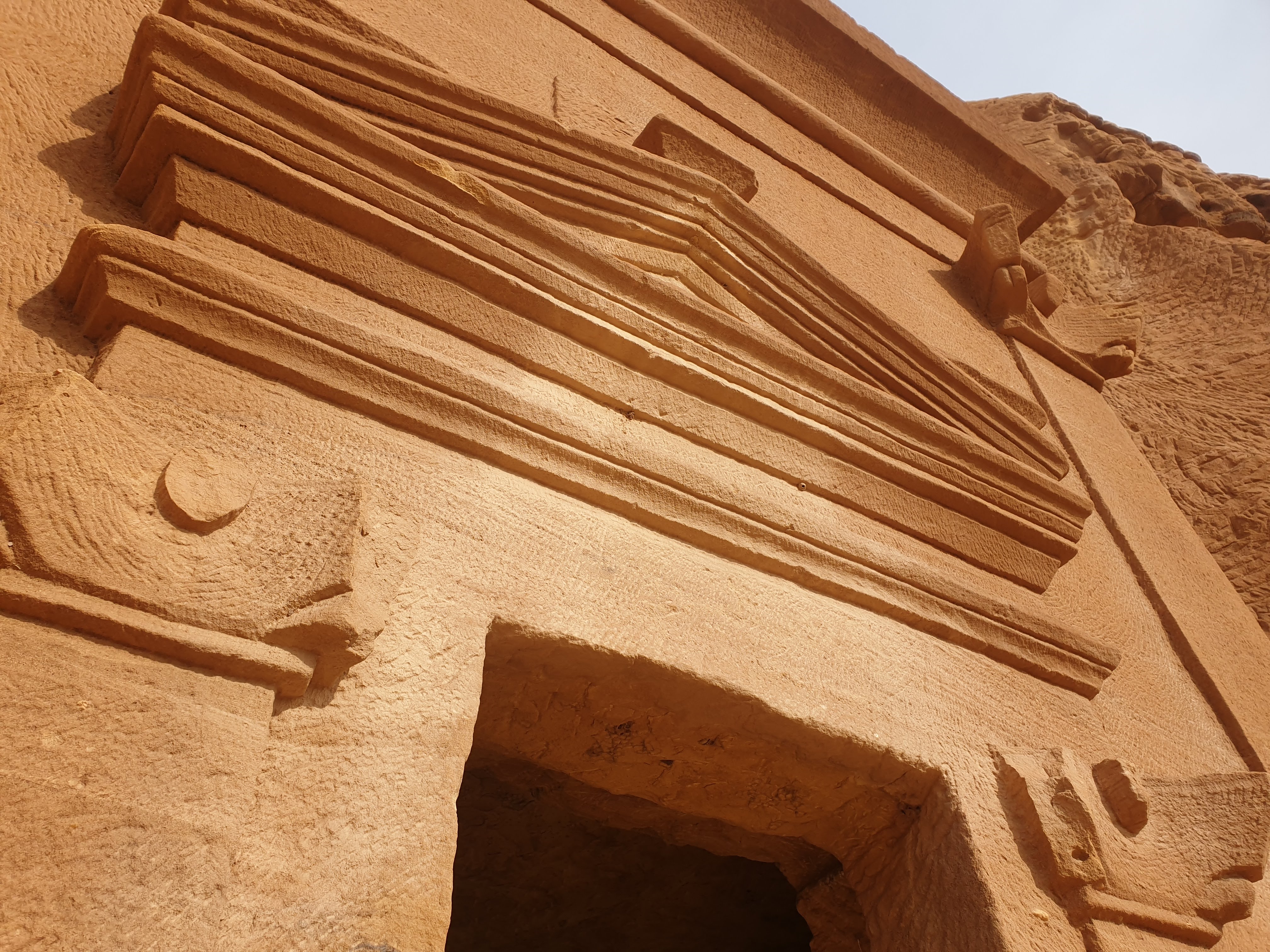

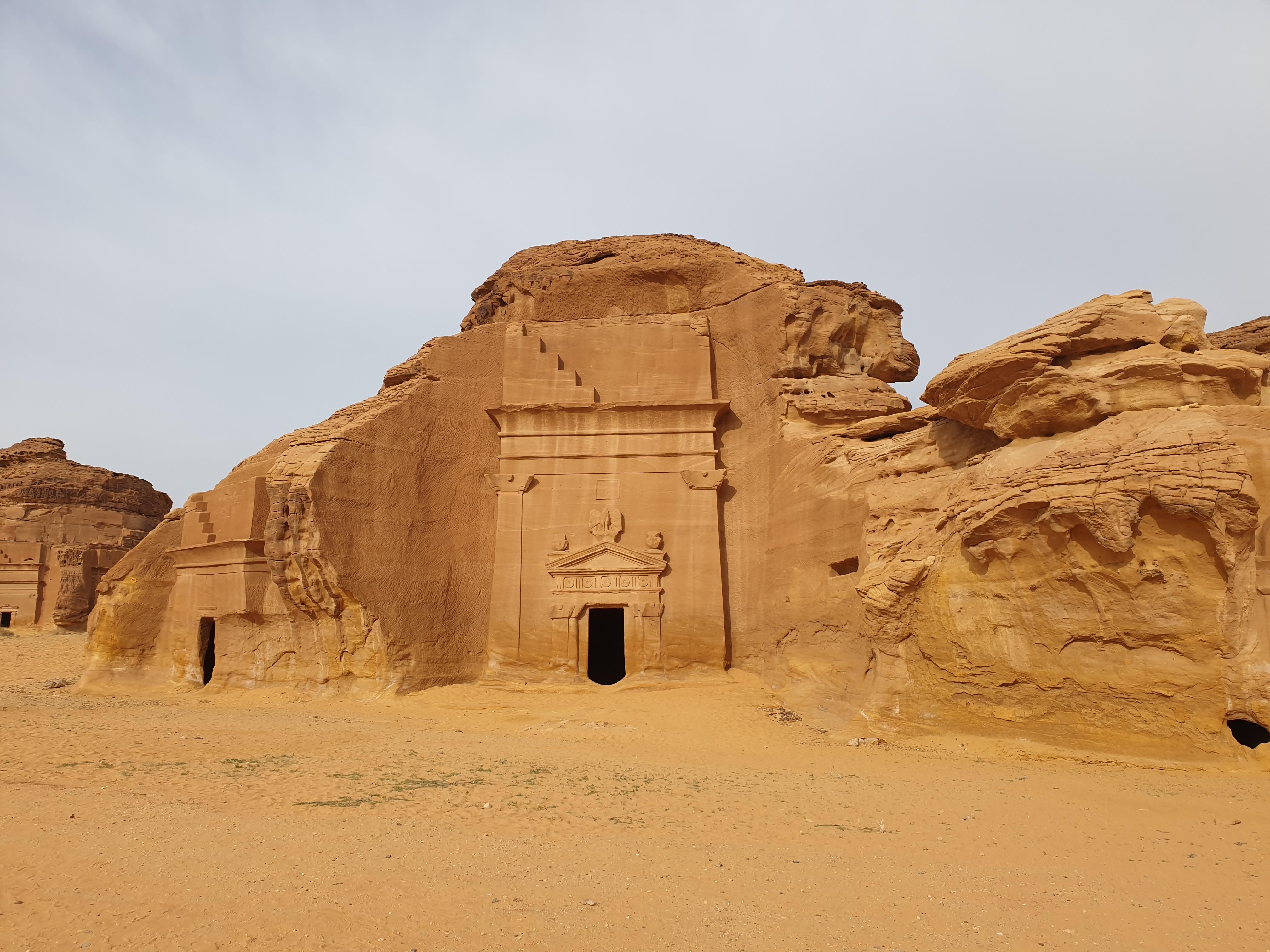


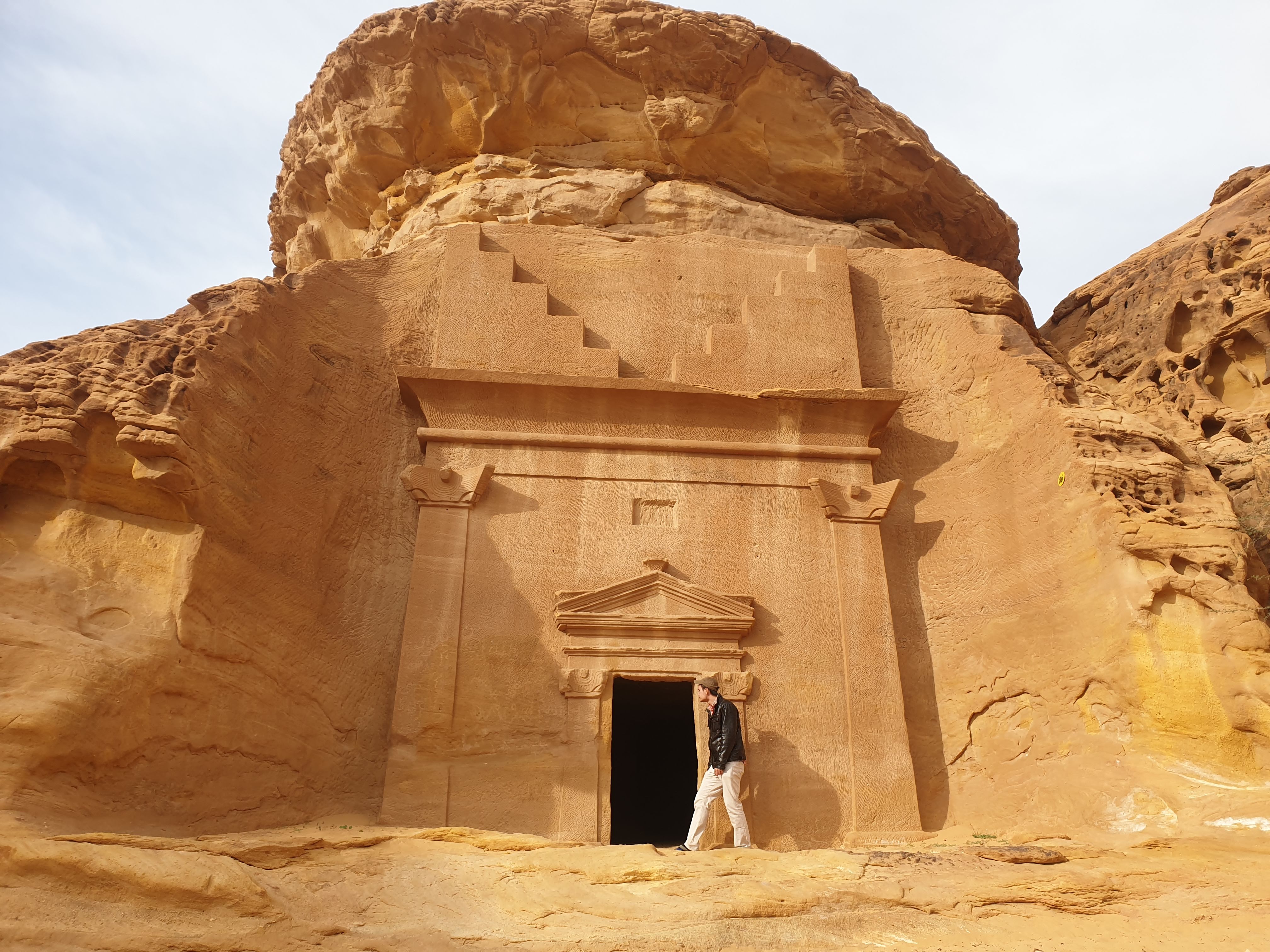
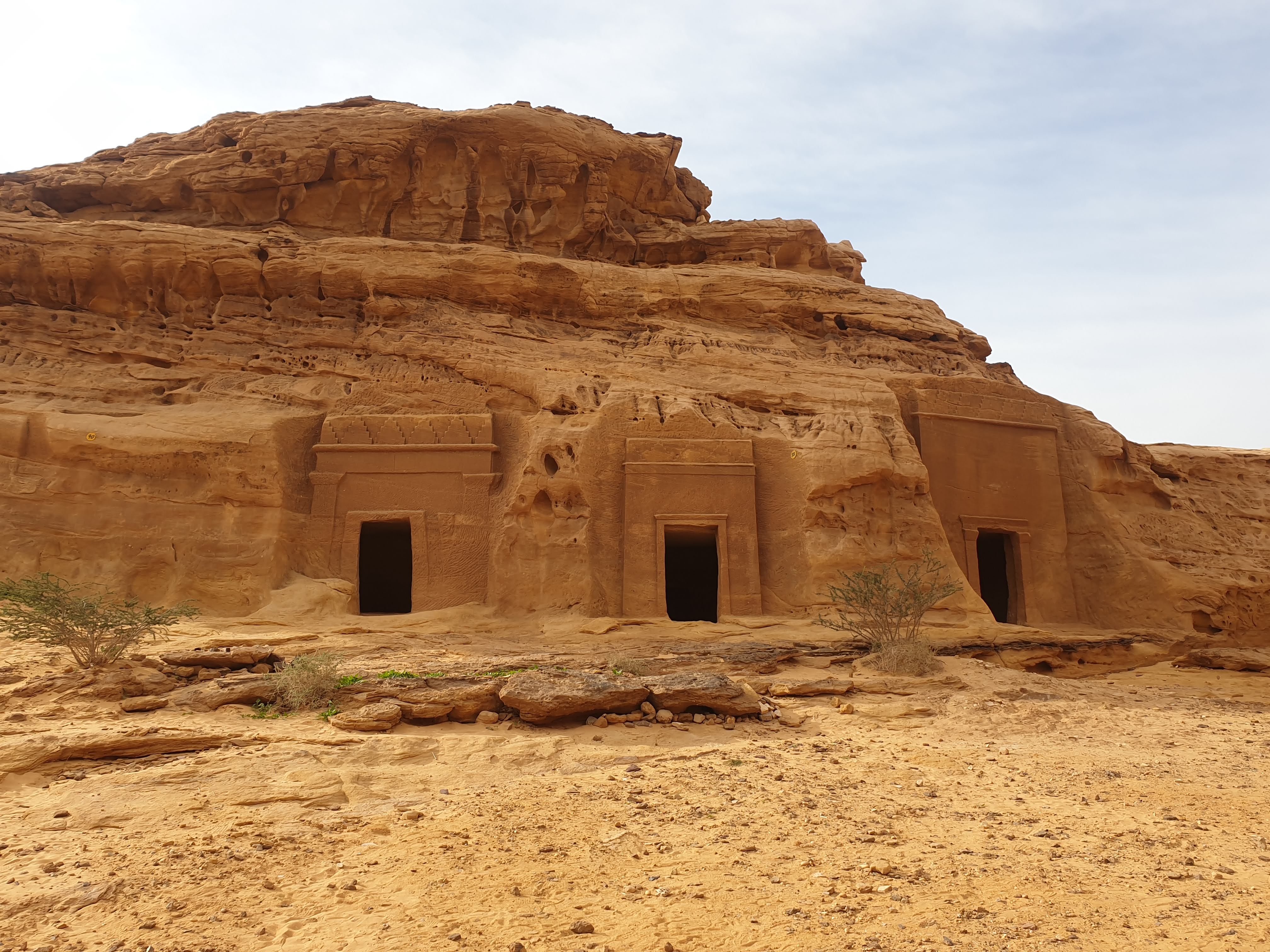
The wonders in and around the Middle East are astounding and Saudi Arabia’s landscape is much more varied than most people realize, myself included. It’s a country that is as rich in minerals as it is in natural beauty. Having visited Dahran’s Ithra museum and Al-Ahsa, I knew the vastness of this region’s history throughout the last 5,000 years. With each new corner of Saudi Arabia, there are new treasures to find and cultures to explore. The people within this country are increasingly welcoming and proud to share their customs with those who are interested. My Dad had worked here many years ago, and I remember him bringing back boxes of sand roses for our family’s home décor. The uniqueness of this part of the world lies deep within history extending to some of the first hominids that roamed planet earth. For the curious and the adventurous, this is a hidden opportunity that every traveler must take. If you’re fortunate, you’ll even enjoy the recreational activities such as the Dakar desert race en-route to your travel destinations. I consider myself fortunate to have witnessed such early history within a country that has been misunderstood for several decades. As time passes, I hope more people are willing to take a walk in the past and begin to understand that our brief time on earth can be swept away as quickly as dust over sandstone. Plan wisely, and for those who thoroughly enjoy traveling like I do, just go!
Yours truly,
Nattapon Jontom Abbett

 Nattaproblem
Leave a reply to Frank Abbett Cancel reply