
My teaching stint in South Korea has come to a close. I taught 9 kindergartners for the first 9 months, and 3 for the last 3 months. Hiring staff can be a challenge and I landed in June 2018, 3 months into the school year. Instead of 1 cohort of students, I received 2; the former being the group I worked with all the way until their graduation at the end of February. The Korean School Year runs from March to March.
I couldn’t feel more blessed to be part of so many cultural traditions within South Korea. Two noteworthy events occurred in the first month of 2019. In January, my birthday celebration was a huge surprise, and my cohort of students showered me with gifts and hugs alike:


Kids in Korea are expected to reach out with both hands when they give and receive items from someone older than them, especially relatives and teachers. This show of respect and gratitude is expressed similarly in Japan and other areas of Asia as well, but it’s especially prominent in Korea. Each time I hand back a graded assignment or a piece of candy they’ve earned, I remind myself to check that they use two hands. It was therefore very honorable and heart-warming to see numerous sets of tiny hands giving me birthday cards on my surprise birthday party.
Move ahead to the month of February, and the school year winds down to a close. My class consisted of 9 kindergarteners (Henry, Roen, Kevin, Violet, Josephine, Alex, Ella, Justin, and Evan) who will come back for a final year of kindergarten before heading off to their respective elementary schools. Correction, 7 of them came back; 2 withdrew or changed schools because of how abusive one class-member was to them. Kindergarten.
The last month was similar to the 6th-month mark in that teachers had to fill out extensive progress reports per student (30 in total for me), write exams for the upper-level afternoon classes, and prepare several speeches for the graduation ceremony. It was more formal than I had anticipated but has already served its purpose as far as my resume goes. We rehearsed songs from the behemoth Disney franchise The Lion King and made sure each student had their individual 3 to 4 sentence speeches memorized for the big day. They were fully prepared and dressed for the occasion in their Hanbok
.


After graduation, the kindergarteners had the following week to rest, while the afternoon students had to come in for their daily 50 minutes of English practice. Believe me when I say that without the kindergarteners, it felt like a vacation. I had time to prepare materials for the following school year and assimilated all the reports necessary for each student. Here are some more graduation photos of myself with parents.


Graduation ceremonies bring a momentary sense of completion to a hard-years work. It made me realize how I’ve been a part of each students life for 9 months. That’s a significant amount of time. Seeing the amount of progress over the time span of nine months must be what teachers live for because it’s immensely gratifying. Equally gratifying is the fact that should there ever be a zombie apocalypse, I will be among those working in a profession who’s survival rate will be highest. Teachers have years of prior experience living with limited resources. 😛
Moving onwards to the new school year in March, I see 3 pairs of expectant eyes look out the classroom window. The new Nobel class members include Xabier (a Spanish/Korean mixed kid…we related to one another very well), Brian, and Seolri. I had these precious souls for another few months until the end of my contract in May. The first two weeks were better than expected, because of the previous experience I’d gained over the last 9 months. Learning to use metacognition in tandem with cognitive dissonance to properly discipline the kids has been a tremendous help. Although imperfect, the alacrity of my lessons has become more fluid as I more habitually prepared myself for each class. Kids this young aren’t expected to learn faster than they’re capable, and should instead be given confidence boosts through focusing on areas in which they are strong. It’s a natural instinct for new teachers to scold or reprimand when a student doesn’t understand the material. That’s what parents do, and is the last thing they expect you to do when teaching their children. Take note. It’s difficult to get used to, but a phrase that keeps me calm and collected is: “How would I like to be taught?”
Despite having been spit on, punched in the privates, and treated much more disrespectfully than one would imagine in an Asian country such as Korea, I have had a positive experience overall. I even sang a song with my guitar using the melody from Alanis Morisette’s “Ironic.” Feel free to check it out on my Instagram. The perception most have with teachers in Korea is one of three things: people paying off student debt, escaping South Africa for various reasons, or finding a way to either teach for a living or save money before starting a business.


For me, I came here because I wanted to complete a year abroad where everything I know to be true about lifestyle and culture doesn’t apply. Although most of my upbringing was in Seattle, WA (USA), I grew up all over the world. Such experiences make an individual very adaptable to cultural change, and I wanted to push my limits even further. My primary purpose was, therefore, twofold: to feed my soul after several years just making money in corporate LA, and two: to connect with an Asian culture that I have found to be competitive, open, and forward-thinking. I have many Asian friends from the USA who all strive for excellence, and Korea is a strong representation of that mentality. Korea proved to be very efficient with its transportation, and for the most part, people were willing to lend a helping hand wherever I went. Talking to strangers is a non-issue.
The highlights of my experience are mostly due to the children at my hagwon. They were delightful and horrific all at the same time, but I survived. Temperments, personality, behavior, and laziness aside, a primary school teacher has to realize that children don’t understand rules; one of the major reasons why teaching is so difficult. Interestingly, it’s also how teachers distinguish between future leaders and followers (yes, of course, there’s always an exception to every rule). All things being equal, teaching the 3 children was like heaven compared to the 9 kids (two of which were complete tyrants) over the past 9 months. They were so bad, even my supervisor said, “you had the hardest class ever.” In all honesty, I really think most people would have quit in my position, but I’m not most people. Muahaha. I’m officially a survivor of kindergarten and the services I’ve rendered this past year ought to settle any bad Karma I’d collected over the past; perhaps even lasting into retirement.


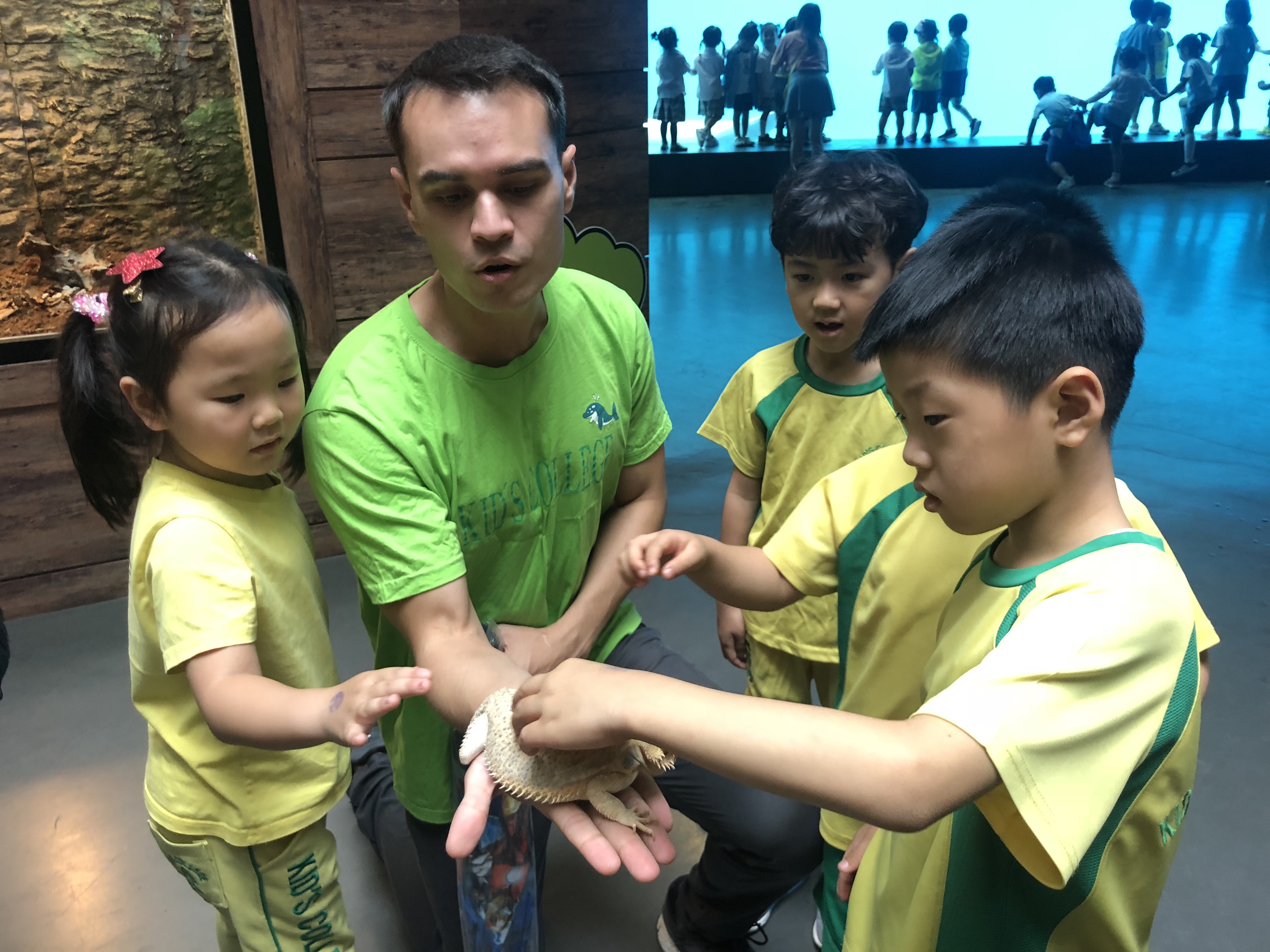
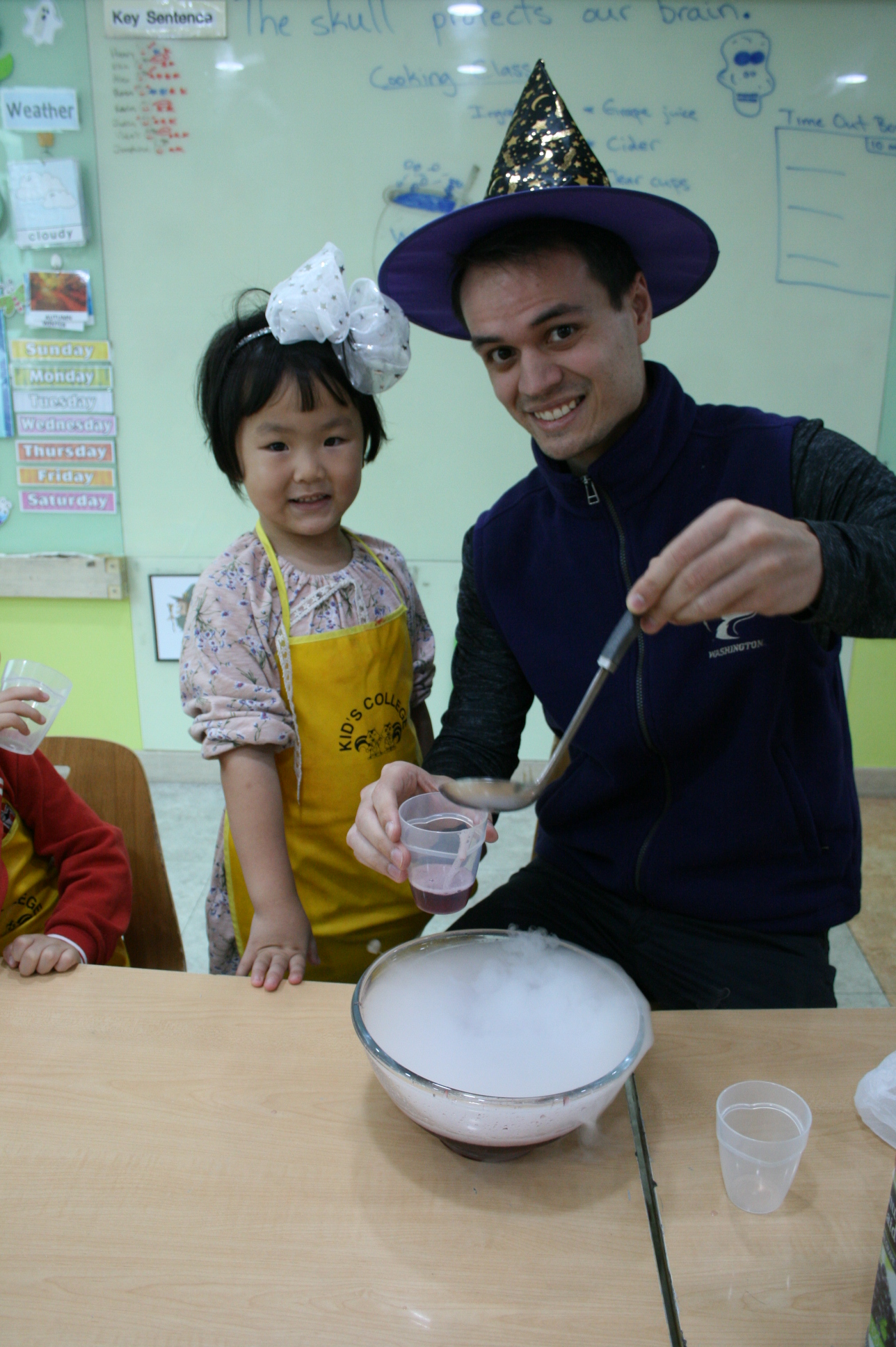
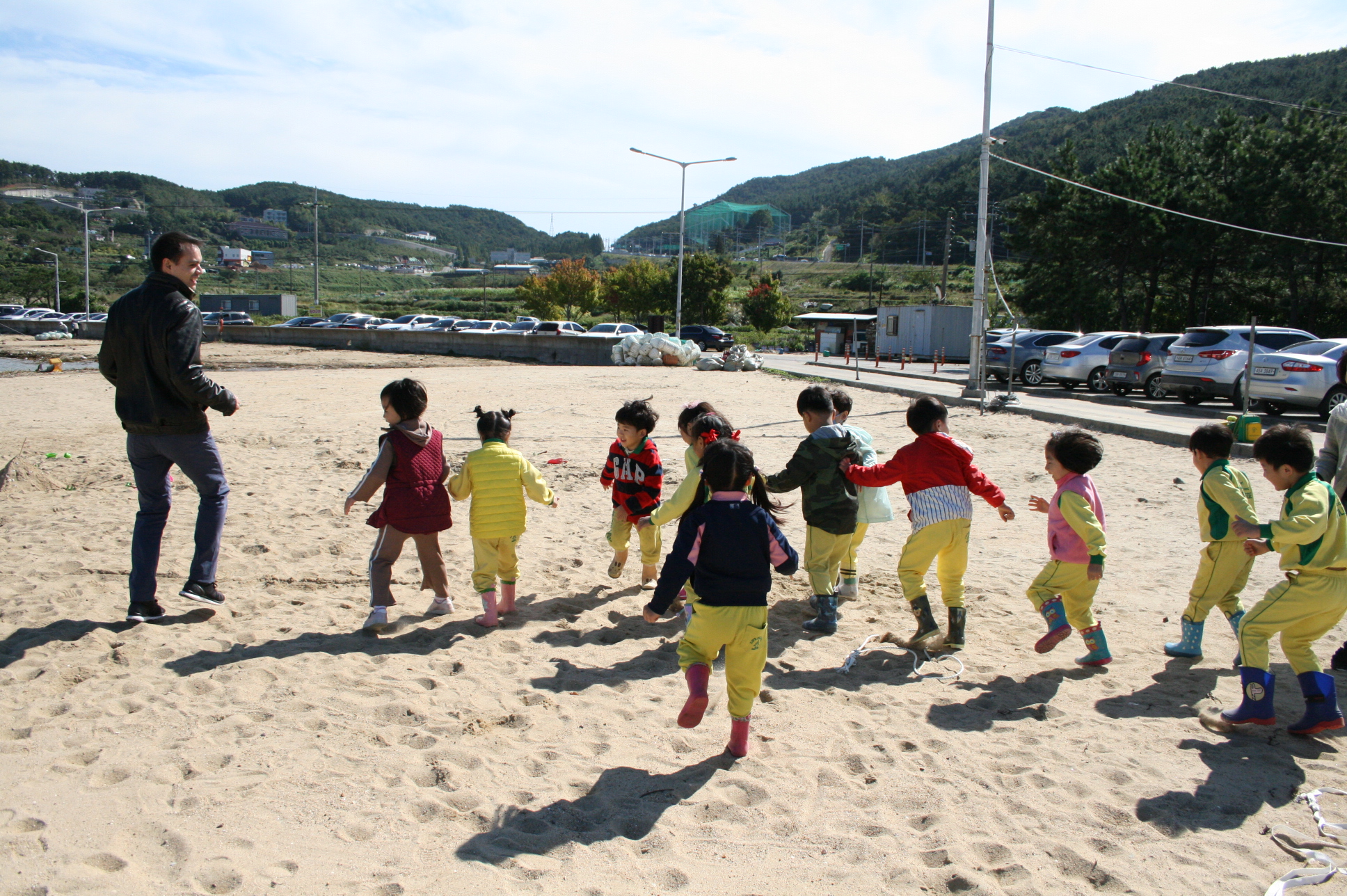
The last few field trips included a strawberry farm, a trip to an installation art park overlooking a bay, and a few birthdays. I’ve learned two lessons over the past year: I can love a child that’s not my own, and I have enough patience, stoicism and mental stamina to get through anything. I’m not just talking about the children. My soul is cleansed, and I’ve never given more of myself for other people than I have this past year. For me it’s the physical equivalent of running a marathon (I’d only done 5 and 10 K’s in Korea); something I would only ever do once. Teaching at an incredibly structured Hagwon such as Kid’s College has been immensely gratifying. Peace out Korea, and good luck with all your children. It’s been a year well spent, and I shall continue learning Korean for as long as K-Pop exists.

Cheers,
Nattapon Jontom Abbett
Thank you to my supervisor at Kid’s College for all the wonderful photos. Sangha Park, you’re amazing.
 Nattaproblem
Leave a comment