
I recently visited Osaka, Kobe, Kyoto, and Nara all while touring the notable historical sites in this richly scenic and delicious part of Japan. It took me 6 days and 5 nights to completely fill my appetite of Japanese traditions, street-side food, temples, castles and more. Traveling can ring up a steep bill, but I will show you how to have fun, eat really well and stay at first class hotels or hostels, all for exactly $774 US. This beautiful area of Japan is rich in color, taste and has a densely packed, efficient subway and monorail system that will keep you zigzagging through the city until it’s time for you to turn the lights out.
What first caught my eye was the density of buildings: apartments, offices, hospitals, malls, everything in between. It wasn’t the mess I expected when people say, “Japan is so clustered!” It was organized, clean and efficient. With the increasing population, Japan has found a way to structure it’s city around a set of practical priorities. The locals I met on the numerous train and subway rides were also devoid of any megalomania, or supercilious countenance noticeable in other powerful countries; or perhaps that was just my impression. From my vantage point, people were either working or having fun, or both; no pretenses. Quite similar to Korea and Thailand now that I think about it, just much cleaner.
KOBE
So, let’s get started! My trip started in Kobe, just across Osaka Bay from Kansai International Airport. This is where the strategizing starts. There were several options available to me: train, ferry or taxi. I decided to take the ferry to enjoy a waterfront view as I approached Kobe. The cost was 1,800 yen, and the ride took a mere 30 minutes. It was quick, painless and allowed me to see various cities from the Bay. From the port, I took a monorail to Sannomiya station. There were nice seafronts to enjoy, but to me, a seafront is a seafront and I really didn’t need to go inside yet another aquarium (as much as I love marine life). I decided on a quick trip to the shopping center off of Ikuta road, where there was a plethora of food options to choose from. From there, I made my way to the Hanshyu Railway station to start heading over to Osaka.


Because this particular trip consisted of more than one city, I wanted to make sure I made the best use of my time and didn’t dawdle in a city for surface level tourist attractions. This meant there was only 4 hours to spend in Kobe before heading east to Osaka-shi, where I planned to spend the night. So, off I went.
Quick Tip:
When travelling it’s smart to consider the cell phone plans that are available to you, whether single or part of a family. In my case, I was a single traveler, with less than a week to spend in the greater Osaka region. A quick online search yielded many wifi options available, such as 4G-LTE plans of a pocket wifi with 10, 20 and 30 gigabit plans available. There are many companies from which to choose, but I would recommend Econnect because I had zero issues with them. Coming from Korea, I realized that Asian tiger-countries often have wifi readily available every 100 meters or so, but online reviews of Japan’s internet availability warned me against relying on those spots as they were tenuous. The pocket 4GLTE device provided by Econnect was quick, easy to navigate, and had a reliable connection. I picked it up at the Kansai airport’s post office, and returned it by mailing the devices in a large envelop Econnect provided, at one of the many red mailboxes before returning to Busan, South Korea.
The process is simple and easy to navigate. The airport, hotel, even residential address are all viable options for pick-up locations. After the trip, simply place all the equipment back in the provided envelope and mail them back to Econnect.
After Kobe, I started to realized that I would come back to Japan someday after the trip. The immediate impression was exciting and alluring, and I began to understand why people frequently chose Japan as a travel destination.
From Kobe, I took one of the eastbound trains from Sannomiya train station to Tsurahashi station, my final destination for the day. The trip lasted about an hour and a half. Through booking.com, I chose a single unit to stay in with a kitchen, bathroom, shower and the works for $50 per night. Some hostels charged this amount, and the place I booked was private, and resembled a single unit apartment so the choice was easy. Upon arriving, I was blown away. The premises resembled any well-maintained Air B&B locations. This particular place was called Puku Puku Inn, and I highly recommend it if a trip to Osaka is on anybody’s itinerary.
The convenience of travel in Japan makes for easy trip planning. A smartphone along with a portable wifi or 4 G-LTE data source are also game-changers. There are traditional folks who insist on using books and paper maps for directions, but if you enjoy planning on the go, a smartphone is the best trip companion anybody could ever ask for. Navigating trains, subways and buses is a breeze. For me, I had an easy route from Tsurahashi station to Namba which took me straight to Dotonburi. Then, I could choose where to go from there. Osaka was filled with lights, good social company, and fantastic food. People were quick, neat, orderly and customer service was punctilious to say the least. I don’t often get to use that word, so there you go. 🙂
OSAKA
All in all, the following are my personal recommendations for Osaka:


1.) Dotonburi: A great time for singletons and families alike. There are numerous restaurants from which to choose, and the nightlife rivals that of any large metropolitan city.


2.) Osaka Castle: For history buffs, this castle represents the culmination of the Edo period (when Samurai ceased to exist). Google says the castle was built for Toyotomi Hideyori by his dad. Hideyori was supposedly the first general to unite Japan after much battling and inner-clan subterfuge during the inception of the Meiji period. That being said, it’s also a good site for those that have nothing better to do for 4 hours. Just steer clear of the heat, and feel free to forego entering the castle, as it’s just another museum. The only advantage to going inside is the view from up-top, but that’s just from reading reports online. I didnt’ go in. I’ve hiked up enough mountains to know what a panoramic view looks like. Ergo, I skipped it. Plus, it was a frying pan and the ticketing agent said the air conditioning inside was broken. No thanks.
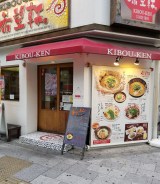
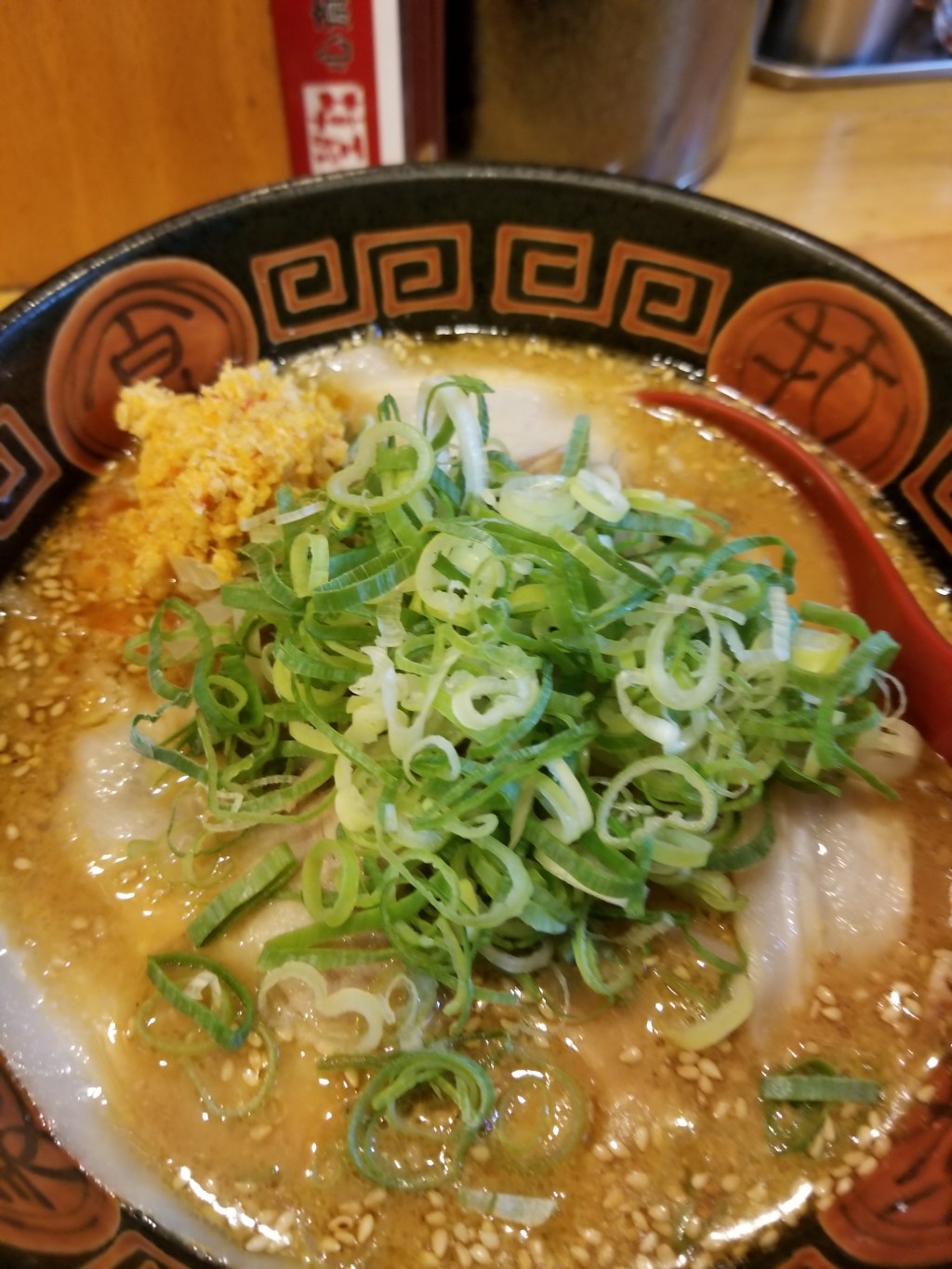
3.) The ramen noodle shops in Osaka are top-notch. Kibou-Ken on Unagidani Nakabashisuji street) is the one I went to first, and it was particularly tasty. However there are many: Ichiran (on Dotonburi road), and Ipurro are a couple to bear in mind.
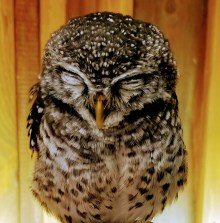
4.) The Owl Cafe. This stop is probably not for die-hard conservationists, but the irony is that these owl species are definitely preserved albeit out of their natural environment. There were over 17 species of owls ranging from the Great Gray Owl, the snowy owl, to screech and even a spotted owl. My inner animal lover wanted to set them all free, but there will never be an opportunity to witness 17 owl species in one place anywhere else, so I recommend this to any Osaka traveler. For the equivalent of $15, you’re given 1 hour to spend with the owls, while sipping tea or coffee. This and the hedgehog cafe are both great options for kids.
5.) Pokemon Fever: Osaka is probably ranked in the top 5 for the largest cities in Japan. Number 1 is Tokyo, but regardless of the city you visit, there are malls with Pokemon Centers at the top of them. The particular mall I went to was Daimaru (I also went to one when I was in Kyoto). At the top-most floor, there’s a Pokemon Store/Center where you can shop your heart out, and purchase anything from games, stuffed animals or legos in you favorite Pokemon form. Since the advent of Pokemon Go, the resurgence of Pokemon seems to have staying power. Have a look. Satoshi Tajiri and his original genius are on full display, and the Pokemon don’t seem to be leaving anytime soon.
KYOTO
FUSHIMI INARI AND NARA (TODAI-JI TEMPLE):
Kyoto and Nara are arguably the most ornamented cities of Japan. Thousands of temples line the city and tourist destinations such as the Geisha District all have well preserved gardens and temples as a backdrop. This makes it difficult if there isn’t too much time, but it is definitely possible. In just a couple days, I managed to visit Kinkakuji (the golden temple), Fushimi Inari (the temple with rows of red posts), Nijo Castle (where the first Shogun, and military leader lived), Arashiyama Bamboo Grove, Todai Ji Temple, the Geisha District, and numerous other trails, temples and gardens in between. My point? It’s possible. The only requirement is planning ahead for transportation and packing light; and if travelling in August like I did, drink gallons of water, because the scorching heat will leave you sopping wet. Keep in mind that leaving early in the morning is ideal, because most temples close at 4 or 5pm. Touring the outer grounds is also free of charge. Entering the structures to look inside at the Buddhas, statues and gardens (as is the case for Todai-Ji) will cost around 600 yen (about $6).
Travelling alone, and with friends intermittently, I had the luxury of staying at Japan’s avante-gard hostels. These are fancy hotel-like companies that have all the amenities of a 4 or 5 star hotel. Everything is merely compartmentalized and the showers are shared. No big deal! Easy, and comfortable! The first Hostel I chose was named the Millenials with reclining beds in each pod, and a hip metropolis feel to the lounge/socializing area. Please click on the highlighted link if you’re interested. I spent a whole 25 seconds of my life to provide that.
Fushimi Inari Taisha: The morning after checking in, I decided to venture out to the farthest two temples on my checklist: Fushimi Inari, a temple located in Fushimi ward, at the base of Inari Mountain, and Todai-Ji, located further south in Nara Prefecture. Thanks to the convenience of the multiple trains and subways made available in Japan, both sites could be seen in just 3 train stops. I took the Kintetsu line, the Hankyu line and several subways as necessary for less than $25 total.
First stop: Fushimi Inari. The temple’s innumerable red rows of pillars draw thousands of tourists to the shrine daily. I made it a point to walk throughout the entire temple to appreciate the expansiveness of the red pillars. The trail starts as a parallel row of Torri Gates, and consist of hundreds of red pillars that were donated to the temple by companies and individuals. It takes the novice hiker 2-3 hours. I enjoy combining my trips with as much exercise as possible, so it took me 1.5 hours. Here are a few snapshots of my personal experience:


The shrine is just as beautiful as the mountain trails with the Senbon Torri gates. Instagram and social media have heightened the appeal of the gates, but the entire shrine is worth scoping out. Temples are as ornate as they are calming, and as long as you stay hydrated, any corner of Fushimi Inari will drum up inspiration; even if that inspiration is to take yet another Instagram picture.
The entire hike took approximately 1.5 hours. Since I got up around 7am, and arrived at Fushimi Inari around 10, that meant I had plenty of time for Nara. After a quick 30 minute train ride, I arrived at Nara train station and no sooner than when I stepped out of the subway hub, I was approached by deer. They were everywhere.


The walk towards Todai-Ji from the Nara train station took me about an hour, but that was with several stops to watch the herds of deer biting people in the butt, and stopping to get some lunch.
Todai-Ji is a temple I stumbled upon after arriving in Nara. It wasn’t until I left when I realized how popular it is as a tourist destination. The Daibutsuden (aka: the “main hall”) is the world’s largest wooden building. The large, 15 meter tall bronze Buddha statue within the temple grounds is impressive, with sculptures carved of wood to commemorate the 4 Nio Guardian Kings greeting tourists at the entrance gate. For 600 yen, you can go inside.
Over 1,200 Sika deer that beg for shika senbei, a bread cracker that can be purchased for 150 yen, are symbolic of happiness and tranquility.
ARASHIYAMA BAMBOO GROVE AND TENRYUJI TEMPLE
Arashiyama Bamboo Grove was my next stop. I wanted to walk among high bamboo shoots and plunge into the world of bamboo. The bamboo stalks were incredible, but the food stands after walking through the temple, coupled with the gardens within Tenryuji Temple (which you can enter after walking through the bamboo path) made the experience worthy of it’s own vacation destination.


I went in August and with global warming spiking the temperatures all over the place, the heat was a definite test of strength. Walking around, I saw families and kids all trekking towards the common-goal of “seeing the sights.” Thank God for water and ice. Bring a lot of those two things if you’re traveling in the heat of the summer. The trails were not as crowded as I’d expect, but I arrived at 11am. Crowds intensify closer to 1 and 2 pm.
There’s nothing quite like walking among large bamboo shoots that squeak and bang on one another 30 feet above. Being completely immersed in a foreign vegetation was something I’ll not soon forget.
Moving on.
Nijo Castle was an unexpected surprise. I was navigating through my GPS when I came across this hidden treasure. It’s fairly close to Kinkakuji Temple so planning a day around Nijo and Kinkakuji would be a smart idea. I took some more trains, and buses to Nijo Castle to see what it was all about.


What a way to end my visit to Kyoto. I learned about the Shogunate, and Edo periods of Japan and how well presented the politics had to be to seemlessly transition from the age of the Samurai and Shogun, to the Meiji period. For example, even though Shogun held real power, they still put on a display of serving the Emperor of Japan. The bulk and strength of the castle reflects the stability and honor of the Shogunate. Nijo Castle served as the office and residence of visiting Shoguns and everything from the squeaky nightingale floors (hence the name) to the intricate artistry within and without, I personally considered it to be a scaled down version of Versailles; the mini Versailles of the East perhaps. One stark contrast between Nijo and the French castles and palaces however, is the space. Asian culture kept the decorations to a minimum, with emphasis put into the castle itself. This day cost me less than 4,000 yen (+/- $40), not too shabby.
With the adrenaline rush of Nijo Castle, I decided to pay a visit to the Samurai Museum during my last day back in Osaka:


The age of the Samurai and Shogunate was rich, intricate, and rife with feudalism. Lasting over 8 centuries, it spanned several periods: Asuka, Nara, Heian, Shogunate, and Meiji. The pre-modern world of Japan is fascinating, war-torn and wide in scope. Battles involved Korea, China and of course the west as you turn the corner into the 19th century. The most interesting aspect of the Samurai period was the influence Zen Buddhism had on their codes of conduct and practice. There was also a strict pedigree (rarely broken) that granted permission to a select few to become Samurai in the first place. What a world!
So, let’s break it down:
- Round-trip flights from Busan/Gimhae International Airport to Kansai Airport: $200 via Jeju Air, a perfectly fine airline.
- Bus fares and train fares to and from Busan/Gimhae airport: Total: $12
- Airport food: $28 (I get hungry in airports).
- Overnight stays: Puku Puku Inn in Ukonu Ward, Osaka shi, Japan: $100 (10,000 yen: this covered 2 nights)-see link provided above. The place was impeccable. For the other two nights, I stayed in ultra modern hostels: $25 per night. ($50).
- All train and subway trips: Roughly $75, and that’s an overestimation. Most mid-distance rides were around 350 to 550 yen, and long distance (like from Osaka to Nara via the JR and Kintetsu lines) were around 950 yen ($8), and I made such trips 3 times.
- Food: After tallying up all my receipts, the total breakdown was 15,500 ($125).
- Temple entrance fees: $15. (I didn’t go into all of them, but most cost around $6-$7).
- Samurai museum and sword/dart throwing class fee: $25
- Miscellaneous food and snacks at temples and outings: $19
- Gifts, and postage fees: Gifts: $40 + postage $9 (Amazingly, express was cheaper than standard…go figure).
- Portable wifi through Econnect: $76 for 6-7 days.
- GRAND TOTAL: $774, and that’s with overestimating.
Saving money is an art form. For those that operate within a budget, and still like to sit down, and enjoy matcha ice cream from the land of matcha itself, you really don’t need to spend an exorbitant amount to have fun and live it up. I’m adventurous, but pragmatic about most things. Luxury doesn’t quite appeal to me as much as trekking outdoors, and roughing it a little. I must say however, I really felt like I was staying in hotels for all 5 nights. They were comfortable, provided terrific amenities, and great conversation with like-minded world travelers.
Japan is extremely hospitality pro: their bowing as you enter the malls makes you feel beyond welcome, and the mist sprays at the temple sites and city sidewalks helped temper the overbearing August heat. I went during peak tourist season, because that’s when I could take a week off. The next time I return, I will make it a point to go in the Autumn, and check out the Philosopher’s path with the cherry blossoms, along with some Onsens (hot springs). I had an amazing life experience, and highly recommend Japan to anybody. Words like efficiency, amiable, precise and ultra creative all come to mind when describing this country.
Thanks for reading about my experiences. If you’ve had similar ones and care to share other areas of Japan that you’ve visited, please drop a line! Stay courageous, keep it simple, and remember, it’s Nattaproblem! 🙂
Ciao for now,
Nattapon Jontom Abbett
Nattaproblem.
 Nattaproblem
Leave a comment