
Stretching is so important for recreational and professional athletes who want to maintain a moderate to high level of fitness. I’ve been an athlete for as long as I can remember and every coach, trainer, and doctor recommended stretching both before and after practice. As I grew into adulthood I took this ingrained concept and applied it to my exercise routines in the gym, along the hiking trails, and at the pool.
As a former gymnast, I remember stretching the splits, the pike (straightened legs glued together in front of you as you touch your nose to your knee), the bridge, shoulders and all the joints. After the back fracture healed, I entered into other sports and applied these techniques to my stretching routine in the pool, the ice rink, on the tennis courts and modified them slightly for running. It turns out, there are varying degrees of stretching. Gymnasts and ballet dancers (or dancers in general) are one end of the extreme. Their joints have an extremely large angle of rotation. On the other end of te continuum, we have long distance cardio athletes (runners, swimmers, bikers) and even rock climbers. The purpose of stretching for these activities is to keep your muscles warm, and agile, which helps prevent injury.
In college, I took physiology and nutrition, and learned the science behind why stretching was such an important aspect of training. The simplest way to put it is: stretching helps keep your body mobile. That’s really all there is to it. Muscles and ligaments are like rubber bands. When kept in warm weather, and used often, they maintain their function. Put a rubber band in cold weather however, and it starts to crack and break. Keeping our muscle tissue warm and malleable aids in our performance in the gym and for competition.
For recreational athletes and those of use who work in the professional world, stretching is a vital way to keep our bodies fully functional. Getting up for a coffee break, take a quick 30 seconds and touch your toes, or get your leg up on a bench in your courtyard if you have one. Don’t be embarrassed. That is one of the best time-investments you could possibly make: yourself. Without stretching, our bodies go into rigor and then a sudden burst of activity with our friends could potentially cause a tear or a sprain. Why put yourself through this when stretching can help prevent such injuries from occurring? It only takes 10 to 15 minutes of your time, and can be done either before a workout, or after a workout. Here are the main four ways to stretch, and depending on your level of fitness you can either start at 1 or skip to 4. Frankly, all levels use them interchangeably.
1.) SMR stretching. The acronym stands for self-myofascial-release. Muscles are composed of fibrous tissue. I could break it down further into sarcomeres, myosin and the opening Ca+ channels that allow your muscles to contract, but for the sake of simplicity, just think of “fibrous tissue.” This tissue develops knots, and adhesions within it’s layers if left standing for too long. Constant contraction, and not enough stretching are the main two culprits. Runners will typically benefit most from foam rolling their hip flexors, inner thigh (adductors), and along their lateral quadriceps which includes their IT or Iliotibial Band. Once you find a sore spot (and it will hurt but this pain is good for you, and will get better over time), apply pressure to your muscle for 20 to 30 seconds. This removes the knots and realigns your muscle into a parallel structure, which in turn allows for increased mobility and healthier joint function. More importantly, it prepares the muscles for exercise. Runners are notorious for foam-rolling across the IT band, near your knee and towards your tensor fasciae could mean the difference between prolonged running health, and an injured knee joint that could set you back 3 to 6 months. Foam rolling isn’t the only method. You may also use tennis balls, medicine balls and even your hand, but this may cause a law of diminishing returns because your hands will tire out and not be able to sustain the pressure needed. Hence, the rolling of the foam. Here’s a video to help you get started:
2.) Static stretching. For the purpose of exercise, the word “static” means: lacking in movement, or at rest. Increasing flexibility through this form of stretching is recommended for those in endurance training, or athletes that require enhanced flexibility for their sport. The recommended time for each static stretch is at least 30 seconds. Static stretching helps us progress towards toe touches, or even the splits. Combining a light combination of static stretching with SMR is ideal for active individuals.
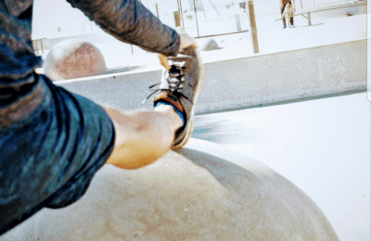
3.) Active-isolated stretching. These exercises are involved in the rotational aspects of your joints all while holding a stretch in place. For example, utilizing a rubber stretch band (wrapped around your flexed foot) to lift your left leg up, while resting your right leg on the ground and straightening the lifted leg out as much as possible is a form of active-isolated stretching. In this particular instance, the targeted muscle is the hamstring complex, but if you angle your leg to the side(s) you loosen the hip flexor complex and the gluteus maximus and gluteus medius. A simple concept to keep in mind is: the looser your joints, the better. Here are some more ideas behind this form of stretching:
4.) Dynamic Stretching. This form of stretching is specifically tailored for the more active individuals, and athletes. It involves plyometrics, some jumping, toe-touches and lunge twists. Many people think of it as a warm-up that kills two birds with one stone; that being stretched muscles along with a cardiovascular workout. Rather than holding each stretch for a lengthy period of time, you bounce from one movement to another. An example of this is a kangaroo jump. It gets your heart beating while forcing your quads and glutes to stretch. Here’s a webpage that demonstrates this nicely:
There you have it. Next time you begin your morning trail hike or gym workout, keep these 4 stretching techniques in mind. They will help you stay limber and most importantly, prevent injury from your imminent activity. Keep muscles warm at all times, stay hydrated and if your metabolism is ultra fast, make sure you have eaten a substantial meal approximately 30 minutes before exercising. Otherwise, there just won’t be enough energy to maximize the workout. Stay moving, stay flexible, and I will hopefully have a nice informative article for you next week.
Ciao,
Nattapon Jontom Abbett
 Nattaproblem
Leave a comment